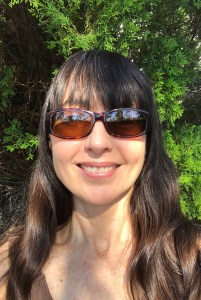
 I have always loved reading and creating, with words, with paint and pencils, from joining a Creative Writing class as a child – as an asthmatic and more than a little uncoordinated, team sports were never my forte – to studying art and then writing at university. Since childhood, when I realised that someone had created the book I held in my hand, I have wanted to write. To create. Perhaps it was reading Little Women and wanting so fiercely for Jo to succeed, to be Jo, or alternatively her sisters and enter the Marsh household. Perhaps it was Alice in Wonderland and wanting to throw myself down that rabbit hole. Books were a perfect escape when I was indoors with another bout of bronchitis. They gave me the world. From those tame beginnings to discovering books could not only captivate and inspire me, but thrill me and scare me, keeping me up at night reading under the blankets with a torch. Books introduced me and immersed me in new worlds.
Looking at art, being captivated by passages of paint, the use of light and shadow, thinking how did the artist do that? Reading novels and admiring the skill, the clever hints and clues, the beautiful play of words, wondering how did the author conceive of that? How did they do that? There have been more than a few false starts, a multitude of drafts, dreadful poems and sketches that will never see anyone else’s eyes but I love the process, being swept away into another space, another moment, when reality (and the day job and all the ordinary, everyday concerns) subside.
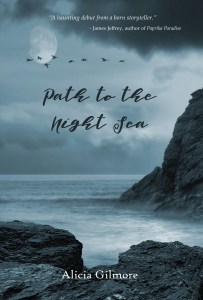 Path to the Night Sea started as a short story in a fiction class with Sue Woolfe. Sue had given the class a selection of photographs and objects to spark our creativity and give us a physical stimulus to write a short fragment. I remember a small glass perfume bottle and a photograph caught my attention. The photo featured a woman in profile, seated at a piano, her hands poised to strike the keys. There was a cat sitting on top of the piano, and I wondered if these were the two most important things in her life – music and her pet. I started to write about this woman who would sit and play, not looking out of the curtained window, but indoors with her cat. Her face in profile, her ‘good side’… The perfume bottle that perhaps had belonged to a woman who would never get hold. A bottle that held scented memories… Ideas and elements came together and what is now a lot of Day One in the novel formed the original short story. Sue read the story, said I had written the start of a wonderful novel and she had to know what happened to Ellie. I realised so I wanted to know too.
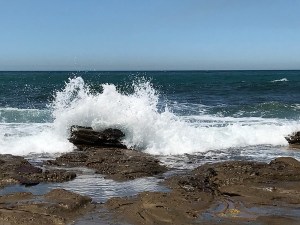
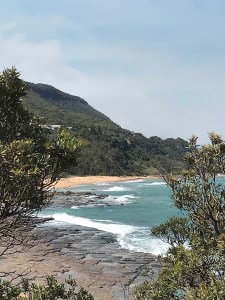
The story became darker the more I delved into Ellie’s world. Seven days seemed the fitting structure for Ellie to be introduced to the reader and for her to seek her path, tying in with the religious dogma she’d heard from her Grandmother and Father. Listening to music by Nick Cave and Johnny Cash helped me establish the mood at times and gave me the impetus to embrace the flaws and the darkness. When I was writing the first drafts, I was living near the beach and the waves, particularly during storms, formed a natural soundtrack. If I peered out from my desk, I could catch glimpses of the ocean. By the time editing was underway, I had moved to a house that backed onto the bush and had inherited a cat. Listening to the raucous native birds, possums scurrying up trees and across the roof at night, dealing with the odd snake and lizards, plus watching the cat, heightened those natural elements of the story.
 I was concerned about and for my characters. I needed to ensure that Arthur in particular had moments, however fleeting, when he was ‘human’, and that Ellie, despite her circumstances, not be passive. I found myself going off in tangents in early drafts with minor characters and subplots but judicious readers and editing brought the focus back to Ellie and Arthur, and the confines of restricted world they inhabit.
I had thought of letting Ellie go one morning years ago when I woke up and heard the news about Elizabeth Fritzl kidnapped and abused by her father. In my drowsy state listening to the radio, the reality of her situation came crashing in and I wanted to put my humble writings aside. What was fictional pain in the face of such devastating reality? Even in 2018, the newsfeed this week is full of children being trapped at home by their parents, the neighbours unaware. Path to the Night Sea is my way of using language to explore familial dysfunction, small town horror, and ultimately, hope.

Alicia Gilmore lives in New South Wales, Australia. Her debut, Path to the Night Sea, is a contemporary gothic novel exploring the dark secrets hidden within an otherwise idyllic coastal setting. Alicia has had short stories published in Phoenix and Cellar Door. In 2012, she was a contributing writer and lead editor of Burbangana. In 2009, Alicia received an Allen & Unwin / Varuna Publishers Fellowship that included a residency at Varuna, the NSW Writers’ Centre.
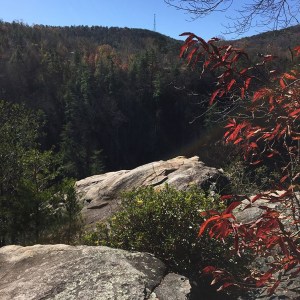 Halfway to Tallulah Falls, my son spills his entire bottle of Gatorade into his lap. “Um, Mommmmmay?” He says in a tentative, keening voice, emphasis on the last syllable, the way he always does, adding a frantic edge to what is not really an emergency. “I spilled my drink.” I sigh, tilting back my own water bottle and taking an eager gulp. Thankfully I have leather seats, though we didn’t bring any spare pants and I have no idea how he’s going to hike down a mountain with his butt soaked through.
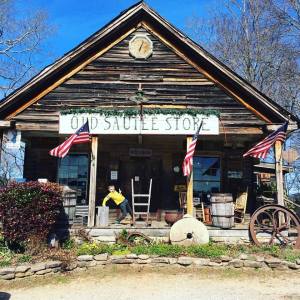 Up the mountain, we stop in the gift shop and buy the kid a pair of leggings and a piece of rock candy in his newest favorite color; cyan. On the way outside, he stops to study a taxidermied fox. We visit the museum exhibit, and I point out the boxcars, the butter churn, the crisp, thin white dresses with their square collars; all relics from a time gone by, with lessons to be gleaned. He nods, but isn’t really paying attention. What use does an eight year old have for sack dresses? He wants to get outside, into the air, to touch the stone and bark, to walk the paths, to hear the delicious crunch of the leaves beneath his feet, and I don’t blame him.
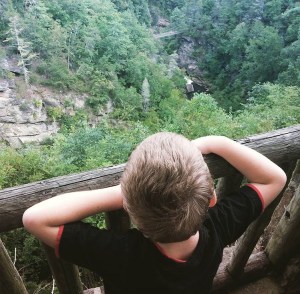 When he was two he wandered off while I was putting his carseat in – I turned and he had vanished. Those ten minutes felt like hours, and when we found him, he was wandering out of the woods – the forests in Oconee County are heady and thick with skinny, gray-brown pine trees, tall and imposing, but full of a gentle kind of calm, as though benevolent ghosts might pass their days there in a cocoon of sweet silence – with our little beagle in tow, humming a little tune as his fat, toddler hands grazed each tree, oblivious and full of joy. He is a natural wanderer, my kid – and while it isn’t always ideal, and are sometimes stressful, these wanderings – I always understand them. I always understand him. In so many ways just like me, but in others so wholly different, so pure and clear-eyed and awake. I feel I know him better than I’ve ever known myself. He is a natural wanderer, fluent in the woods, a real-life tree hugger. He has always felt at home there in the silence of the woods, a place where he is heard and understood, nurtured and adored.
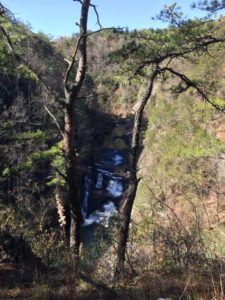 When he graduates high school, I plan to take him on a hike through the Appalachian Trail. I haven’t told him yet, but it’s a secret dream. It seems poignant, appropriate. I can picture him, sweaty blonde hair, cheeks flushed with red in the cool air, panting with exertion, a heavy backpack weighing down wide shoulders. Undoubtedly he’ll have spilled his Gatorade on his pants, or tripped and skinned a knee, but there will be joy.
 I have long been a devotee of the bean, and the search for the perfect brew, for that truly spectacular blend of arabica and artistry, has been an ongoing, life-long quest. Travels hither and thither across the globe have been defined and remembered by the superior cups of coffee savored in one locale or another. High on the list is Café De Pause in Marburg, Germany, a gorgeous nook of a place filled with stovetop espresso pots of various size and description. Kokako in Auckland, New Zealand, a sleekly appealing café with in-house roasting and organic beans, is another member of this club. Surprisingly, the Delta Club Crown Room at Amsterdam airport, where I downed five much-savored cappuccinos also merited a place in the ranks of my favorites.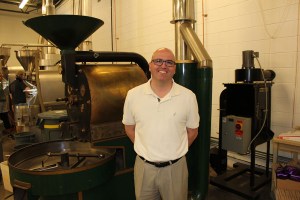
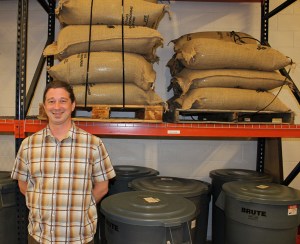
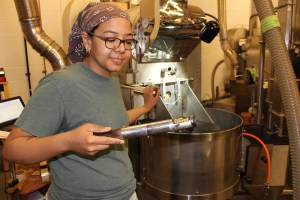
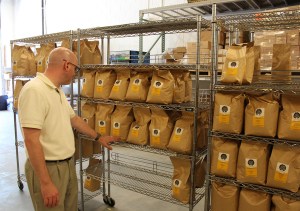 So every time I enjoy a cup of Joe Van Gogh’s finest, I feel a thrill of pleasure that I, too, in the purchase of a bag of beans, am playing a small part in supporting such marvelous enterprises: sustainable farms where workers are family and the land is cherished, and a coffee company that has quietly built its success by elevating others. And they make a damned fine coffee to boot. What more could a discerning coffee devotee ask for? Now I just have to get Brian Maiers to move into my spare room with his Star Trek coffee-contraption in tow.
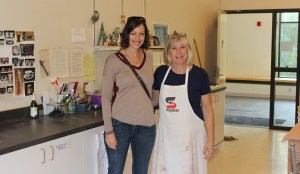
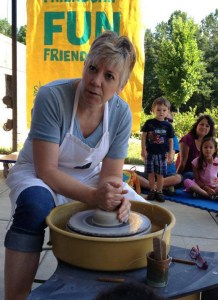 Artists who make things on the wheel are considered potters. Artists who make things with clay by hand ( via slabs, coils, pinching & sculpting) might be considered ceramic artists. I consider myself both as I love both processes equally. I began college in New York as a drawing and painting major. I happened to see some of the work coming out of the pottery studio and knew I had to take a class. Once in the ceramic studio, I was hooked. For the first two years we were only allowed to use hand-building techniques. Then we had one brief lesson on the potter’s wheel, and it was so much fun that’s where I stayed, for the most part, for my last two semesters. I graduated from State college of New York, Brockport.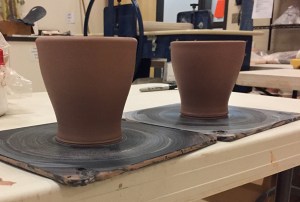
 When six-foot Curva Peligrosa rides her horse into Weed, Alberta, after a twenty-year trek up the Old North Trail from southern Mexico, she stops its residents in their tracks. A parrot perched on each shoulder, wearing a serape and flat-brimmed black hat, and smiling and flashing her glittering gold tooth, she is unlike anything they have ever seen before. Curva is ready to settle down, but are the inhabitants of Weed ready for her? With an insatiable appetite for life and love, Curva’s infectious energy galvanizes the townspeople. With the greenest of thumbs, she creates a tropical habitat in an arctic clime, and she possesses a wicked trigger finger, her rifle and six-guns never far away.
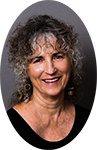 Lily Iona MacKenzie is the author of two novels, Fling and

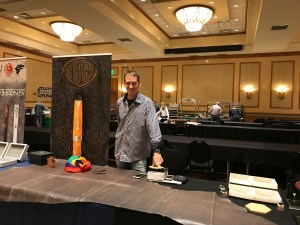 I arrived last night, and even though the show was just starting to get set up, I saw some lovely people and got a peek at some tantalizing journals, papers, and pens. Cary Yeager from Fountain Pen Day gave me an official FPD pin and bookmark (I’m already collecting swag!) and we had a nice chat about the generosity of the fountain pen community. And it’s true: I have never met a group so welcoming and willing to share knowledge (and ink and pens) with even the newest of newbies.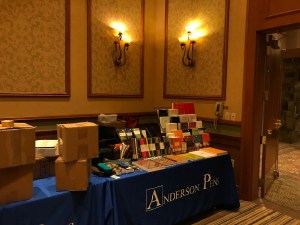
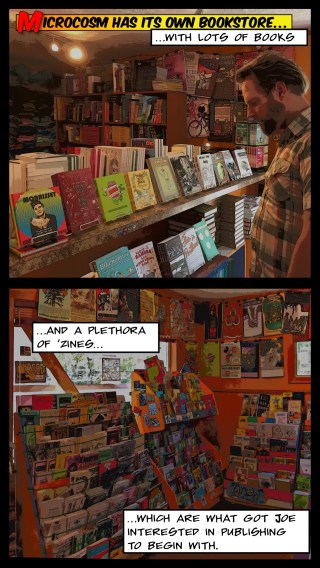
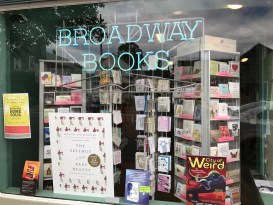 The store-front windows of Broadway Books make the shop light and airy, and its well-organized shelves draw customers on to explore the next book, the next topic, the next table. Over the shelves hang poster-sized covers of other volumes for which readers might want to search.
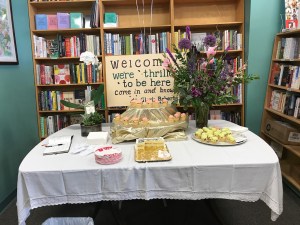 The birthday party on Saturday made it obvious what a community asset the store is. I met a trio of women who had been friends for forty years. Regular customers milled about, chatting, talking books with the owners and staff, having their photos taken at the picture booth set up for the day, and eating cake and drinking champagne. Despite the bustle of the celebration, I saw the staff continuously assisting customers by making recommendations and finding books. One of the owners (alas! I did not discover which one) asked everyone there to please go out and tell the story of their book store, and I am happy to comply with that request here.