• Skip to primary navigation
  • Skip to main content
  • Skip to footer

Regal House Publishing

Advancing Finely Crafted Literature

  • Home
  • About Us
    • The Origin Narrative of an Indie Press
    • The Regal Mandate
    • Our Imprints
    • The Regal House Initiative
    • Regal House Publishing Staff
    • Our Professional Affiliations
    • RHP’s Climate Commitment
    • Helen Keller Intl
    • RHP Summer Scholars Program
    • Contact & FAQ
    • Blog
  • Authors
    • Our Authors
      • Regal House Authors & Poets
      • Fitzroy Books Authors & Poets
      • Pact Press Authors & Poets
    • Forthcoming Publications
    • Sour Mash: RHP’s Southern Literature Series
    • Fugere Books: RHP’s Novella Series
    • Regal House Reading Series
    • Author Resources
  • Submissions
  • Marketing & Distribution
    • Our Distribution and Printing Partners
    • Subsidiary Rights
    • For Retailers
    • Events
    • A Conspiracy of Lemurs Podcast
  • Contests
    • The Fugere Book Prize for Finely Crafted Novellas
    • The Petrichor Prize for Finely Crafted Fiction
    • The W.S. Porter Prize for Short Story Collections
    • Past Contests
      • The Kraken Book Prize for Middle-Grade Fiction
      • The Acheven Book Prize for Young Adult Fiction
    • The Terry J. Cox Poetry Award
  • SHOP

Blog

Martha Kalin, on Writing Fearlessly

May 7, 2019 Leave a Comment

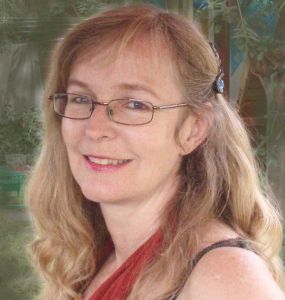
Regal House Publishing Senior Editor, Pam Van Dyk, interviews Martha Kalin, winner of the Terry J. Cox Poetry Award, on the craft of poetry, winning the award, and advice for novice poets.
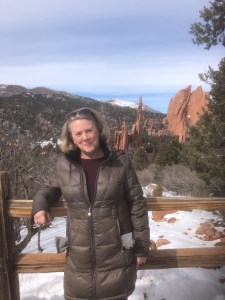
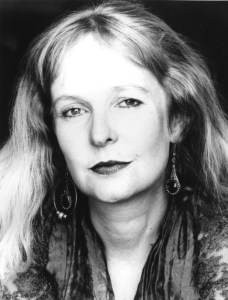
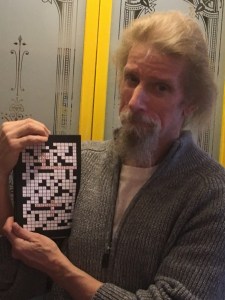
Martha Kalin, winner of the 2019 Terry J. Cox Poetry Award

Regal House: We’d like to know how you got started writing poetry. What is your “poet’s origin story”?

Martha Kalin: I began writing poetry as a very young girl, so it seems as though poetry’s been part of me forever. It’s a bit of a mystery what drew me to poetry in particular, but I always loved the sounds of words, loved to be read to, and had an extended family of teachers and writers who encouraged me. I particularly loved writing limericks and other short forms. I even created a collection of my work, with the book divided into sections, one titled “Poems About Animals”, the other titled “Poems About Anything but Animals”! In school my favorite classes were always creative writing and I often would secretly write poems when I was supposed to be working on math problems.

Regal House: Who were/are your biggest influences as a poet and why?

Martha Kalin: There have been so many influences I could never name them all. In college I fell in love with English Romantic poets such as Wordsworth, Keats, and Shelley and American poets such as Emily Dickinson, Walt Whitman, T.S. Eliot, Wallace Stevens. In some cases the influence was because I shared a love for the beauty of the natural world, in some cases, because there was so much feeling in their poetry, I always felt transported. Over the years I’ve dipped into the waters of many contemporary poets and have loved many. About ten years ago I was fortunate to discover Lighthouse Writers Workshop, a non-profit center for writers in Denver, Colorado and became closely involved in the Lighthouse community. This has been a rich source of ongoing learning and support and has had a huge impact on my writing.

Regal House: What books, poetry or otherwise, are you currently reading? 

Martha Kalin: I’m reading (and re-reading) Marie Howe’s beautiful poetry collection Magdalene, and Ocean Vuong’s stunning collection Night Sky with Exit Wounds. I just finished Natalie Goldberg’s memoir Let the Whole Thundering World Come Home and am slowly making my way through The Way of the Dream: Conversations on Jungian Dream Interpretation with Marie-Louise von Franz, by Fraser Boa.

Regal House: What does winning the Terry J. Cox Poetry Award mean to you?

Martha Kalin: It’s such an incredible honor to win the Terry J. Cox Poetry Award. As a poet, it’s often hard to know how one’s work is being received, or whether it speaks to people in memorable ways. It means so much that others appreciate my work and want to support me in finding a wider audience. I was particularly moved that the award was named for the father of Regal House Publishing’s Editor-in-Chief, who was a poet himself.

Regal House: Among the poems in your winning collection, How to Hold a Flying River, do you have a favorite or one that holds special meaning? Can you share why?

Martha Kalin: The poem “Between Your Sleep and Mine” has particular significance to me. It represents a point in time when I was consciously trying to move from writing short, and more traditional lyric poems toward longer (for me), more complex and layered poems. I was seeking to reflect more fully today’s world, the pain, strangeness and intensity, but also new forms of understanding. I began to develop increasing interest in experimental and hybrid forms that integrate poetry and prose and that make leaps into and out of dreams and the unconscious.

Regal House: Alice Walker once said, “Poetry is the lifeblood of rebellion, revolution, and the raising of consciousness.” What are your thoughts on what poetry does for the world?

Martha Kalin: I love this quote and feel deeply that poetry has tremendous power to speak the unspeakable. Poetry, can startle, shock, and break us open in ways that can lead to deeper compassion and connection with one another and the truth of our experience.

Regal House: Do you have a routine or process for crafting your poetry? 

Martha Kalin: Yes! This may seem a bit weird, but I write most of my poems these days in my phone. I use it like a journal, but it works even better than a paper notebook, in that I almost always have it with me and can capture little fleeting images and lines that otherwise would be lost. I’ve never been adept at writing in a disciplined way, or at responding to prompts or assignments. I do best when I catch impressions and unexpected passing phrases that then stimulate my imagination. I take all these notes in my phone and mull them over and play with them. Eventually I’ll gather them to see whether anything interesting starts to arise. Only when I have something with a bit of sizzle for me do I begin to craft the lines into a poem. I usually work on a poem for quite a long time, sometimes even for years.

Regal House: Finally, what words of advice might you offer to those who are just beginning to write poetry?

Martha Kalin: I encourage anyone with an interest in writing to read widely and find poems that inspire you, delight you, or speak to you in an important way. Listen carefully to the rhythm and music of the language. Practice writing by imitating or just letting your imagination run freely. Take feedback from others you respect but don’t let criticism stop you from writing what you want to write. Search for your own voice, the voice uniquely yours. And then write fearlessly.

Martha lives and write in Denver, Colorado where she works for University of Colorado’s Department of Family Medicine, developing programs for vulnerable and high risk patients. Her recent publications include poems in Anastamos, Don’t Just Sit There, Inklette, Hospital Drive, Panoply, San Pedro River Review, and the anthology Obsession: Sestinas in the Twenty-First Century published by University Press of New England. Her chapbook Afterlife and Mango, was published by Green Fuse Poetic Arts in 2013.
Filed Under: Regal House Titles Tagged With: Martha Kalin, poetry, Terry J. Cox Poetry Award winner

The Birth of a Short Story Collection: Women of Consequence

March 22, 2019 Leave a Comment

I’ve been writing short stories full time for the last ten years, and I’ve been fortunate enough to see a good number—more than eighty—published. But although I’ve got piles of journals and anthologies featuring my work lying around, though I can Google up dozens of my stories in online publications, and though I’ve received awards and recognition for individual pieces, what I wanted was a book—a whole book with just its title and my name alone on its cover.

            For a short fiction writer, a book means a collection of stories, and the expectation is that these stories will be connected somehow— by theme or by setting, for example, or by recurring characters. It seemed to me that I could satisfy any one or all of these approaches, as I had plenty of stories with intersecting characters, motifs, and locations. I tried basing collections on road trips, on works of art, even on parenting. Unfortunately, though some of these collections drew compliments and even recognition, none yielded an offer of publication. After a decade of hard work, I still didn’t have my book.

            The idea, when it came, struck with the force of a cultural tidal wave: several of my most successful stories feature women as either narrator or principal antagonist. Moreover, these stories about mothers, daughters, lovers, sisters, and female friends reflect—and are unified by—an idea central to my writing: Kafka’s assertion that a literary work “should be an ice ax to break up the frozen sea inside us.” And so, Women of Consequence came to be.

            Why “Consequence” in the title? Because it’s a term that allows ambiguity. The women in my stories are more often cautionary tales than role models. Some are victimizers, some are victims. But the characters in Women of Consequence approach the world with boldness and creativity: a fallen starlet revives her career by voicing a wretched dog-man in an animated horror film; hoping for greater profit, a surrogate nearing her due date runs off to Mexico with her valuable cargo; a meals-on-wheels driver with an eating disorder survives on bits picked from the dinners of her clients; a casting agent hires a performance artist to nurse her new baby; to become eligible for an exclusive dating service, a young professional pretends severe colorblindness; a dangerously overprotective mother attempts to destroy her child’s faith in his physical senses. These and the other women in this collection may or may not achieve their goals, but the consequences of their efforts are inescapable.

            Readers may find the premises of some of these stories disturbing. A surrogate running off with the baby she carries? A mother stripping her child of his senses? And several of the stories feature ghosts and surreal or supernatural phenomena. But if the stories of Women of Consequence disturb, they do so because they represent a kind of exaggerated familiarity. The object is not simply to shock, but to compel readers to reflect on their own lives and the thickness of the ice of their inner frozen seas.

More than seventy of his short stories have been published or are forthcoming in print and online journals such as The Georgia Review, The Florida Review, The Baltimore Review, The Pinch, Post Road, Nashville Review, A-Minor Magazine, Yemassee, The Madison Review, The Doctor T. J. Eckleburg Review, The Los Angeles Review, PANK, Superstition Review, Tahoma Literary Review, and Zymbol. Gregory’s work has earned six Pushcart Prize nominations and his stories have won awards sponsored by Solstice, Gulf Stream, New South, the Rubery Book Awards, Emrys Journal, and The White Eagle Coffee Store Press.


.

Filed Under: Regal Authors, Regal House Titles

That’s My Story: William L. Alton

January 9, 2019 Leave a Comment

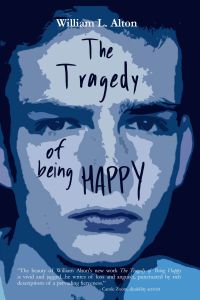
William L. Alton’s book, The Tragedy of Being Happy, will be released by Pact Press, an imprint of Regal House Publishing, on January 12, 2019.

The Tragedy of Being Happy William L Alton

There’s a fair bit of interest, scientific and otherwise, in the links between creativity and insanity. How crazy must someone be to be a good author?

I find that for me, insanity is the core of my creativity. I have lived with Schizo-Effective Disorder since I was 13. I spent 2 years locked in a maximum security psychiatric hospital until I escaped. Yes, I am literally an escaped lunatic. It took until my early Forties to find the right cocktail of drugs. I still live with some symptoms but have found a balance that works for me. In the beginning, I made up stories to justify my feelings and symptoms. I used them to pass the time. I used them to create worlds in which I was more than the drug addled, angry young man I was. As I got older, writing became the lens through which I interacted with the world. I am always looking at people and situation and asking myself, What if? The balance between madness and functionality is what allows me be both an educator and a writer. I am driven to go out into the world but require a lot of “down” time. As a writer, I find that I need to be open and willing to let go while maintaining the drive and stubbornness and need to sit alone in a room believing that the shit in my head is interesting to more people than me. To me, writing is about moving from survival to thriving.

Who or what inspired you? How so?

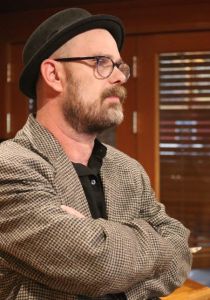
William L. Alton, Pact Press author of The Tragedy of Being Happy
William L. Alton

I became a writer because I was a troublemaker. I grew up in Arkansas in the Seventies. Back then, they still had corporal punishment in schools. I was in the office three or four times a week getting paddled. In the third grade, I had a teacher who was a Quaker. Instead of having us paddled when we caused trouble she would assignment poems for us to memorize and recite the next day to class. The first time, I refused. The teacher called my mother. My mother was not a Quaker. She absolutely DID believe in corporal punishment. After that, I memorized the poems and recited them. Because I was a hellion, I memorized a lot of poems that year. Later in life, I became an addict and lived with mental illness. When I sobered up and started my recovery, I had a teacher who introduced me to Shakespeare and Milton and Poe and Hawthorne. As important as that was though, that teacher also gave me the guiding principle of my life. I had done something stupid and was making excuses and he looked at me and said: “Bill, you can be as crazy as you need to be. Don’t be an asshole.” These two teachers are the reason I write. They are the reason I perform. They are the reason I am the person I am today.

What social issue or problem does your work address?

I write about mental illness, poverty, addiction and survival. I write about the hidden things and the hidden people. I write about the monsters in the closet and hopefully, one way of kicking their asses.

What difference do you hope your book will make?

I want people to know that they are not alone. I want them to read my books and maybe see ways to love the unlovable. I want people to see that those of us in the shadows are people too.

William L. Alton, author of Pact Press's The Tragedy of Being Happy

William L. Alton has a BA and MFA in creative writing from Pacific University and has published a collection of flash fiction, Girls, two collections of poetry titled Heroes of Silence and Heart Washes Through, and two novels, Flesh and Bone, in 2015, and Comfortable Madness. He lives in Beaverton, Oregon, where he works with at-risk youth.

Filed Under: Author Interview, That's My Story Tagged With: Pact Press, That's My Story, The Tragedy of Being Happy, William L. Alton

What Empty Things Are These: Why Then, Why There?

November 1, 2018 Leave a Comment

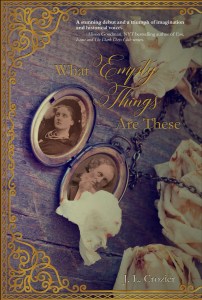
Regal House Publishing author J.L. Crozier, author of What Empty Things “Why,’ so many ask me, ‘write about this period?’ That is to say, 1860, and London, no less. I’m not English, and honestly, I wasn’t around then.
But context is all. I do absolutely think that history can tell us much about ourselves, and my abiding impression of Victorians is that they are very, very familiar to us. We can see ourselves in them. Much, believe me, is explained about our times by looking at theirs.

Who the Victorians were – or at least, who they believed they were – was pretty well established by 1860. They had travelled far, metaphorically speaking,   from the Georgian period, when, frankly, life was a lot more laid-back for the moneyed classes. That was because these were mainly the titled, and society was not based so consciously on commerce. Their houses were outward-looking, with large windows and balconies. The sun shone in on apartments where rooms did not necessarily have established functions, where servants were just as likely to share sleeping quarters with their masters. They might, in fact, all end up after a late night snoring gently on a handy couch.

Victorians by 1860, however, lived in a very different society. The industrial and agrarian revolutions had changed many things. Never let it be forgotten that there were legions of vulnerable people destroyed by these revolutions (some of whom were transported to the penal colony of Australia, in punishment for attempting to establish some rights), but in the meantime town and cities became swollen with the newly and vastly expanded middle class. Life was suddenly much more urban in general, where time was no longer measured in seasons and harvests but by clocks, minutes and hours. People were more educated. Transportation – trains particularly – linked them and proved the means of carrying food and other stuffs from city to city. Newspapers and periodicals spread far and wide, of course, and, with newly educated markets and the means of reaching a far-flung audience. Discussion and commentary, poetry and literary works boomed.

Patterns were established to demonstrate that the finer people deserved their status: the family was headed by the patriarch (a little like God), and everybody else ranked beneath him. It was not only important that society be aware that these families were awash with money, but that (there was perhaps some guilt here) they were nonetheless good. The home itself reflected the sense that the Victorian family was a virtuous entity – nothing loose about the way they lived, no sir. The family (and this was a nuclear family) was the centre of everything, and so the house looked inward. No more balconies; many heavy curtains over the windows. Every room must have its designated function; servants would begin to have their own tiny bedchambers immediately below the roofline; as far as possible (and even though it might reduce the actual bedchamber to cupboard-size) those who could began to insist on adjoining changing rooms. Roles were strictly delineated. ‘Upstairs’ was not to mix with ‘Downstairs’; the lady of the house worked hard to do the right thing, symbolising the virtues of the family (and of herself) and displaying her home and family at their best.

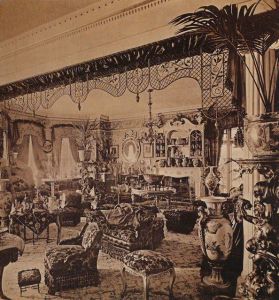
Victorian parlor
The parlour, or front parlour, or drawing room was essentially meant to display the Victorian family at its ‘best’: its virtues, its taste and its success.

The front parlour or drawing room was the formal room of display, and she would also have a morning room.

Once again, however, this was a society where virtues were on display, but also concealed some dark contradictions.  People were conscious that appalling housing in the cities were a very bad look indeed, and they spoke about the need to clear whole areas of verminous and noisome habitations. They were not, however, so attracted by the idea that urban renewal – that is, replacement housing – might be a companion notion. And where the fortunes of many increased during this time, there were also many charlatans who would became obscenely wealthy through shonky schemes that ruined the more credulous investor. Railroads, real or fables, were a favorite ploy.

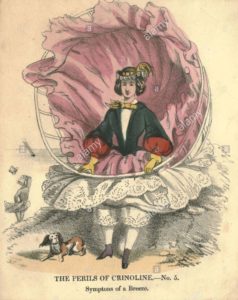
Interestingly, crinolines – that odd piece of underwear so identified with Victorian women – in themselves say a lot about the times. By 1860, for example, these were now made of hoops of fine steel, and were therefore far lighter and more comfortable to wear than the bent-wood and horsehair versions of a few years before. Thus, you could say, industry had improved the lot of women in general. But that’s not all that can be said about crinolines. Punch, the satirical periodical, had quite a lot to say, in fact. Crinolines enabled skirts to bell-out to some ridiculous dimensions, with which cartoonists had a lot of fun, and, since a crinoline meant that very few petticoats were now needed to create a really impressive width… ladies were very vulnerable to a high wind. Punch loved it.

The Perils of the Crinoline
A high wind was not a friend to a lady out for a stroll. Luckily, she was wearing underwear.

But there’s more. Crinolines meant, as I said, that a fine impression could be made with a much-reduced acreage of petticoats. Yards and yards of dress material advertised the status of the wearer (and her husband and father, perhaps more to the point), but the expense need not extend to the underwear. Victorian dress of 1860 was a bit of a shop-front, indeed. Except for the important point that a certain vulnerability in windy weather encouraged the rapid development of good, solid underwear – drawers and stockings, and so on. In my researches, I was surprised to learn that undies were not so common before the advent of Victorians and their crinolines.

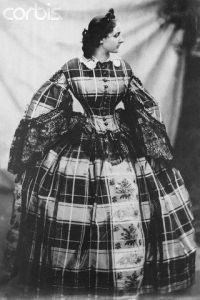
Dress, being such an item of personal display, is a fine subject for those analysing any society. Really, it is. Victorians went through many versions of the dress that not only demonstrated how little a woman was required to do in the way of work (if they weren’t farm workers, servants or factory hands, of course), but that also displayed the status of their husbands or fathers. But, in addition, their dress – especially in 1860 – absolutely demonstrated how confused and contradictory was the prevailing attitude to women. Just look at it: the woman was covered from neck to toe, but her shape was almost grotesquely sexualised.

The Countess Castiglione
The Countess Castiglione used the crinoline to perfection as a display, not just of wealth – but also of an exaggerated and almost cartoonish sexuality.

This of course, is where the corset came in, as the companion-piece to the crinoline. (As a little aside, however, the corset in 1860, while it could be tugged very tight, was itself a part of a piece of trompe l’oeil: a good, wide crinoline could help give the impression of an hourglass.)

Not enormously surprising, then, that the bourgeoise in her finery was subject to the politics of the time. This seems a bit unfair, to me, since she and her dress were always in effect lived statements about her husband or her father, really. She herself owned nothing. However, John Ruskin, commentator of the time, was quite caustic about the ostentation implied by extremes of bourgeois female dress; and there arose at this time the Aesthetes and their ‘rational dress’, which did away with both corsetry and crinolines.

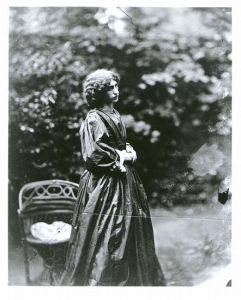
Jane Morris, née Burden, a Pre-Raphaelite model
Jane Morris, née Burden, was a Pre-Raphaelite model and muse whose face graced myriad paintings and drawings of the time. Here she is without corset or crinoline, wearing ‘rational’ dress in 1865.

These were political statements in themselves, absolutely, and a sign of revulsion at so much conspicuous consumption. But they were not necessarily a sign that women’s lot in particular was being seen as political – Ruskin was no feminist, and there was a lot of idealisation in artistic circles that really doesn’t suggest women were being seen as anything more that symbols. Just as the nouveau riche, bourgeois class saw them, really.

However, let it also be said that education was reaching women, too, to an unprecedented extent, and that there were some intellectual giants about, who were beginning to speak of the condition of women. John Stuart Mill was one such. Another, if less well-known, was Barbara Bodichon, feminist and member of the Langham Place Circle, which argued for dress reform. She had already written in 1850, after a walking holiday in which she and Mary Howitt opted for practicality and comfort, turfed their corsets and shortened their skirts:


Oh! Isn’t it jolly

To cast away folly

And cut all one’s clothes a peg shorter

(a good many pegs)

And rejoice in one’s legs

Like a free-minded Albion’s daughter.

(Wojtczak, date unknown)

Thus it is clear that in the midst of what was not, to tell the truth, a very liberated space for most women, there were the seeds of a very different set of views altogether. And of course, while not everyone was conscious of taking up anything like a feminist cause, the expansion of the middle classes and the proliferation of journals and literature meant that more women were being heard as writers, and occasionally as commentators. And women were increasingly characters in novels, as well, characters who were active and intelligent. Even children’s literature might sometimes recognise girls. Who could forget Alice in Wonderland or Alice Through the Looking Glass, both of the 1860s?

What Empty Things are These, a novel by Regal House Publishing author Judy CrozierAnd it struck me, while indulging my fascination for all things Victorian by writing a novel about this most interesting time (remember, 1860 was also the year after Darwin’s theory of evolution crashed onto the scene) that some intriguing questions could be asked. What, I mused, would happen if the patriarch of this most Victorian of households were to lose his hold on it? What if he and his domestic influence were to fade? What would change?

Adelaide encounters many things in my novel, in her search for a life that would have meaning for her once George, her comatose husband, finally passes on. But fundamental to all the changes she goes through are the alterations to the patterns of her own home, including all of the relationships under that roof.

—–00—–

For those interested in pursuing some of the themes mentioned above, my Master’s thesis: Beneath the carapace: virtue versus sexuality, and other contradictions behind meanings imposed on English female shape and clothing in the 1860s is available at my website: www.jlcrozier.com

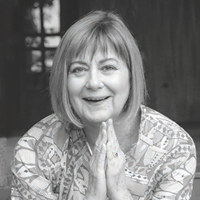
Regal House Publishing author J.L. Crozier, author of What Empty Things Are TheseJL (Judy) Crozier’s early life was a sweep through war-torn South East Asia: Malaysia’s ‘Emergency’, Burma’s battles with hill tribes, and the war in Vietnam. In Saigon, by nine, Judy had read her way through the British Council Library, including Thackeray and Dickens. Home in Australia, she picked up journalism, politics, blues singing, home renovation, child-rearing, community work, writing and creative writing teaching, proof reading and editing, and her Master of Creative Writing. She now lives in France.
J.L. Crozier’s historical novel, What Empty Things Are These, is available from booksellers all over the world.

Filed Under: Literary Musings, Regal Authors, Regal House Titles Tagged With: Historical Fiction, J.L. Crozier, Victorian-era fashion, What Empty Things Are These

That’s My Story – J.L. Crozier

October 18, 2018 Leave a Comment

Thats My Story, Regal House Publishing author interviews

With what do you write? A computer? A pencil? A ballpoint/ biro? Rollerball? Quill and the blood of virgins (male or female is fine. We’re all about the equal opportunity at Regal)? A fountain pen (people who use a fountain pen get extra credit points)?

Regal House Publishing author J.L. Crozier, author of What Empty Things Are TheseI use a computer. One of the best things my mother ever did for me was pack me (and my older brother) off to Stott’s Business College in Melbourne for a summer course in typing. She’d gone there herself about forty years before, and I have to say the place did seem to hark back a bit. We had huge typewriters that were possibly 20 years old even in the 70s. Perhaps one of them still had my mother’s fingerprints on it. We all typed in rhythm – one-two-three, one-two-three – and we’d bring our finished paragraph up to the teacher to check. Any mistakes and we’d have to do it again. My brother, a post-graduate at the university at the time, kept making so many mistakes he began to cheat and not take his paragraph to be vetted. Then we’d begin to have a bit of a giggle, outraging the teacher who, it turned out, thought I was flirting with this boy. Ah, the 70s. Recall this ‘boy’ is and was six years older than me, but, hey, it must be the girl’s fault. Still, she blushed fiery red when she discovered our surname was the same.
But I digress. Nowadays, I type a good faster than I write in longhand and, anyhow, with a pen in hand I can lose the thread or totally forget the trenchant point I was trying to make, well before I get to the end of a sentence. Also, bless this technology that allows you to hone and hone and hone without making a total mess.

I do, however, keep endless copies. I think somewhere in the back of my mind I fantasize that historians will actually want to know about all of my rewrites. You know… how did JL Crozier arrive at her great art? What were her methods? What can we learn from her? So my folders are full of versions 1 to 25, not to mention 4.5 and so on. Once I was on the verge of mass deletions of versions 1-24 (and the rest), but then I thought there were some passages that could be copied and dropped into the newest version. So now I am too paranoid to lose anything… and, anyway, what of posterity? Can’t you just see the PhD student of 2045 ploughing through the gems of #1-24, noting them for the gratification of other students of deathless literature?

No?

Maybe I should just relax.

There’s fair bit of interest, scientific and otherwise, in the links between creativity and insanity. How crazy must someone be to be a good author?

What are you suggesting?? Well, you’re probably correct. I think the answer is ‘reasonably’, though then again we could just spend a lot of time with a brandy balloon in front of an open fire discussing what exactly is sanity anyway.

Personally, I think the line between the two is far from clean-cut, as is any demarcation between what we think we know of as ‘normal’ and any number of syndromes. The mind is a remarkably plastic thing, and the brain can build itself back together after incurring great trauma. What we understand about the world is so largely taught a university department-full of philosophers could not really tell where essential reality lies. We take rather a lot on trust, but then we have to balance that with a learned capacity to balance evidence and probabilities. There is always the possibility of further refinement to edge us closer to a ‘truth’, which is I guess why the current enthusiasm for fakery in media is so deeply destructive.

Still, back to the question. We’re none of us absolutely steady, and we wouldn’t want to be. Where would life be, if we had nothing to improve on? And as writers, we need to understand the unsettling effects of emotion and trauma. We need to understand instability, if we want to write characters. We need to recognize frailty and we need to empathize with it.

That’s how crazy we need to be to be authors. But add to that a need for obsessiveness. Otherwise we’d never finish.

Are you fluent in any other languages? If so, do you find that knowledge has any effect on your writing? Is it important for people to learn other languages? Why?

Regal House Publishing author J.L. Crozier, author of What Empty Things
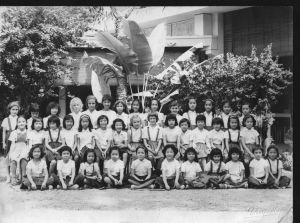
J.L Crozier, 4th from the left, back row.

I’m fluent in French, which comes from a childhood in Vietnam in the 60s at a French convent in Saigon. I’m living in France now (the choice of country made, obviously, because I had a head start from my very distant youth), and relieved that much of ‘learning’ is more ‘remembering’. Though there are moments – think of the number of French phrases you think you know… in fact many of these are not translations at all. A French person would not know what you meant as you enthuse about your ensuite. It does not mean your own private bathroom in French. Honestly.

I’ve discovered that the French can take a long time to finish a letter, what with all the linguistic flourishes; I have a French friend who can devastate tradesmen with politeness until has absolutely won her point and they are begging to be allowed to make reparations. I’ve also discovered that many of the differences in language lie in nuance and that English and French speakers can each inadvertently find themselves being rude. I myself can find myself in the middle of a sentence without a paddle, if you see what I mean.

No, it doesn’t have an effect on my writing, but it will be interesting to see what happens if it is ever translated. And will I know what to look for as the author? Scary.

Look around myself in France and noting how many anglophones here don’t speak French, I would say yes, it’s important. But I think too that some people find learning a new language very difficult, especially when they’ve reached retirement age, and especially when the anglophone diaspora makes it so easy to avoid it. But what they miss is understanding a culture that’s represented by its language. Forever, those community.

Languages can’t be directly translated; there’s a culture behind them and a millennium of simile and metaphor. English is awash with ocean-going and naval references (e.g. ‘room to swing a cat’ – that’s a cat ‘o nine-tails); I understand northerners and Inuit have a bag-full of words for snow. There’s about a dozen words for ‘rain’ in Scotland. Sometimes something really isn’t translatable at all. You just need to know its background.

That’s the kind of thing we need to understand about language. Well, about people, really.

Regal House Publishing author J.L. Crozier, author of What Empty Things Are These

JL (Judy) Crozier’s early life was a sweep through war-torn South East Asia: Malaysia’s ‘Emergency’, Burma’s battles with hill tribes, and the war in Vietnam. In Saigon, by nine, Judy had read her way through the British Council Library, including Thackeray and Dickens. Home in Australia, she picked up journalism, politics, blues singing, home renovation, child-rearing, community work, writing and creative writing teaching, proof reading and editing, and her Master of Creative Writing. She now lives in France.

J.L. Crozier’s historical novel, What Empty Things Are These, is available from booksellers all over the world.

Filed Under: That's My Story Tagged With: J.L. Crozier, That's My Story, What Empty Things Are These

That’s My Story – Lily Iona MacKenzie

September 21, 2018 Leave a Comment

Thats My Story, Regal House Publishing author interviews

With what do you write? A computer? A pencil? A ballpoint/biro? Rollerball? Quill and the blood of virgins (male or female is fine. We’re all about equal opportunity at Regal)? A fountain pen (people who use a fountain pen get extra credit points)?

Lily Iona MacKenzieQuill and the blood of virgins took me down a narrative path that I finally had to opt out of. It became too messy. Before computers became an essential writer’s tool, and when typewriters were my only other option, I wrote exclusively with a pen on yellow lined pads. I couldn’t imagine ever being able to write creatively on a typewriter, and I never did. But when computers seduced me into their world, I could no longer hold out. Previously, I not only hand wrote my drafts of poems and fiction, but I also typed them up afterward so I could then revise them. That involved further (multiple) rounds of typing and revising. Those of you who are writers know how many revisions are necessary before a draft becomes viable.
Once I had purchased my first computer, a Kaypro, I soon discovered that if I could teach myself to create directly onto a disc, I could save myself a tremendous amount of time and effort. However, I also lost whatever dynamic existed between my right hand and my brain (I’m right handed). At times, when I was having difficulty letting loose on the computer with right-brain activity, I had to stop and write with a pen until I could enter the narrative again. And yes, I did use a fountain pen. What else is there?

Do you use chocolate as an intrinsic aid to writing?

I wasn’t a chocolate fan until recent years. I haven’t a clue why. But since I’ve discovered this delectable delight, I’ve had to make a bargain with myself (and the chocolate devil!). Pre-diabetic, I can’t eat the real stuff since most chocolate treats have a strong sugar base. But I’ve discovered a fudge recipe (that I’ll reveal only if you tempt me with lucre) that uses a sugar substitute and satisfies my newfound craving for chocolate. Since I’ve made this discovery, I’ve found that my writing has not only sweetened up considerably, but it also has turned darker. I’m sure none of this would have happened without the assistance of chocolate!

What do you read that people wouldn’t expect you to read? What’s the trashiest book you’ve ever read?

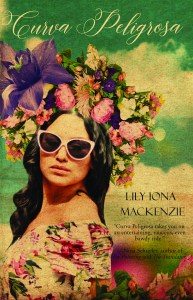
Since most people who will likely read this interview won’t know me, they may wonder, after learning about my novel Curva Peligrosa and the main character’s main focus on sex and eternal life, why I would spend so much time each day on the New York Times and the Washington Post. I confess. I’m a news hound, always searching for articles that deepen my understanding of worldwide problems. Unfortunately, there are too many difficulties to mention them all here, but I’m a political creature, and I seek the truth. The Post doesn’t always hit the right notes, but it tries. The Times has its biases, too, but it does attempt to present multiple sides of an issue. As a writer, though, it’s the sub stories that intrigue me. I always try to imagine my way into the emotional dynamics involved in these scenarios. It’s part of my writing practice.

And the trashiest novel I’ve ever read would me a tie between Amboy Dukes and Blackboard Jungle.

There’s a fair bit of interest, scientific and otherwise, between creativity and insanity. How crazy must someone be to be a good author?

Since I’ve never been diagnosed as insane, I may not be the right person to try and answer this question. However, I do know that the persistence and commitment required to hang in there and create a novel is enormous. I suspect that an insane person may not have the wherewithal to do it. I also think there’s a fine line between creativity and insanity, depending on one’s definition of the latter. To me insanity means that you’ve really gone over the edge and are no longer available for rational dialogue. I have a half-brother, a visual artist, who is psychotic. And while I appreciate those brief moments when he is “himself,” in recent years, they have become few and far between. He lives in a world that only he can inhabit. I can’t follow him there, and I’m certain that this would be true for writers who have a similar diagnosis. I think we’ve romanticized insanity because those who suffer from it seem to enter a world we don’t have access to. But I believe that it takes a sane individual to enter the underworld and return with material that s/he can share with others.

We’ve all heard the advice that authors “should write what they know.” But fiction emerges from imagination and creation of new worlds. Do you feel a tension between what you’ve experienced and what lives only in your mind?

I think the key to this question is the last part, “what lives only in your mind.” It assumes that what we fantasize or imagine doesn’t have roots in the outer world, but from my experience, both inner and outer worlds are indispensable. They interact with each other constantly, even when we think we’re writing about people, settings, etc., that we’ve never experienced directly. We humans are namers, Adam (or maybe Lilith) getting the task of being the first to give names to animals and more. We can’t name something that we can’t visualize, and once we visualize it, the item comes alive. That’s the magic of language and our power as writers to do “novel” things with it. So even if we are focused more on themes that originate in our unconscious than those we’ve actually experienced externally, they still are things that we know.

Lily MacKenize, Regal House Publishing author of Curva Peligrosa

Lily Iona MacKenzie has published books, reviews, interviews, short fiction, poetry, travel pieces, essays, and memoir in over 150 American and Canadian venues. She also has taught writing at the University of San Francisco for thirty years and was vice-president of USF’s part-time faculty union. When she’s not writing, she paints and travels widely with her husband. Regal House published Lily’s novel Curva Peligrosa in 2017, and Lily’s poem ‘God Particles’ was featured in Pact Press’ Speak and Speak Again anthology.

Filed Under: That's My Story Tagged With: Curva Peligrosa, Lily Iona MacKenzie, That's My Story

That’s My Story – Laurie Ann Doyle

September 7, 2018 Leave a Comment

Thats My Story, Regal House Publishing author interviews

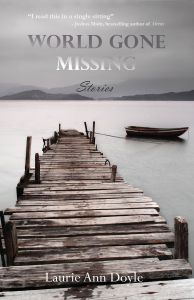
  1. The stories in your new book World Gone Missing all explore a central theme: that people don’t become fully visible until they disappear. What brought that theme about?

The truth is I didn’t pick that theme as much as it picked me. Before I even had a thought of a book in my brain, my brother-in-law went missing. Decades later, sadly he still hasn’t reappeared. Though the opening story in World Gone Missing—“Bigger Than Life”—has a similar through-line, I completely fictionalized the characters and specific plot points. What remains true to life is the feeling you get when a loved one seems to vanish into thin air. The best way I can describe it is a sinking, helpless sensation. As the years wore on, I began to see my brother-in-law in new ways. I appreciated his subtle kindnesses and sharp wit, along with his sometimes brash and irrational nature. Thought I’m not sure this would have changed anything, I wish I could have been more compassionate.

As I finished this story and embarked on others, I realized that losing a loved one can bring many conflicted feelings, and conflict is at the heart of fiction. Sometimes a person’s absence can free up a character to do things they’d never done before, wonderful things. Sometimes they find it almost impossible to move on. This realization got me going and I saw both the loss and liberation that absence can bring. Though I had to get a chunk of stories written before that unifying theme floated up.

  1. Why a book of stories, and not a novel?

Jim Shepard, winner of the Rea Award for the Short Story and many other honors, likes to joke that he writes short fiction “for the money.” The reality is it is harder to publish a collection than a novel, because collections don’t sell as well. I feel lucky that Regal House Publishing picked up my book. But I’ve talked to a ton of readers who live and breathe short stories. But given the economics of short fiction, does that mean the short story is a lesser art?  There are certainly professors and authors who view stories as “practice” before the writer settles down to create what truly matters in the world of literature: the novel.

I could not disagree more.

To me, it makes absolutely no sense to pit short and long fiction in competition against one another.  Both forms are art. I love the way I can hold a story in my head, relishing all its details right up to the ending. I also love immersing myself in the vast world of a novel, though I often have to reorient myself when I pick up the book to read more. Short stories have been made into more award-winning movies than most people realize, including Broke Back Mountain (Annie Proulx), The Birds (Daphne du Maurier), Breakfast at Tiffany’s (Truman Capote). The world needs short and long fiction.

In terms of my own writing, here again, I’d have to say the short story choose me, rather than me it. A while back, I got introduced to the magic of Alice Munro, then the bounty of Best American Short Stories. I started faithfully reading stories everywhere I could find them. At some point, I thought, why the hell not — why not try my hand at writing short fiction?  After a decade of work—most authors say writing a story collection is just as hard as a novel—World Gone Missing is now out in the world. It’s quite a feeling.

  1. I understand you teach writing at UC Berkeley Extension. How does teaching affect your writing?

Regal House Publishing author, Laurie Ann DoyleTeaching writing has given me many gifts. Maybe that sounds corny, but it’s true. Teaching requires that I make a deep study of masterful writing. In fact, the first writing class I taught was “Learning From the Masters: Techniques of the Literary Greats.” Of course, I had studied renowned authors in grad school, but now I had to go deeper. To prepare for the class, I examined how Hemingway constructed his dialogue so it sounds real, how Baldwin used imagery to create underlying meaning, what Grace Paley does to make us laugh. In identifying specific techniques and articulating for students what they accomplish, I have learned a tremendous amount.  Ten years later, I’m still teaching the “Learning From the Masters” course and it continues to feel fresh.
I find the dedication and inventiveness of my students inspiring. I’ve taught many talented student-writers over the years, from twenty-somethings to eighty-somethings. Their precise language, unique voice, and original plot lines amaze me.  The way students solve common writing challenges—for example, how to immediately plunge the reader into the story, or use suspense—often gets me thinking in new ways.  After class, though I’m usually pretty tired, I find myself scribbling down my own ideas to expand on the next morning.

  1. Can you describe the process of writing “World Gone Missing?” How long did it take you to write your book?

Regal House Publishing title, World Gone Missing by Laurie Ann DoyleWriting World Gone Missing took me a decade. During that time, I was also transitioning out of healthcare, teaching writing, and raising a son. As importantly, I was developing the intellectual and artistic autonomy that every writer needs to write the best words in the best way they can. The book formed slowly, like a Polaroid photograph coming into focus. Over that decade, I also started and put aside a novel, began a story collection based in the Arizona high desert, and penned and published several short memoir pieces. But time and time again I kept returning to the fledging group of stories that ultimately became World Gone Missing. The book is a collection of twelve pieces all set in the San Francisco Bay Area and linked by the overarching theme that people don’t become fully visible until they disappear. It’s an odd and interesting conundrum.

But I didn’t realize that I had a book-length work until I was about five or six stories in.  The first story I wrote for the collection, “Voices,” was initially drafted in grad school. The last story, “Lilacs and Formaldehyde,” was finished just a few months before the book’s final edits, after I’d decided the book needed a bit of magical realism.

What drove much of World Gone Missing were memories of places in the Bay Area that rose in my brain when I least expected them: the historic carousel in Golden Gate Park where my grandmother loved to take us, the Victory Statue in the center of Union Square, the pastel-colored homes across from Highland General Hospital, and the smashed shop windows on Telegraph Avenue that I saw one October morning after I first arrived at UC Berkeley as a freshman. All these details showed up in World Gone Missing

  1. What’s next for you, writing wise?

I’ve finished up several flash fiction pieces, which was enjoyable. Now I’m deep into  novel, which takes place (of course) in Northern California. Though I don’t want to give too much away, it continues my emphasis on characters who are missing from the present action, as well as illuminating the intimate connections between people and place, whether they be a shadowy forest, an immense lake, or simply a specific stretch of patched sidewalk.  Details of the physical story world always pull me forward.

Regal House Publishing author, Laurie Ann Doyle

Laurie Ann Doyle is an award-winning writer and teacher of writing. Stories in Laurie’s debut collection, World Gone Missing, have won the Alligator Juniper National Fiction Award, been nominated for Best New American Voices and the Pushcart Prize. Her stories and essays have also been published in The Los Angeles Review, Timber, Jabberwork Review, Under the Sun, and elsewhere.


Filed Under: That's My Story Tagged With: Laurie Ann Doyle, That's My Story, World Gone Missing

That’s My Story – Margo Sorenson

August 31, 2018 Leave a Comment

Thats My Story, Regal House Publishing author interviewsWhat do you read that people wouldn’t expect you to read?
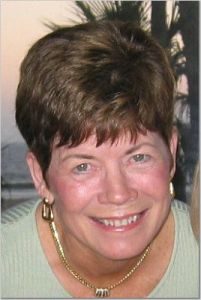
Maybe because I’m a children’s and young adult author and I’m female, people might not expect that I read the sports section every day; I am a baseball fanatic and love the backstories of every game and the human drama involved. Many sportswriters are very entertaining and they know how to spin a tale and engage readers. When I was a kid, I loved playing softball, even though I wasn’t all that good at it. At least I was fast! I had my own glove and bat, which was kind of different for a girl back then (think living in the Middle Ages). In Secrets in Translation, Alessandra is a good tennis player, but she doesn’t play tennis in the main part of the plot; it only helps her make friends when she moves to the U.S. after having grown up in Italy. Playing any kind of sport can bridge lots of cultural gaps and can bring people together.  Reading about them broadens horizons.

Are you fluent in any other languages? If so, do you find that knowledge has any effect on your writing? Is it important for people to learn other languages? Why?

Margo Sorenson, Fitzroy Books authorAnything that helps us to understand and connect with others is important, and learning other languages is most definitely a window into other people and different cultures. The way we express ourselves in our languages is hardwired into our brains, and if we can speak other languages, we can have insights into the thought processes of other people that we otherwise wouldn’t have. I loved writing Secrets in Translation, because I could use my Italian, which I began speaking when I grew up in Southern Italy as a little girl. It made me feel at home again! I speak other languages, as well, but Italian is the language of my heart.

For our authors who use non-English vocabulary or passages in their work, how do you feel doing so enriches the story, the setting, or your characters?

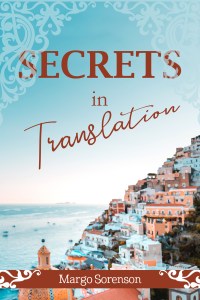
Secrets in Translation by Margo Sorenson

The fact that the main character, Alessandra, speaks Italian, gives her the “inside track” for her experience in Positano. The family that employs her as a nanny trusts her translation, the Italians she meets are affected in many surprising ways by her knowledge, and her Italian language is the key to solving the mystery she confronts in Positano and, most important, the key to making a discovery about herself.

What surprising skills or hobbies do you have?

I play the guitar and sing country music. Well. I try. ?

What’s your favorite joke?

Ole wore both of his winter jackets when he painted his house last July. The directions on the can said “put on two coats”…. I know. It’s not Italian, but I’m married to a Norwegian, and this is a typical Norwegian Ole joke. ?

Do you view your current genre as being your one and only, or are you tempted to try your hand at others? If so or it not, why so, or why not?

I have been published in different genres, primarily for young readers from 4 to 18. It is so much fun to play with words that I can’t really say one genre is my favorite. The story just develops and takes its own form; it’s out of my control.  I’ll bet most authors would say the same about what they’re writing. I’d been wanting to write about Alessandra for a long time, and, after one of my return visits to Italy, her story just came to me. With the help of my friends in Italy who guided my research, it took shape. Italy is a beautiful country and the people are warm and generous, a wonderful place to make the kind of discovery that Alessandra is finally able to make, and I hope it resonates with readers of all ages.

Margo Sorenson, Fitzroy Books author

Author of twenty-eight traditionally-published books, Margo Sorenson spent the first seven years of her life in Spain and Italy, devouring books and Italian food. A former middle and high school teacher, Margo has won national recognition and awards for her books, including ALA Quick Pick Nominations, recommendations from Multicultural Review, and being named a finalist for the Minnesota Book Award in YA Fiction.

Filed Under: That's My Story Tagged With: Margo Sorenson, Secrets in Translation, That's My Story

  • « Go to Previous Page
  • Page 1
  • Interim pages omitted …
  • Page 6
  • Page 7
  • Page 8
  • Page 9
  • Page 10
  • Interim pages omitted …
  • Page 12
  • Go to Next Page »

Footer

The Regal House Enterprise

Regal House Publishing is the parent company to the following imprints:

Fitzroy Books publishing finely crafted MG, YA and NA fiction.

Pact Press publishing finely crafted anthologies and full-length works that focus upon issues such as diversity, immigration, racism and discrimination.

The Regal House Initiative, a 501(c)(3) nonprofit that conducts project-based literacy and educational outreach in support of underserved communities.

From our Blog

Dockside Books: An Up North Haven for Thinkers, Adventurers, and Creatives

Tombolo Books: a book lover’s loveshack in downtown St. Pete, Florida

That’s My Story: Regal House Publishing (RHP) Interviews Novelist James Janko

  • Facebook
  • Twitter
  • LinkedIn
  • Google +
  • Email
Regal House Publishing · © 2017–2025 · Website design by Lafayette & Greene
 

Loading Comments...