With what do you write? A computer? A pencil? A ballpoint/biro? Rollerball? Quill and the blood of virgins (male or female is fine. We’re all about equal opportunity at Regal)? A fountain pen (people who use a fountain pen get extra credit points)?
 Quill and the blood of virgins took me down a narrative path that I finally had to opt out of. It became too messy. Before computers became an essential writer’s tool, and when typewriters were my only other option, I wrote exclusively with a pen on yellow lined pads. I couldn’t imagine ever being able to write creatively on a typewriter, and I never did. But when computers seduced me into their world, I could no longer hold out. Previously, I not only hand wrote my drafts of poems and fiction, but I also typed them up afterward so I could then revise them. That involved further (multiple) rounds of typing and revising. Those of you who are writers know how many revisions are necessary before a draft becomes viable.
Once I had purchased my first computer, a Kaypro, I soon discovered that if I could teach myself to create directly onto a disc, I could save myself a tremendous amount of time and effort. However, I also lost whatever dynamic existed between my right hand and my brain (I’m right handed). At times, when I was having difficulty letting loose on the computer with right-brain activity, I had to stop and write with a pen until I could enter the narrative again. And yes, I did use a fountain pen. What else is there?
Do you use chocolate as an intrinsic aid to writing?
I wasn’t a chocolate fan until recent years. I haven’t a clue why. But since I’ve discovered this delectable delight, I’ve had to make a bargain with myself (and the chocolate devil!). Pre-diabetic, I can’t eat the real stuff since most chocolate treats have a strong sugar base. But I’ve discovered a fudge recipe (that I’ll reveal only if you tempt me with lucre) that uses a sugar substitute and satisfies my newfound craving for chocolate. Since I’ve made this discovery, I’ve found that my writing has not only sweetened up considerably, but it also has turned darker. I’m sure none of this would have happened without the assistance of chocolate!
What do you read that people wouldn’t expect you to read? What’s the trashiest book you’ve ever read?
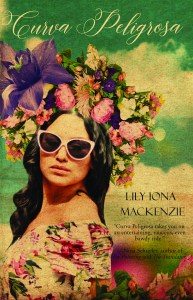 Since most people who will likely read this interview won’t know me, they may wonder, after learning about my novel Curva Peligrosa and the main character’s main focus on sex and eternal life, why I would spend so much time each day on the New York Times and the Washington Post. I confess. I’m a news hound, always searching for articles that deepen my understanding of worldwide problems. Unfortunately, there are too many difficulties to mention them all here, but I’m a political creature, and I seek the truth. The Post doesn’t always hit the right notes, but it tries. The Times has its biases, too, but it does attempt to present multiple sides of an issue. As a writer, though, it’s the sub stories that intrigue me. I always try to imagine my way into the emotional dynamics involved in these scenarios. It’s part of my writing practice.
And the trashiest novel I’ve ever read would me a tie between Amboy Dukes and Blackboard Jungle.
There’s a fair bit of interest, scientific and otherwise, between creativity and insanity. How crazy must someone be to be a good author?
Since I’ve never been diagnosed as insane, I may not be the right person to try and answer this question. However, I do know that the persistence and commitment required to hang in there and create a novel is enormous. I suspect that an insane person may not have the wherewithal to do it. I also think there’s a fine line between creativity and insanity, depending on one’s definition of the latter. To me insanity means that you’ve really gone over the edge and are no longer available for rational dialogue. I have a half-brother, a visual artist, who is psychotic. And while I appreciate those brief moments when he is “himself,” in recent years, they have become few and far between. He lives in a world that only he can inhabit. I can’t follow him there, and I’m certain that this would be true for writers who have a similar diagnosis. I think we’ve romanticized insanity because those who suffer from it seem to enter a world we don’t have access to. But I believe that it takes a sane individual to enter the underworld and return with material that s/he can share with others.
We’ve all heard the advice that authors “should write what they know.” But fiction emerges from imagination and creation of new worlds. Do you feel a tension between what you’ve experienced and what lives only in your mind?
I think the key to this question is the last part, “what lives only in your mind.” It assumes that what we fantasize or imagine doesn’t have roots in the outer world, but from my experience, both inner and outer worlds are indispensable. They interact with each other constantly, even when we think we’re writing about people, settings, etc., that we’ve never experienced directly. We humans are namers, Adam (or maybe Lilith) getting the task of being the first to give names to animals and more. We can’t name something that we can’t visualize, and once we visualize it, the item comes alive. That’s the magic of language and our power as writers to do “novel” things with it. So even if we are focused more on themes that originate in our unconscious than those we’ve actually experienced externally, they still are things that we know.

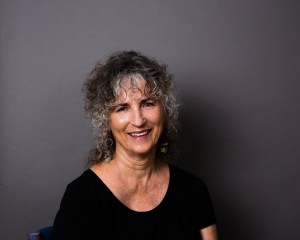
Lily Iona MacKenzie has published books, reviews, interviews, short fiction, poetry, travel pieces, essays, and memoir in over 150 American and Canadian venues. She also has taught writing at the University of San Francisco for thirty years and was vice-president of USF’s part-time faculty union. When she’s not writing, she paints and travels widely with her husband. Regal House published Lily’s novel Curva Peligrosa in 2017, and Lily’s poem ‘God Particles’ was featured in Pact Press’ Speak and Speak Again anthology.


Leave a Reply