• Skip to primary navigation
  • Skip to main content
  • Skip to footer

Regal House Publishing

Advancing Finely Crafted Literature

  • Home
  • About Us
    • The Origin Narrative of an Indie Press
    • The Regal Mandate
    • Our Imprints
    • The Regal House Initiative
    • Regal House Publishing Staff
    • Our Professional Affiliations
    • RHP’s Climate Commitment
    • Helen Keller Intl
    • RHP Summer Scholars Program
    • Contact & FAQ
    • Blog
  • Authors
    • Our Authors
      • Regal House Authors & Poets
      • Fitzroy Books Authors & Poets
      • Pact Press Authors & Poets
    • Forthcoming Publications
    • Sour Mash: RHP’s Southern Literature Series
    • Fugere Books: RHP’s Novella Series
    • Regal House Reading Series
    • Author Resources
  • Submissions
  • Marketing & Distribution
    • Our Distribution and Printing Partners
    • Subsidiary Rights
    • For Retailers
    • Events
    • A Conspiracy of Lemurs Podcast
  • Contests
    • The Fugere Book Prize for Finely Crafted Novellas
    • The Petrichor Prize for Finely Crafted Fiction
    • The W.S. Porter Prize for Short Story Collections
    • Past Contests
      • The Kraken Book Prize for Middle-Grade Fiction
      • The Acheven Book Prize for Young Adult Fiction
    • The Terry J. Cox Poetry Award
  • SHOP

About Regal House

That’s My Story: Mandy-Suzanne Wong

October 15, 2019 Leave a Comment

With what do you write? A computer? A pencil? A ballpoint/biro? Rollerball? Quill and the blood of virgins (male or female is fine, we’re all about equal opportunity at Regal)? A fountain pen (people who use a fountain pen get extra credit points)?
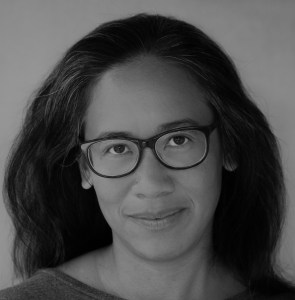
Regal House Publishing author, Mandy-Suzanne Wong

Ah, the fountain pen! All students at my British-modeled school were required to use blue fountain pens. Bloody hell, I loathed them. The cartridge running out when you need it most. The new cartridge vomiting all over your magnum opus. The horrible pink blotting paper. Ink all over your uniform, which would earn you a telling-off. Other children chewing the ends of their pens and winding up with disgusting blue teeth. How I longed for a biro! I faked my homework with my mum’s rollerball whenever possible. Now that I’m a professional writer with a professional writer’s income I scribble with whatever I can mooch for free, black biros given out at conferences preferred. But. How many plastic biros and biro refills must there be in the Great Atlantic and Pacific Garbage Patches? Have you ever wondered? According to Google, the most eco-friendly writing tool isn’t the biro or the computer but the hated fountain pen! It has to be a model that uses not disposable cartridges but an internal bladder which should not require replacing. However, it does require you to dip your pen in an ink bottle every once in a while, carefully squeezing ink into the bladder while not spilling it on your draft and hoping against hope that in the meantime your idea won’t sail clean out of your head never to return, and if your pen is on the asthmatic side, ink inhalation can take time. I have yet to solve the problem of eco-friendly writing in a way that satisfies my conscience. I have a terrible feeling I may never satisfy it.

We’ve all heard the advice that authors should “write what they know.” But fiction emerges from imagination and creation of new worlds. Do you feel a tension between what you’ve experienced and what lives only in your mind?

I’ve never found that advice particularly helpful. For one thing, none of us really knows much about anything. It’s questioning and wondering that make for good writing, not pretending to know it all. Even if I’d been groomed from birth to be a professional paper shredder, I wouldn’t know everything there is to know about being a professional paper shredder because I don’t know everything there is to know about being human. That very fallibility is essential to being human. We really don’t know much about ourselves. We know even less about other people. When characters run around shooting other characters or fling about sweeping generalizations, so sure of themselves that they never think to question their motivations—and much of the time it’s because their authors think they “know” that what they’re doing is justified by popular prejudices—well, as I reader I’m turned off, sometimes irreparably. Prejudices are not knowledge.

The idea that writers “write what they know” is misleading to readers too. My characters are not me. My characters’ families are not my family. I don’t write romans à clef. It is infuriatingly difficult to convince people of this. I’ve had to resort to asking aloud whether people really think that J.K. Rowling ever believed herself to be an eleven-year-old boy with magical powers—which I hate to do because people then assume I’m comparing my level of success to Rowling’s, and that is absolutely not the case—but it’s the only thing that seems to get the point across. Mind you, few people who offer to pray for me have actually read Drafts of a Suicide Note beyond the title. Someone offered to be my therapist (they’re not a therapist) on the assumption that, instead of raising difficult questions about the experience of depression, I already “know” it all and they “know” even better. When anxious, I just Add To Cart, books preferred. What could be healthier?

Who has supported you along the way? [or “The Hands of Aetna Simmons”]
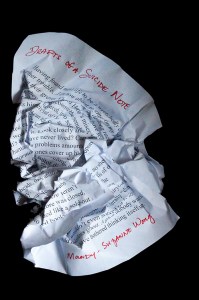
Drafts of a Suicide Note has received some very special support in ways that are highly unusual for a novel of its kind. As far as I know, you can only die once; but Aetna Simmons has left behind ten suicide notes, all different: different voices, different looks, different inks and penmanships. Michelle Rosquillo, my truly magnificent editor at Regal House, suggested to the wonderful Editor-in-Chief, Jaynie Royal, that my wild dream of seeing Aetna’s documents rendered as illustrations—something I’d diffidently asked for but never dared to hope for—mightn’t be too wild after all.
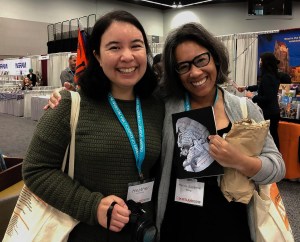

Heather Kettenis and Mandy-Suzanne Wong at AWP

The cost of illustrations, however, was prohibitive. Jaynie suggested that I ask the photographer who’d taken my headshot if she might be able to help. Well, my photographer is my longtime bestie and soul-sister, Heather Kettenis. Heather has done papercraft, digital collage, and photography all her life. She’s also a hardworking physician. But she made the time to help to make my dream come true. We explained our idea and Aetna’s bizarre story to other artists who happen to have interesting handwriting, and they agreed to help as well. Rich Andrew, screenwriter and editor; Mark “Metal” Wong, breakdancer and performance artist; Kathryn Eddy, painter, collage artist, and sound artist: they became the “hands” of Aetna Simmons, some of her proliferous tentacles. I’d made up her words, they were already in my novel; the artists wrote them down in their distinctive ways; Heather photographed what they had written and made the images ready for print. She created more of Aetna’s documents on her own, using a combination of papercraft and digital techniques.

After that, Heather still had more to do. What image could possibly lend itself to the cover of a book called Drafts of a Suicide Note? Long story short: Rich, who’d read the manuscript, came up with an idea that Jaynie and Michelle and I refined in our minds. But how to execute it? Only one person we knew had the necessary skill and believed in the book enough to want to make it come to life.

I’ll never forget the afternoon Heather and I spent smashing pieces of my manuscript and photographing the balled-up scraps inside my piano bench. My job was to hold up black skirts and white tissue paper, absorbing and reflecting the Bermuda light as the sun moved slowly westward and Heather, bent over the camera on the tripod, said, “A little to the left . . .”

On my next birthday, my mom presented me with the actual smashed-up piece of paper that made it onto the cover, mounted in a black-box frame.

And the book? Well, it exceeds my wildest dreams.

Why are there so many Russian matryoshkas in Drafts of a Suicide Note? Those things are totally clichéd, and they’re probably symbols of reproductive fecundity, which couldn’t interest you less. What is up with the matryoshkas?
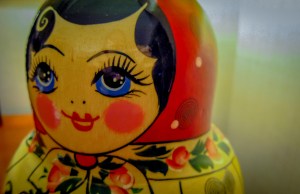
No matryoshkas appear in Drafts of a Suicide Note. But you’re right, I’ve been sort of mesmerized by Russian nesting dolls since I was a child. The best ones are unquestionably works of art, often painted by underappreciated women artists. But that’s not the main thing. I’ve spent some time staring at one of my favorite matryoshkas—a simple one with flowers—and wondering why I like these things, let alone find them mesmerizing. When you open the outer doll, which you do with a sort of splitting, not a twisting motion, there’s another doll inside with the same face. You open the inside doll, and there’s another one inside it with that same face. And so on. Yet you’re absolutely right that I’ve no interest in self-replication. I think the main thing is this. You break me open, but I’m still here. Break me again, but I’m still here, break me again and again until you reach the hard kernel at the very base of me that cannot be broken, that may have no resemblance to anything, and that is nonetheless still me. I think that’s what matryoshkas say to me.

What’s next for you?

I’ve got two novels in the works at the moment. One is still in its early stages, a novel about Ayuka Watanabe, the subsistence free-diver who stars in my fiction chapbook Awabi. The other I’m hoping to finish by the end of the year. Right now I’m calling it The Box. It’s a novel in six second-hand stories, each presented by a different narrator with a different voice and style, about a puzzle box that only some people can open as it’s lost and found and lost and found, changing hands again and again in a city that’s undergoing some strange effects of climate collapse. In no case is any narrator simply telling their own story; they’re telling stories they’ve heard from others. There’s no particular protagonist. It’s very experimental for me, really a lot of fun. The pay might leave something to be desired, but I do love my job.

Mandy-Suzanne Wong was the winner of the Digging Press Chapbook Series Award (Awabi, Digging Press, 2019) and the Eyelands International Flash Fiction Competition. Her work has also been shortlisted for the UK’s Aeon Award. Her stories and essays appear in The Spectacle, The Hypocrite Reader, Conclave, Sonic Field, Quail Bell, The Island Review, and several other venues. She is a native of Bermuda, where she’s writing a new novel and her first nonfiction book.

Filed Under: Author Interview, Regal Authors, Regal House Titles, That's My Story Tagged With: Drafts of a Suicide Note, Mandy-Suzanne Wong, That's My Story

The Indie Book Scene: A Vibrant, Innovative Space

September 23, 2019 Leave a Comment

Jaynie Royal & Pam Van Dyk at SIBA

RHP senior editor Pam van Dyk and I were in Spartanburg, SC, last weekend for the SIBA conference. It was marvelous to connect with a crowd of passionate bibliophiles from indie bookstores and other independent presses. The indie book scene is such a vibrant, innovative space, one that is propelled forward by those who care deeply about connecting readers with books – and that dedication was certainly on display at SIBA. It was our first year attending;  we were delighted by the warm welcome that we received, and we left with a renewed commitment (not that it had ever wavered) to find ways to support and promote our local indie bookstores that play such a vital role in our respective communities. It was exciting to be a part of the literary hubbub and to cheer on other indie presses that are beginning operations and to connect with and learn from those who are entering their second decade of successful operation.

Publishing can be a tricky business to navigate. In the first year or two of Regal House operations, I had innumerable questions and much to learn—not having entered the field via any conventional route—and Joe Biel of Microcosm Publishing in Portland was unstintingly generous with his time and advice (I highly recommend his recent book to any venturing into the publishing field: A People’s Guide to Publishing. I am inserting a link here directly to Microcosm’s website, since the very best way you can support an indie press is to purchase their titles directly from their website! Unless a brick-and-mortar bookseller is hosting an event – and then we would encourage you to attend their event, get a signed copy, and support your local bookstore!)

It has been five years now since the founding of Regal House Publishing, and I could not have imagined then the enterprise that we are now, with a nonprofit arm, two imprints, a dedicated editorial team, over ninety phenomenally talented authors in our RHP community, and titles being released all over the world. And in truth, ninety percent of that growth has transpired in just the past twelve months!

My strong feeling, half a decade down the line, is that our House must be built (for, indeed, the construction never ends!) on generosity and respect —with a generosity of spirit, as demonstrated by Joe Biel, to assist, nurture, and promote opportunities for others in the field, whether they be new to the publishing field or aspiring authors; and a respect for the awe-inspiring talent of the authors who populate our House, each of whom has labored many a year over the manuscript they entrust to us; a respect for our hard-working editorial staff who burn the midnight oil in advance of distribution deadlines and who unfailingly volunteer their time to work on our nonprofit Pact Press anthologies; a respect for our distribution partners, IPG, who work tirelessly to get our titles on to bookstore shelves; a respect for brick-and-mortar indie booksellers who are battling minimum wage hikes (without the option of raising product prices), price undercuts by Amazon, and the ever-pressing costs of overhead; a respect for our printing partners, McNaughton & Gunn, who work diligently to supply beautifully printed copies of our catalog, right here in the U.S. For they, too, like other printers nationwide, are battling hikes in the cost of paper, just as cheap printing rates offered by China lure business across the ocean; and a respect for debut authors who are sending out their literary everything, whose bravery astounds and humbles me on a daily basis.

The publishing industry, with all its knotted complexities, is not for the faint of heart, but I delight daily in being a part of it.

Jaynie Royal is the Founder and Editor-in-Chief at Regal House Publishing and the Director of Literary Outreach at Regal House Initiative. She is the author of the historical fiction novel, Killing the Bee King, and lives and works in the lovely city of Raleigh, NC, in company with her husband, three children, and a Great Pyrenees puppy called Max.

Filed Under: About Regal House, Regal House Publishing Staff

Authors Speak Out on America

September 16, 2019 Leave a Comment

By Jan Alexander

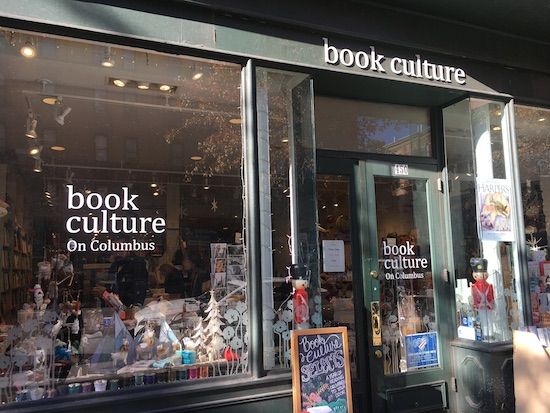
This Thursday evening, Sept. 19 at 6:30, at Book Culture Long Island City, NY I’m going to be introducing a panel called Authors Speak Out on America, with three fabulous writers whose latest books shed light on what it’s like to be at the receiving end of  America’s most pressing social injustices.

Our own Loretta Oleck, who has a haunting poem called “Laya & Aseel” in Pact Press’s We Refugees, will talk about her work with people like the two girls she depicts at a Syrian refugee camp.

Melissa Rivera will talk about her new novel, The Affairs of the Falcons,  about an undocumented immigrant from Peru and the myriad Faustian deals  she has to make just to keep her children fed.

Roxana Robins, whose latest novel, Dawson’s Fall, is based on the true story of her great-grandfather’s crusading work for civil rights in the post-Civil War South, will talk about a time and place that laid the foundations for much of our present-day racism and obsession with gun ownership.

My own new novel, Ms. Ming’s Guide to Civilization, is set largely in China. So why am I bringing a panel of writers together to talk about America?

In part because my title character, a young writer named Ming, inhabits a China and a New York that have a lot of similarities. Both are full of people whose lives revolve around making money—lots and lots of money, as if they’re living in some primal fiefdom where you win the game if you can pile all your gold into a gilded tower and taunt the other 99 percent as they  scrounge for handouts below. Money bores Ming, who wants her life to revolve around the pursuit of truth and meaning. She has quixotic dreams of saving the world from banal greed.  If she’s kind of a Doña Quixote, she has a worthy Sancha Panza in her friend from the struggling-to-pay-the-rent side of Manhattan, Zoe.

In my novel Ming and Zoe meet a mysterious Chinese hermit who turns out to have some magical powers, and the three of them concoct a scheme to remake the world into what they’d like it to be—a paradise of knowledge and economic equality. I knew, even while I was laying the groundwork, that their utopia was going to backfire when human nature intervened. I didn’t know how much of the more-or-less complacent real life I’d led in the United States—granted, a complacency existed only if you were white—was about to blow up in my face on Nov. 8, 2016.     

I had pursued a graduate degree in Chinese studies and lived in Asia for a time as an alternative to that perceived American complacency. But I was back here by 2016, and suddenly everything seemed different; suddenly we live in a country that feels like an ad hoc experiment in the flip side of everything my characters defined as “civilization.” A country where a certain faction seems to believe refugees deserve to live in fear and squalor, undocumented immigrants deserve to be deported to the places they fled, people of color are a threat of some kind, if you’re poor it must be because you’re not working hard enough. In my most pessimistic moods I wonder if the writer’s mission to expose truth and meaning still carries weight—or are we headed for a future in which exposés are just entertainment and even hurricanes blow wherever a president’s whim decides to send them?

But then I think about how the whole planet is shifting in ways that will change the lives we’re accustomed to living, and how we need the kind of facts and fictions that help us understand our fellow humans and what they’re going through. That’s why I’ve been interviewing authors who write about the state of America in its infinite variety for Neworld Review, and why we’re having this panel. We won’t solve the country’s problems in one night, but we hope to shed some greater truths.  


Jan Alexander is the author of Ms. Ming’s Guide to Civilization, Getting to Lamma, and co-author of the nonfiction book Bad Girls of the Silver Screen. Her short fiction has appeared in 34th Parallel, Everyday Fiction, Neworld Review, and Silver Birch Press. She has written about business and travel for many publications and taught Chinese history at Brooklyn College.

Filed Under: Regal House Events Tagged With: Book Culture, Jan Alexander, Loretta Oleck, Ms. Ming's Guide to Civilization, We Refugees

Four Dead Horses

August 26, 2019 2 Comments

Martin Oliphant had always hated horses. Their staggering stupidity. Their unexplained, unexpected, and ever explosive snorting. The way they twitched distinct patches of their skin to dislodge flies. The way they shied madly at the most innocuous occurrences: a golf umbrella at fifty feet; a leaf falling from, of all places, a tree; a bale of hay stacked exactly where it’s supposed to be stacked and had been stacked for the last month.

Martin Oliphant hated horses but he didn’t, it must be said, wish horses dead. It must be said because horses died around him. Died or almost died. At Martin’s hand or almost at Martin’s hand. And it was horses, dead ones mostly, that blazed the trail to his life-forging passion. Horses brought Martin to cowboy poetry, and horses, live ones mostly, were cowboy poetry’s central theme.

Opening lines of KT Sparks’ Petrichor Prize winning novel Four Dead Horses (Regal House, spring 2021)

KT Sparks

Regal House: So, as a debut author who no one has ever heard of, isn’t it a bit pretentious to start an interview quoting yourself? It’s not like you just finished penning Profiles in Courage.

KT: Oh, absolutely. But I’m a complete egomaniac. It’s why I’ve been able to start writing novels at my late age (I’ll be 116 when Four Dead Horses comes out). It takes a unique brand of self-focused tunnel vision to say to your family: “Yeah, I’m sure you all need college funds and health insurance and not to have your decrepit old mother showing up on your doorstep having blown through her retirement savings and needing a loan for a knee replacement. But the world is calling on me to lock myself in a trailer, drink an Olympic swimming pool of coffee, and send forth 300 pages worth of words on the subjects of folk literary arts, midwestern men, western values, and equine mortuary science.”

But that’s not why I wanted the book’s opening up top. It’s because, when you decide to title a book Four Dead Horses, you better be ready to explain quickly why that’s the case.

Regal House: Four Dead Horses is the story of a corpulent middle-aged Midwestern pet mortician who, despite hating horses and occasionally (and always unintentionally) contributing to their deaths, dreams of performing with the real cowboys at the Annual Elko Cowboy Poetry Confluence. Is the novel autobiographical?

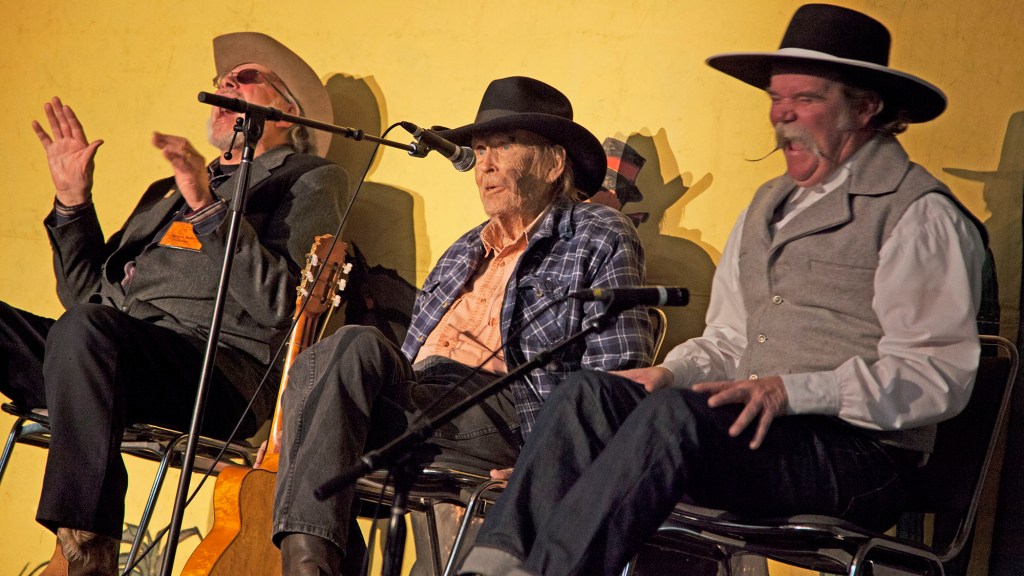
KT: Well, I’m neither male nor in the business of burying animals nor residing in Michigan (any longer). And my BMI is in the normal range for a woman my age, though I’d love to do something about that visceral fat, but hormones, what are you going to do? The small town on the shores of Lake Michigan in which Martin is raised is based on my home town as it was in the early eighties, and Martin and I would have been at the University of Chicago around the same time (I’m sure he was in my Political Order and Change class). I also, much to my own surprise and like Martin, fell in love with cowboy poetry while writing the novel. I even went to the Cowboy Poetry Gathering in Elko, Nevada on which my fictional Annual Elko Cowboy Poetry Confluence is based. It was fantastic—cowboys (and cowgirls and Mexican vaqueros and Native Americans) with rodeo belt buckles the size of dinner plates and dents in their foreheads from bull busting in standing-room-only crowds straining to hear other identical cowboys (and cowgirls, etc., etc.) perform poetry. It was art integrated with real life and hard work and dusty open plains in a way you just don’t see on the literary circuit out East.

Cowboy Poetry Gathering in Elko, Nevada

Regal House: What led you to hone in on Martin Oliphant as a main character? Aren’t you afraid the sad-sack-Midwestern-white-guy-hero’s-quest market is already saturated?

KT: There’s always room for another entry in the poetry-spouting-pet-mortician canon, don’t you think? And I’m a sucker for a character who, despite relentless failure, pursues a completely improbable and inappropriate set of life goals. It’s funny (I hope) and also tragic in a particularly Midwestern way, the lengths to which Martin will go and what he’s willing to sacrifice to hitch his chuck wagon to an idealized vision of the West. He misses out on a lot of opportunities for a rich life at home in order to pursue a version of the American dream that probably doesn’t exist, and certainly not for him.

Regal House: So you’re saying Martin’s a MAGA-type?

KT: Absolutely not. He supports the arts! He’s with Hickenlooper all the way.

Regal House: OK then, what about the movie? Who plays Martin?

KT: Jonah Hill, no question about it. But he’d have to put the weight back on.

KT Sparks is a farmer living in the Shenandoah Valley of Virginia. Her short fiction and nonfiction have appeared in a numerous literary magazines. Her first novel, Four Dead Horses, won Regal House Publishing’s 2019 Petrichor Prize and will be published by that Regal House in spring 2021.

Filed Under: Author Interview, Regal Authors, Regal House Titles Tagged With: Petrichor Prize winner

How to Write a Teacher Novel

August 23, 2019 1 Comment

Become a teacher. You were always a writer. But Ronald Reagan is president; the world doesn’t need another Up the Down Staircase, To Sir with Love. People are making money. Nobody wants to read about your little public school problems.

Leave Minnesota and follow your wife’s career to Berkeley. Find some 8th graders in Oakland to teach. When your classroom starts to shake, run to the blacktop. Watch San Francisco burn across the Bay. When a bullet comes through your window, call the police. When they show up the next day, take comfort when the cop says, “Don’t worry, they weren’t shooting at you. It was just random gunfire.”

Follow your wife’s career to New York City. Try to find some 8th graders they will let you teach. Really, really try. If you can make it there, they say. Learn from your students about Tupac and Biggie and Suge. Edit their pieces entitled “They Robbed Our Bodega Again” and “Meet My Brother’s Pit-bull, Rage.” Watch them dance the merengue. Tell them stories about your Midwestern childhood, chasing fireflies in the dark. Laugh when they say, “Yo, that’s like in a book. You should write that down.”

Read a memoir by a New York City school teacher, a skinny Irish guy with bad teeth, about his mother’s ashes. Start to think about your stories. You are a New York City school teacher. You are skinny and Irish and have bad teeth. You have a mother.

Follow your wife’s career to Boston. Teach the children of the pale and affluent. Learn about lacrosse and dressage and eating disorders and cruises to St. Thomas. Take pleasure in driving through the wooded hills of New England suburbia, past Robert Frost’s stone fences. Edit your students’ astonishingly well-crafted stories. When they ask if you have written any short stories, resent their impertinence, then take up their challenge.

When their parents offer to send you to a writing camp called Bread Loaf, panic, then thank them. Relax when you realize Robert Frost is no longer there to judge you. Rejoice when you are placed in the workshop of a young woman named Egan, who looks like a model and is the smartest person in a roomful of smart people. Rejoice again when she reads aloud a scene from your teacher story and says, “That is so funny, that’s as good as it gets.” (Remember those words: you will live off them for fifteen years). Despair when she adds, “But that ending has to go, it just doesn’t work.” Question her judgment; that ending is brilliant.

Go home. Put your teacher story in your bottom desk drawer. Take it out six months later. Note that that Egan lady was correct and the ending still doesn’t work. Change the ending. Send your teacher story out into the world. Get it published. Write other teacher and non-teacher stories. Get rejected. Get accepted. Get rejected.

Reread your first teacher story. Realize that it is bigger than you thought; it holds multitudes. Panic when you realize it wants to be a novel. Breathe: Barack Obama is president now; perhaps the world is ready for another teacher novel, a different teacher novel.

Spend a decade of summer vacations writing, rewriting your teacher novel, in your basement, in coffee shops, at an arts colony in the Adirondacks, spinning out your gritty New York City tale beside a blue mountain and a blue, blue lake. Finally, send your teacher novel out into the world.

Open an email. Read the second paragraph first, which sounds like rejection: It was a very tough decision. Read further: You have been selected as a finalist for the Petrichor Prize. Consider the possibility that you have, at sixty-one, secured a position in a Russian ballet company. Read the opening of the email, disinter the lead: We would be delighted to publish your novel, Class Dismissed.

Make reservations for yourself and your wife (whose career you are no longer following) at The Painted Burro. Order two margaritas, light on the salt. Then order one for your wife.

Regal House Publishing is delighted to bring you Kevin McIntosh’s novel, Class Dismissed, finalist for our 2019 Petrichor Prize, in 2021.

Kevin McIntosh‘s short stories, many dealing with the teaching life, have appeared in the  American Literary Review, Beloit Fiction Journal, Chicago Tribune, Jabberwock Review, Potomac Review, and elsewhere. Stories conceived during residencies at Ragdale and Blue Mountain Center were nominated for Best New American Voices and the Pushcart Prize. By George!, Kevin’s musical biography of the Gershwin brothers, was produced at his alma mater, Carleton College, and given a staged reading at the Playwrights’ Center in Minneapolis. He continues to write and teach writing in Greater Boston.

Filed Under: Author Interview, Regal Authors Tagged With: Petrichor Prize

How the Stories Began…

August 14, 2019 Leave a Comment

Every time I visited Ireland, my father would ask, ‘What kind of rent are ye paying over there?’ I would admit that Paris rents were high – even then, ours was what would soon be called a thousand euros. But we loved it.

My father’s questions may have eventually influenced the decision we made, shortly before the millennium, to buy a place. There were still some bargains to be found in Paris. We soon found a small apartment, applied for a loan, and waited. In a parallel move, using a small sum supplied by my dear and now departed parents, I bought a smaller place I hoped to use for writing. Writing was all I ever wanted to do, but there was never enough time, or a place for it.

We gave notice on our rental, a lovely place near Bastille with marble fireplaces, parquet floors and ceiling moldings. It was one room too small. The owner promptly put it up for sale, having paid too much for it some years earlier during a kind of boom. She had been very fair and easy to deal with, so when her estate agent announced he was bringing a client to visit, I pulled out all the stops.

The agent and the client visited one evening after dark. I had the lamps lit, Mozart piano in the background. The client told the agent he wanted to buy it. Now there was no going back. We waited for news of the loan. And waited. After what already seemed too long a time, I started harassing the bank. My husband’s work schedule didn’t allow him to hang onto the phone for an hour during the day. Anyway, he was too nice to harass anyone. My teaching schedule was more varied. I finally rustled up suitable interlocutors at the bank. At first hesitant, they finally suggested I call the insurance company dealing with the loan. Again, there was a lot of delay. I sensed kerfuffle and kept digging. The purchase of the writing studio went ahead.

I finally managed to wiggle it out of the insurance: my husband was unacceptable for a loan application, because he’d had stomach cancer. The cancer had been removed some months earlier, along with 4/5 of his stomach (that was when we learned that the digestive system is ‘outside the body’ – think about it). He hadn’t received treatment because he hadn’t needed it. His oncologist’s report, which we’d supplied to the bank and the insurance, contained one magical word: CURED.

Back in those days this wasn’t enough for the insurance. They refused the loan (they’re no longer allowed to refuse a loan in France on those grounds). Our rental lease came to an end. We packed up our stuff and got a removal company to drive it all to my new writing space, which luckily had a kitchenette and a tiny bathroom.

A Parisian siesta

There was torrential Parisian rain the day we drove past the hospital in the removal truck, and eased into the narrow street to our new abode. Everything looked sad and run-down in the rain. Some buildings were in bad condition and would later be evacuated by the city before restoration. The removal guys worried for us. All the things that had seemed attractive and even romantic when I’d found a suitable – and cheap – place to write, especially on a sunny afternoon (narguileh parlors, Chinese herbalists, a broad variety of foreign food and music places) seemed to them doubtful.

That night, our boxes piled to the ceiling, we lay in the only flat space left on the floor. The move began to look like a terrible mistake. My gentle husband felt it was his fault. In fact, it turned out to be the best thing that ever happened. We were about to discover, only a short walk from central Paris and its tourist hotspots, a universe teeming with immigrants of all stripes with their problems and the exacerbation of these by French habits and rules – or their own misunderstanding of these.

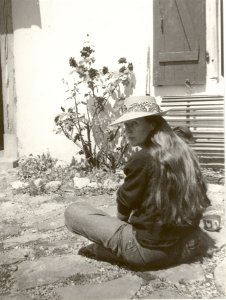
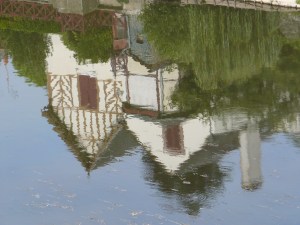
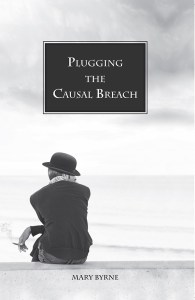
It was an amazing revelation and a life-enriching experience. I was paying attention to a new place, where our own dilemma, and my status as another immigrant, drew me to relate better to those of my new neighbors and friends. I’d had some success with a few early short stories when living in Morocco. Now, more stories were inspired in that Paris quarter, and Plugging the Causal Breach was born. 

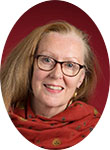
Mary Byrne graduated in English and Philosophy from University College Dublin. She has been a scientific and academic editor, French-English translator and English teacher in Ireland, England, Germany, Morocco and France. She now lives in Montpellier, and loves philosophy, art, and anything baroque.

Filed Under: Author Interview, Regal Authors, Regal House Titles Tagged With: France, Mary Byrne, Plugging the Causal Breach, short story collections

On Writing: Karol Hoeffner’s Notes from Budapest

June 3, 2019 Leave a Comment

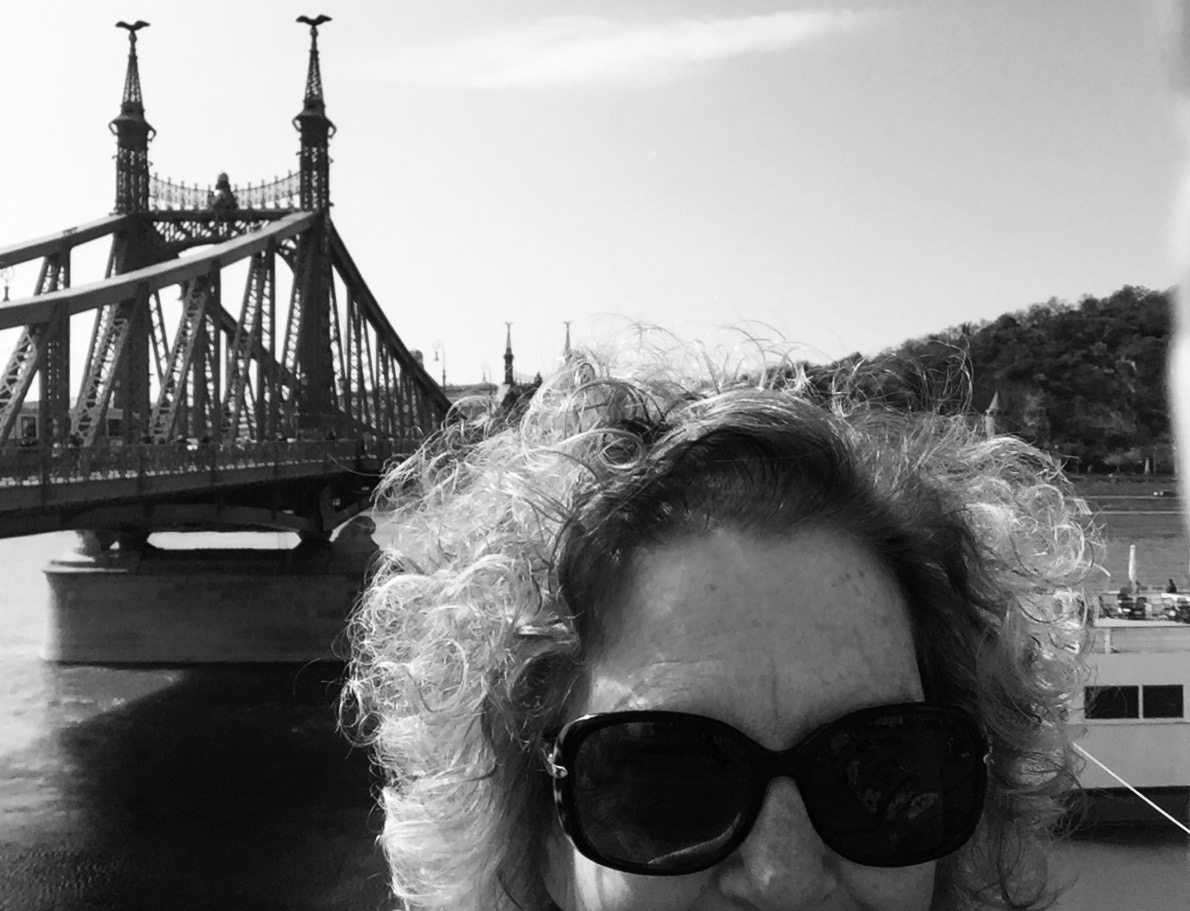
I just returned from a month-long working vacation to teach screenwriting workshops in Hungary at the Budapest Film Academy. My family, friends, and colleagues were tucked away in their busy lives, so I traveled solo back to the city where I worked for four months in the fall of 2017. I immediately recognized the ornate art-deco door to the courtyard of my old apartment from the backseat of my cab. I even remembered which of the multiple keys belonged to the four locks on my gated door and how you had to turn the key counter-clockwise twice to unlock it.

I unpacked one suitcase and, slightly jet-lagged, ventured out to my favorite grocer for supplies:  water and yogurt.  The street where I once lived basked in the hazy light of late afternoon. I passed a tiny tot on a scooter followed by her bear of a father, gently guiding her past the street cafes. I breathed in the familiar smell of cigarettes wafting my way. I listened to the cacophonous refrain of a language I neither speak nor understand. 

And halfway down the block, I literally ran into a former Hungarian student strolling toward me.  He hugged me and said, “Karol, I was just thinking about you.”

I was back in my Hungarian hood experiencing the exhilaration of being in a foreign city that no longer feels foreign. After a good night’s sleep, I ambled down half-empty side-streets to the Central Market, a once cavernous train station that was now a bustling farmer’s market. Later, I was swept up by crowds on a busy boulevard leading to the Danube. And remembered how much faster Europeans walk than Californians! The pace in Budapest brings to mind a high-speed autobahn, while strolling in Los Angeles more closely resembles the steady slog of the 405 Freeway during rush hour.

I developed a theory that explains the difference, and stick with me, because in that theory resides a moral lesson for writers. Throughout the morning, I passed hundreds of people.  But I did not see one person talking or texting on their cell.  Not one.When I boarded a crowded tram at Kalvin ter for the square at St. Stephen’s Cathedral, I did note two tourists on their cells. But the locals were gazing out the window, lost in the sweep of city scape.

I wondered if Hungarians pocket their cells because of the distances they travel on foot; maybe they want to keep their hands free for cigarettes or street food – my personal favorite being langos, warm fried bread bubbling with cheese. In Los Angeles, the farthest we walk is from a parked car to our destination. We cross streets, heads down, cell phones in hand, checking messages, Instagram, and funny cat videos.  Because we can’t bear the thought of missing anything.

And in doing so, we miss everything.

The inner working of a writer’s life is defined by the interplay between experience and writing.  But the backbone of experience begins with noticing.  I decided to put my cell away for the rest of the trip. That night, I had an Aperol spritz at the tiny café next door and eavesdropped on a conversation by three expats.  I pretended to be writing in my journal; instead, I wrote down what they said. Among their more memorable comments were the following two:

“In Scotland, God is harsh.”

“My five-year-old niece said that Daddy’s most senior but mommy’s in charge.”

I have no idea where those lines will lead or what they will unlock, but they are worth noting. Since most of my overheard conversations were in Hungarian, I began to focus not on what people said, but how they behaved. And suddenly, standing in lines no longer felt annoying; eating alone no longer seemed lonely.  Both were opportunities to observe life I might miss if I was scrolling through my emails.

I amused myself by making up stories about the people I saw, like the woman in a half-empty restaurant who left her four friends at the bar to answer her cell.  She crouched on a footstool near the door, her head bowed, her brow furrowed. She spoke in forceful staccato beats. I surmised she was either breaking up with a bad boyfriend or plotting the demise of a mortal enemy.  I also considered that she might be in real estate and closing a deal.

But the point is when we cannot participate in language, our sensory awareness heightens. I found it so much easier to journal in Europe, not because I had more time. But because I had noticed more during the day and therefore had more to write about at night.

What marks us as writers is that we are a noticers of life. We are born observers. We are expert spies, listening in on other’s people’s lives.  We not only pay attention to details, we wallow in them. But if we walk through life glued to our cell, we’re not in the world. And if we’re not in the world, we miss out on the stories that surround us in plain sight. So, as writers, let’s stow our cells. Ignore the pings. And aspire to become chroniclers of life because we took the time to notice the details.

Karol Hoeffner is the Chair of Screenwriting at Loyola Marymount University in Los Angeles. She has fourteen film credits including several Danielle Steel adaptations, a television mini-series Harem, movies-of-the-week based on true stories – TheMaking of a Hollywood Madam and Miss America:  Behind the Crown. Among her other credits are the original movies, Voices from Within and Burning Rage. She has penned two young adult novels, All You’ve Got, and Surf Ed.

Filed Under: Regal Authors, Regal House Titles Tagged With: Karol Hoeffner, writing craft

The Birth of a Short Story Collection: Women of Consequence

March 22, 2019 Leave a Comment

I’ve been writing short stories full time for the last ten years, and I’ve been fortunate enough to see a good number—more than eighty—published. But although I’ve got piles of journals and anthologies featuring my work lying around, though I can Google up dozens of my stories in online publications, and though I’ve received awards and recognition for individual pieces, what I wanted was a book—a whole book with just its title and my name alone on its cover.

            For a short fiction writer, a book means a collection of stories, and the expectation is that these stories will be connected somehow— by theme or by setting, for example, or by recurring characters. It seemed to me that I could satisfy any one or all of these approaches, as I had plenty of stories with intersecting characters, motifs, and locations. I tried basing collections on road trips, on works of art, even on parenting. Unfortunately, though some of these collections drew compliments and even recognition, none yielded an offer of publication. After a decade of hard work, I still didn’t have my book.

            The idea, when it came, struck with the force of a cultural tidal wave: several of my most successful stories feature women as either narrator or principal antagonist. Moreover, these stories about mothers, daughters, lovers, sisters, and female friends reflect—and are unified by—an idea central to my writing: Kafka’s assertion that a literary work “should be an ice ax to break up the frozen sea inside us.” And so, Women of Consequence came to be.

            Why “Consequence” in the title? Because it’s a term that allows ambiguity. The women in my stories are more often cautionary tales than role models. Some are victimizers, some are victims. But the characters in Women of Consequence approach the world with boldness and creativity: a fallen starlet revives her career by voicing a wretched dog-man in an animated horror film; hoping for greater profit, a surrogate nearing her due date runs off to Mexico with her valuable cargo; a meals-on-wheels driver with an eating disorder survives on bits picked from the dinners of her clients; a casting agent hires a performance artist to nurse her new baby; to become eligible for an exclusive dating service, a young professional pretends severe colorblindness; a dangerously overprotective mother attempts to destroy her child’s faith in his physical senses. These and the other women in this collection may or may not achieve their goals, but the consequences of their efforts are inescapable.

            Readers may find the premises of some of these stories disturbing. A surrogate running off with the baby she carries? A mother stripping her child of his senses? And several of the stories feature ghosts and surreal or supernatural phenomena. But if the stories of Women of Consequence disturb, they do so because they represent a kind of exaggerated familiarity. The object is not simply to shock, but to compel readers to reflect on their own lives and the thickness of the ice of their inner frozen seas.

More than seventy of his short stories have been published or are forthcoming in print and online journals such as The Georgia Review, The Florida Review, The Baltimore Review, The Pinch, Post Road, Nashville Review, A-Minor Magazine, Yemassee, The Madison Review, The Doctor T. J. Eckleburg Review, The Los Angeles Review, PANK, Superstition Review, Tahoma Literary Review, and Zymbol. Gregory’s work has earned six Pushcart Prize nominations and his stories have won awards sponsored by Solstice, Gulf Stream, New South, the Rubery Book Awards, Emrys Journal, and The White Eagle Coffee Store Press.


.

Filed Under: Regal Authors, Regal House Titles

  • « Go to Previous Page
  • Page 1
  • Page 2
  • Page 3
  • Page 4
  • Go to Next Page »

Footer

The Regal House Enterprise

Regal House Publishing is the parent company to the following imprints:

Fitzroy Books publishing finely crafted MG, YA and NA fiction.

Pact Press publishing finely crafted anthologies and full-length works that focus upon issues such as diversity, immigration, racism and discrimination.

The Regal House Initiative, a 501(c)(3) nonprofit that conducts project-based literacy and educational outreach in support of underserved communities.

From our Blog

Dockside Books: An Up North Haven for Thinkers, Adventurers, and Creatives

Tombolo Books: a book lover’s loveshack in downtown St. Pete, Florida

That’s My Story: Regal House Publishing (RHP) Interviews Novelist James Janko

  • Facebook
  • Twitter
  • LinkedIn
  • Google +
  • Email
Regal House Publishing · © 2017–2025 · Website design by Lafayette & Greene
 

Loading Comments...