• Skip to primary navigation
  • Skip to main content
  • Skip to footer

Regal House Publishing

Advancing Finely Crafted Literature

  • Home
  • About Us
    • The Origin Narrative of an Indie Press
    • The Regal Mandate
    • Our Imprints
    • The Regal House Initiative
    • Regal House Publishing Staff
    • Our Professional Affiliations
    • RHP’s Climate Commitment
    • Helen Keller Intl
    • RHP Summer Scholars Program
    • Contact & FAQ
    • Blog
  • Authors
    • Our Authors
      • Regal House Authors & Poets
      • Fitzroy Books Authors & Poets
      • Pact Press Authors & Poets
    • Forthcoming Publications
    • Sour Mash: RHP’s Southern Literature Series
    • Fugere Books: RHP’s Novella Series
    • Regal House Reading Series
    • Author Resources
  • Submissions
  • Marketing & Distribution
    • Our Distribution and Printing Partners
    • Subsidiary Rights
    • For Retailers
    • Events
    • A Conspiracy of Lemurs Podcast
  • Contests
    • The Fugere Book Prize for Finely Crafted Novellas
    • The Petrichor Prize for Finely Crafted Fiction
    • The W.S. Porter Prize for Short Story Collections
    • Past Contests
      • The Kraken Book Prize for Middle-Grade Fiction
      • The Acheven Book Prize for Young Adult Fiction
    • The Terry J. Cox Poetry Award
  • SHOP

Blog

That’s My Story: David Ebenbach on Fiction, the Writing Process & Jokes You Love

September 3, 2024 Leave a Comment

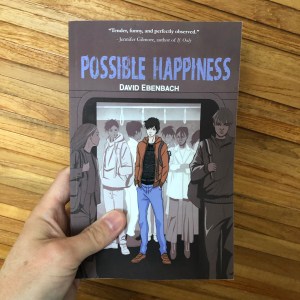
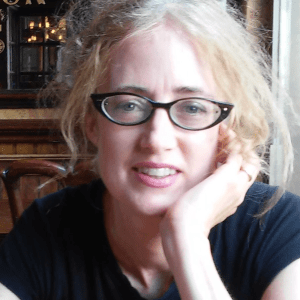
The RHP team sat down with David Ebenbach, author of Possible Happiness, to chat about fiction, humor, and the writing process.
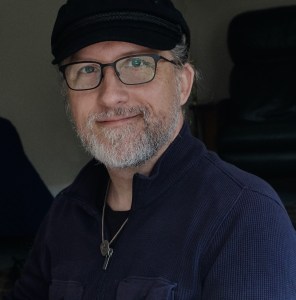
We’ve all heard the advice that authors should “write what they know.” But fiction emerges from imagination and creation of new worlds. Do you feel a tension between what you’ve experienced and what lives only in your mind?

This question was a big one for me in the writing of Possible Happiness; on the one hand, this is definitely the most autobiographical novel I’ve ever written, with a protagonist who’s a lot like me and who’s spending his teen years coming of age in the same place and time that I did (Philly in the late 80s), and the character spends the book going through a lot of all-too-familiar dramatic emotional experiences. On the other hand, almost none of this book actually happened, or at least not in this way, or with these exact people, or in this order, and so on.
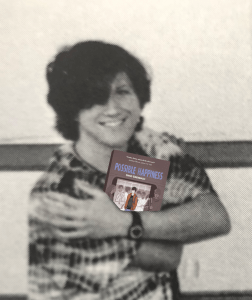
Let me explain. I started working on this book by thinking about what my teen years were actually like and writing down what the major events were. So that was the foundation. But I was aware from the very beginning that I was going to need to make major, fundamental, continuous changes to this raw material to make it work as a novel. Life, after all, has too many people in it, and in the real world things happen in chaotic and plotless and often meaningless ways. Life therefore isn’t the best material for fiction—unless you transform it, do whatever you need to do in order to make it work. So I changed people, events, timing, feelings, consequences. Everything.

And yet still—the novel is kind of true all the same. In fact, that’s exactly why I changed and falsified so much: to make it true.

What’s the role of humor in Possible Happiness?
I think humor is a very serious thing. I didn’t think so when I was just starting out as a writer, when I was very concerned about being taken seriously, and so a lot of my early work is a bit humorless, which I can now see made it more one-dimensional than it had to be. But I now see that humor is crucial to fiction. It’s crucial in part because it’s a big part of life, not to mention a significant source of pleasure and meaning in my own experience. It’s also crucial because, as the writer Dylan Krider once observed, humor intensifies surrounding emotions. He said, in a lecture I once heard, something like, “If you want to make a story sad, make it funny. If you want to make it scary, make it funny.” I guess it’s like adding salt to a recipe; you add humor to make everything else more vivid. You probably also do it because it’s funny.

How long did it take you to write your book? How many revisions has it undergone so far?

Oh, boy. I started writing this book in 2018. So that’s six years ago! And—*consults notes*—the final version of the novel is apparently version #22. Though that doesn’t mean that I wrote twenty-two full drafts of the novel—not at all. I just like to create a new draft (with a new number) whenever I make any kind of significant change, even if it’s just to a single chapter or scene. So that number means that there were twenty-two times when I made a big-enough change to save the document as a new draft. But the book certainly did go through a lot of revision. Characters were dropped altogether, events rewritten or replaced, threads added. Scenes and sentences interrogated like murder suspects. It’s part of the deal. I passionately hate revision, but I do it because the book needs it, and my job is to make sure the book gets what it needs.
Do you belong to any writing groups or communities, either online or offline?

Yes! I wouldn’t be any kind of writer at all without community. For starters, I am buoyed every day by the positivity and energy of my online communities on various social media platforms. (I’m not kidding! I know people say terrible things about social media, but I get a lot of positivity from my connections there.) But I also depend on feedback and support from the more focused writing group I’m in. We meet about once a month to share prose, and the people in the group—Angie Chuang, Melanie McCabe, Emily Mitchell, and David Taylor—are not only wonderful writers (go check out their books if you don’t believe me—or even if you do believe me!), but also incredibly wise readers with excellent advice, and lovely human beings who help me stay at it when I’m thrown off by doubt. Without them, Possible Happiness probably wouldn’t exist, and, even if it did, I bet it wouldn’t be worth reading.

What’s your favorite joke?

Do you know the one about the duck who goes into a bar to ask if they have any grapes? I love that one. That duck is so persistent! Do ducks even eat grapes? The first time I heard the joke, I laughed off and on for several hours. I won’t bother you by retelling it here, though, because it’s long and not too many other folks think it’s quite as funny as I do. But, if you’re interested, you can find a retelling of the joke in my short story “Out of Grapes,” which is in my collection The Guy We Didn’t Invite to the Orgy and other stories (which, maybe it goes without saying, is not a YA book). And anyway I’m a big believer in holding tight to a joke that you love, even if (especially if) you love it more than anyone else does. And maybe, now that I think of it, that advice applies to a lot more than just jokes.
Filed Under: Author Interview, Regal Authors, That's My Story Tagged With: author, fiction, humor, interview, Philadelphia, YA

That’s My Story: Beth Castrodale on Literary Adventures, the Importance of Friendship & the Influence of a Depression-Era Corset Maker

August 15, 2024 2 Comments

In the lead-up to the publication of her novel The Inhabitants, Beth took part in a virtual sit-down to discuss her writing process, the role of friendship in her writing, and more.

What’s your process for writing: do you outline, create flow charts, fill out index cards, or just start and see where you end up? Do you use the same process every time?

I find rough outlines invaluable for working out story arcs for first drafts of novels, and for helping me complete those drafts in a reasonable time frame. In the absence of such advance planning, I once spent 12 years writing and revising a novel, which I vow to never do again.

But I never hew strictly to outlines. They’re just general guides, and once I get down to writing, stories and characters inevitably take on a life of their own, which is one of the things I enjoy most about writing.

I’ve created a rough outline for every novel I’ve written since the one that took 12 years to finish, and I can’t imagine I’ll ever skip this step in the future. My life isn’t getting any longer!

We’ve all heard the advice that authors should “write what they know.” But fiction emerges from the imagination and the creation of new worlds. Do you feel a tension between what you’ve experienced and what lives only in your mind?

Personally, I find it most engaging to write about situations–and from perspectives–that are quite different from what I’ve experienced. To take my most recent novel, The Inhabitants, as an example, the protagonist is a portrait artist, and she moves into a house built by an architect whose creations were said to influence the mind. Although I’m not a visual artist, and the protagonist’s house is purely my own invention, I loved the possibilities that arose from placing someone who’s visually attuned into such a mentally, and emotionally, stimulating space. (And the space is haunted, no less!) To give some examples from my other novels, I’ve also written from the perspective of a (male) rocker-turned-gravedigger and a Depression-era corsetiere.

For me, novel writing is perhaps my greatest source of adventure–a way to immerse myself in diverse characters’ inner lives and to see how they confront various challenges, both internal and external. To my mind, writing about someone who’s a lot like me, and who shares many of my own experiences, would be the opposite of an adventure, and I think I’d lose interest pretty quickly.

I wouldn’t say that there’s a tension between what I’ve experienced and what lives only in my mind, because when I’m deeply immersed in my writing and in a character’s world, I kind of lose my sense of self. However, I certainly draw on my own experiences when I’m writing about characters who are grieving, falling in love, dealing with an upheaval in their lives, or going through just about anything else that most of us typically face over time.

What role has friendship played in your evolution as a writer?

A huge role. I’m thinking in particular of a dear friend, the poet Beth Gylys, whom I’ve known since first grade, when both of us attended a since-demolished elementary school outside of Pittsburgh. When Beth and I first met, I’m not sure that either one of us sensed that writing would be the thing we most wanted to do with our lives. But storytelling was part of our relationship from the start. For one thing, we used to wander around a cemetery near our suburb, read the names on the gravestones, and make up stories about some of the people buried on the grounds.

During recess, instead of playing hopscotch or kickball with the other kids, or swinging our way across the monkey bars, we’d make a wide circuit around the playground, talking and talking. I can’t remember the topics of our conversations, but it seemed as if nothing could be more important than whatever we were discussing. Through experiences like this, we built a bond that lasted for years and across many miles after Beth’s family moved back to New Jersey and mine moved to Ohio. Beth has remained a beloved friend and an inspiration to me as a writer, and we’ve supported each other through many ups and downs when it comes to writing and life in general. Beth has also been a thoughtful, insightful, and generous commenter on my work.

What surprising skills or hobbies do you have?

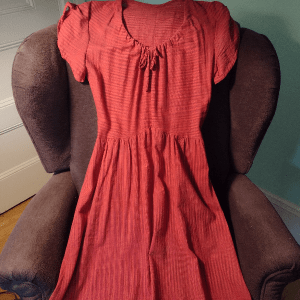
One of Beth’s hand-sewn dresses, based on a forties-era pattern

One kind of odd hobby I have is sewing dresses by hand. Although I have a sewing machine, I don’t like being rushed by the mechanics of it, and I find it far more relaxing and rewarding to set my own pace and to have the sensory experience of working with a needle and thread.

This all started when I was working on my début novel, Marion Hatley, whose eponymous protagonist is a Depression-era corset maker. The retro nature of the novel inspired me to order some vintage patterns and sew some older-style dresses. It’s been a lot of fun, and I love it that so many old-school patterns are available online.

What’s next for you?

A scene from the family farm that inspired Beth’s novel-in-progress

I’m in the early stages of writing a novel that’s set on a farm inspired by a fourth-generation farm in my family. The story involves a land dispute that threatens the ongoing existence of the farm, which the protagonist has been left to run by herself, for the most part. The dispute stirs the protagonist’s great-grandmother to return to the world of the living and step into the action, on the protagonist’s behalf. But it turns out that she wants more than to just save the land, setting the protagonist up for a struggle that’s far bigger than what she’d bargained for.

Beth Castrodale is the award-winning author of three novels: Marion Hatley, In This Ground, and I Mean You No Harm. Her latest novel, The Inhabitants, will be released by Regal House Publishing in fall 2024.

Filed Under: Author Interview, Regal House Titles Tagged With: author, Beth Castrodale, interview, The Inhabitants

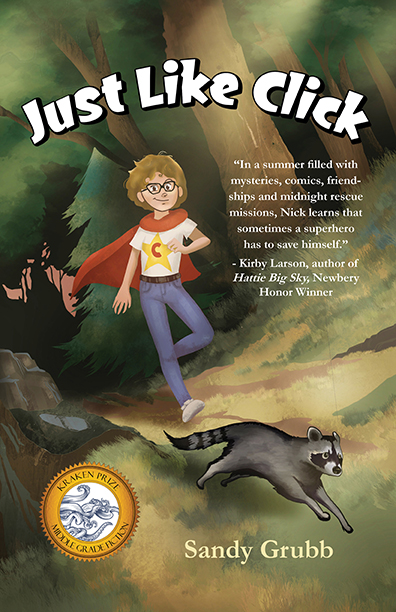
That’s My Story: Sandy Grubb and Just Like Click

April 15, 2024 Leave a Comment

We recently interviewed Sandy Grubb, the 2022 Kraken Contest winner for her middle-grade novel, Just Like Click, which released yesterday, April 16, 2024. Just as Sandy has been inspired by so many talented authors who came before her, her adventure story with heart and humor is certain to inspire a new generation of readers. We hope you enjoy the conversation.

RHP: Your book is out in the world! How does that feel?

SG: I’m elated. I’m humbled. I’m jittery. I have all the feels, all at once. But I’m so grateful to my family and friends who encouraged my dream of publishing a children’s book. And I’m grateful to my agent, Stephanie Cardel at Lighthouse Literary, and you, Fitzroy Books, for picking my book out of the masses of manuscripts you receive every week and recognizing something special in my pages. I wrote a story about fifteen years ago that slightly resembles Just Like Click. I would pull it out every couple of years and play around with it, making minor changes in my characters and plot. In the meantime, I began really studying writing and realized what a mess that story was. I started all over about seven years ago, and my debut is the result.

RHP: We’ve all heard the advice that authors should “write what they know.” But fiction emerges from imagination and creation of new worlds. Do you feel a tension between what you’ve experienced and what lives only in your mind?

SG: I believe a writer should definitely write what she knows but shouldn’t stop there. A writer’s life experiences inform and enhance her imagination. The more experiences she has, the more her imagination will range far and wide to create exciting stories and intriguing characters.

Imagination is a mysterious phenomenon. No doubt we draw from all the movies, books, and TV shows we’ve consumed along with our real-life relationships and activities. In a way, it’s like having our own personal version of AI running full-time in our brain. For Just Like Click, I drew from my childhood love of Superman comics and our family’s favorite vacation spot at Black Butte Ranch. My characters in the story are a conglomeration of my own family, friends, students I’ve taught, and myself. Ideas may come to me when I’m poised with my fingers hovered over my keyboard, when I’m out for a walk, or when I’m about to fall asleep at night. Imagination is at work all the time. When ideas come, I quickly write them down.

RHP: Which author most influenced you?

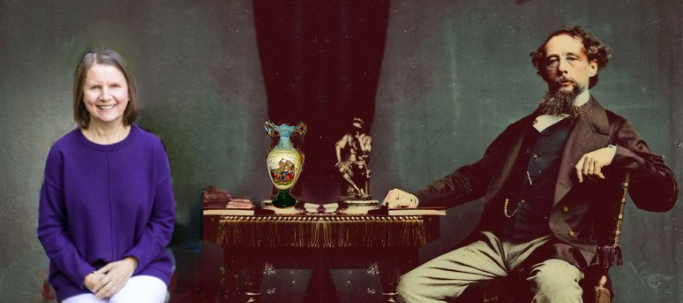
SG: In the eighth grade I discovered Charles Dickens. When I finished Great Expectations, at first, I was just impressed with myself for reading such a long book. But that story and Dickens’ writing have continued to inspire me. When I was applying to colleges, the Stanford application asked me what kind of book I would write. I told them, I’d write a story that reflects today’s society the same way Dickens did for his time. I can’t match Dickens’ genius, but the books I write for children are all contemporary stories with universal life themes showing struggles kids face today. I recently listened to the audio version of Tale of Two Cities. It played like a movie in my head. Dickens swept me into his vivid world. I hope I can do that for the readers of my books.

RHP: What’s your favorite joke?

SG: It turns out laughter is good for our health in many ways. Humor is just as essential as breathing. I take it seriously and work it into my writing and my life. The humor I enjoy best springs up organically, often from the quick wit of a friend or within the dialog of my story. Those are the kind of laughs we explain by saying, you had to be there. I also appreciate slap-stick humor or stand-up comedy, in the right place. If I were trying my hand at writing a stand-up routine, I may deliver something like this:

I told my husband I’d like to fly to Paris for the weekend to gain inspiration for a story I was feeling stuck on. When my husband called me delusional, I almost fell off my unicorn. I explained that if I don’t fly business class, our kids will. My wonderful husband agreed. I wanted to blend into the Paris scene, so I shopped for some camo pants, but I couldn’t find any. On the flight, a lively little girl ran up and down the aisles, disturbing everyone. Eventually she ran into the flight attendant and knocked a cup of hot coffee out of her hand. As the attendant was cleaning up the mess, she glanced at the little girl and suggested, “Look, why don’t you go outside and play.” In Paris, I began posting videos on TikTok, thinking it would help spark my imagination. I was addicted to the hokey pokey, but then I turned myself around. When my husband told me to stop impersonating a flamingo, I had to put my foot down. I finally came home when I broke my arm. I explained to my doctor I had broken it in two places. He told me to quit going to those places.

RHP: What difference do you hope your book will make?

SG: Recently, blogger Melissa Taylor (Imagination Soup) listed many reasons children benefit from reading, including cognitive development and increasing their capacity for empathy. As a former teacher, I understand how literacy opens doors of opportunity throughout life. So, first of all, I hope my book will spark more children to become life-long readers. Sometimes it only takes one special book to get them started. My world growing up was not much bigger than my neighborhood, but I “traveled” around the world in the books I read.

More specifically, I hope readers of Just Like Click will come to realize that they have superpowers and can choose to use them to change their world, to help themselves, and to help others.

RHP: What advice would you give to an aspiring author?

SG: Live generously. Practice bravery. Read widely. Write even when you don’t feel like it. Find your writing people. Don’t forget to laugh. Don’t be afraid to start over. Never give up.

Indeed, writers are among the bravest people I know. We compose words from our hearts and put them out to the universe for review. When rejection comes, we tell ourselves it’s not personal, but it almost always stings. Perhaps it’s the rejection that makes praise all the more glorious. When Fitzroy Books chose my novel as the winner of the 2022 Kraken Book Prize for Finely Crafted Middle Grade Fiction, my joy broke loose in tears.

Filed Under: Regal House Titles

FLAGSHIP BOOKS: A Vibrant Addition to an Old Kansas City Neighborhood

February 13, 2024 Leave a Comment

by Catherine Browder

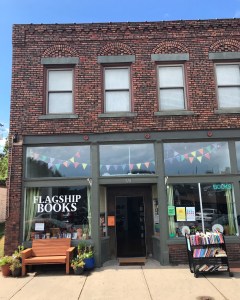
Flagship Books celebrated its second anniversary in the historic Strawberry Hill district of Kansas City, Kansas, on January 27, 2024. Brothers Ty and Joel Melgren left a more residential block and moved uphill to their current storefront in April of 2023. The old downtown district of Kansas City, KS, with Strawberry Hill nearby, is perched on bluffs overlooking the confluence of the Missouri and Kansas rivers. This once Central European neighborhood is enjoying a multi-national renaissance.

“Here, we’re in the heart of Strawberry Hill,” Ty explains.

Currently, at 510 N. 6th St., they enjoy steadier foot traffic, a third Friday Arts Walk, burgeoning and established businesses, and a busy Mexican restaurant across the street. Next door you can find a hairdresser, an auto body shop and a gym. The Strawberry Hill Neighborhood Association meets at Flagship, as does a monthly Big Open Book Club, where patrons “come and hang out and talk about books.” They are a neighborhood business and proud of it.

During the recent AWP#24 conference, Flagship hosted off-site readings for Indy and university presses, including three Canadian presses. In its short life it has offered book launches for several local authors and is scheduled to do another in early Spring of ’24 for veteran KC poet, Trish Reeves. A table to the left of the entrance features local authors. Indeed, its support of local writers is one of its great appeals.

Melgren brothers: Ty (l) and Joel

What was once a grocery and bar in the 1950s later became a yoga studio and then a real estate agency. The pressed tin ceiling, the polished hardwood floors and brick walls are original.

Over five years ago, Joel Melgren joined the real estate agency that had offices in the space. When the space became available to rent, the brothers thought it fit their project: to build a business that was both fun and community-oriented. The space is modest, but deep and airy. Displays racks, shelving and tables are movable, and the arrangement was different each time I visited.

Joel is the financial half of the enterprise, the one originally interested in establishing a business. Ty, with a side-job as an ESL teacher, makes the literary choices, revealing wide-ranging taste. On a day I visited, among a selection of popular new books, I found Clare Keegan’s latest and Danny Caine’s updated How to Resist Amazon and Why, while Sarah Smarsh’s work appeared on the regional author table. A “small book” title by Wendell Berry, Think Little, sat on a wall shelf. Ty has developed an interested in physically “small books.”

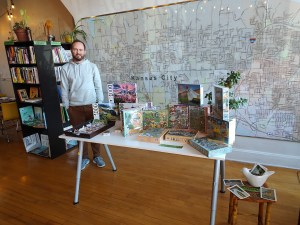
In the center stands a tall multi-sided display of well-curated used books, both recent titles and classics. In the rear, beyond a settee and chairs, is the children’s section. An enormous map of Wyandotte County, KS, covers the north wall and was in place when the brothers moved in. On the north side, is a table for meetings or art activities. The wall behind the table is covered in a white board where, that day, a drawing of Strawberry Hill was displayed. Children are free to draw on the board. Flagship recently hosted a clay artist.

Ty standing with wall map of Wyandotte, Co, Ks.

Ty points out the art work decorating both north and south brick walls: framed paintings by local Croatian artist Elaine Grisnik. Grisnik has been documenting Kansas/Missouri buildings for years. And on the central table displaying cards and stationery, puzzles and journals, Ty selects a postcard featuring work by Grisnik. The painting replicated on the card depicts Weiss Market and Bar, where Flagship Books now resides.

Strawberry Hill was settled in the late 1800s mostly by immigrants from Central and Eastern Europe: Croatia, Slovenia, Serbia, Poland, and Russia. The area is situated close to the West Bottoms of Kansas City, MO. Most of the newcomers were employed in the meat packing industry, located across the river in the Bottoms. Although the stockyards are long gone, the West Bottoms, now mostly warehouses, has burgeoned into a new art and entertainment district.

Early on, these European newcomers to Kansas City, KS, lived on the riverfront close to their stockyard jobs in Missouri. The 1904 flood destroyed these homes, forcing the community uphill. Highway and viaduct construction in the 1950s further intruded on the old Central European communities. Somewhat later Strawberry Hill became home to a sturdy Mexican-American community. And nowadays, Ty informs me, the area has become home to recent Burmese immigrants.

Even today, established communities in Strawberry Hill belong to two Catholic churches that anchor the area. The Croatian community still attends St. John the Baptist, and Holy Family Catholic Church, visible from the bookshop door, remains the Slovakian parish. St. John’s Park offers an impressive view of the Kansas City, MO, skyline.

A visiting humorist once referred to Kansas City as “a burgh the size of Asia.” He was referring, probably, to the larger Kansas City, in Missouri. But the Kansas City Metropolitan area, in fact, includes two states, both Kansas Cities and their suburbs, housed in five counties. “Spread out” is an understatement.

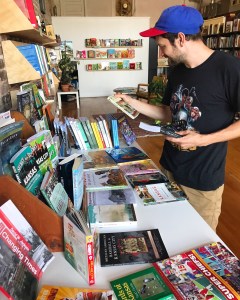
A patron looks over a table of Kansas City related books

Flagship Books, actually, began its life in a different part of the greater Kansas City Metro: North Kansas City, MO. Ty had recently been brought home from a State Department teaching job in Tunisia because of the pandemic. Home at that time was family, living in Mission, KS. He continued remote teaching for the State Dept, but online teaching was not something he enjoyed.

The brothers began brainstorming ideas for a business they might both support and enjoy. When Joel, the real estate agent, sold a duplex, they had the money to invest. The Iron District in NKC was geared for an outside space since the pandemic was still an issue. Businesses and patrons were looking for outside spaces, and the Iron District offered unique shipping containers. The Melgrens started tentatively, but people did come. Since the shop was housed in a shipping container, they thought the bookstores might best he named for a ship.

“But not a battleship,” Ty adds with a laugh. “Eventually we settled on Flagship-Joel had the idea. It served us well even though we outgrew the original space.”

They remained in the Iron District for nine months. Since they lived in Kansas, they felt motivated to return. When the first Strawberry Hill location opened, they were ready to move. Eventually, the real estate agency space on N. 6th St. became available, and the Melgren brothers willingly moved once more.

“We are more visible here,” Ty explained during one of my visits. “We have people in their 60s or older stop by to chat because they remember the location, remember Weiss’s grocery store or the people who lived upstairs.”

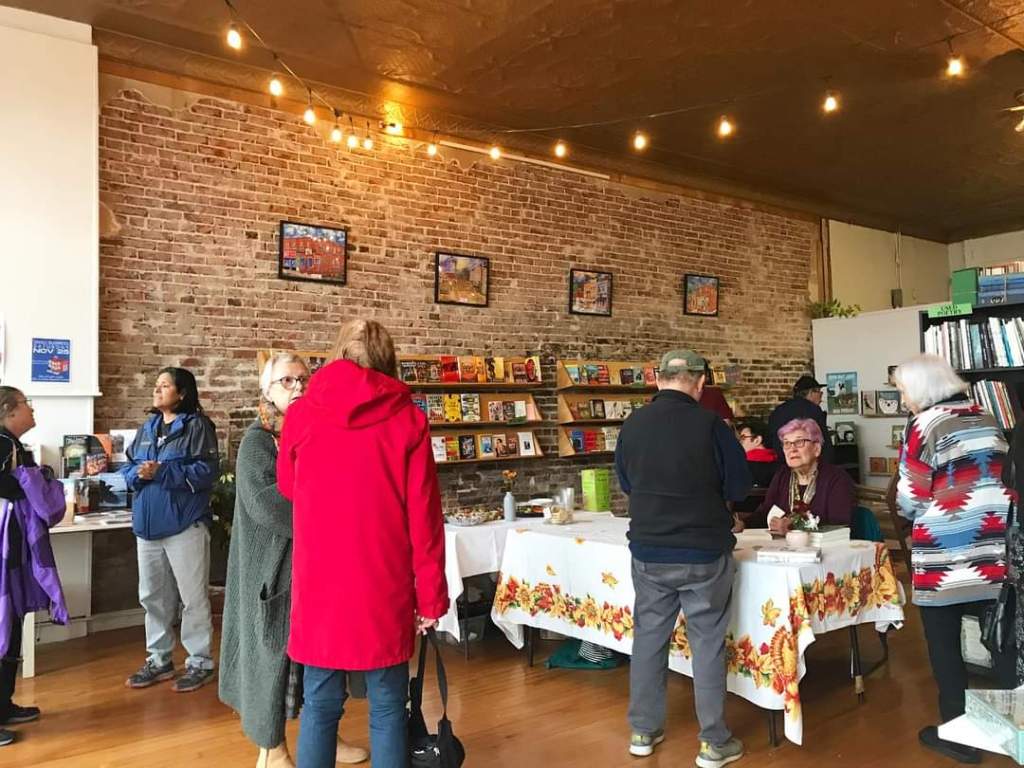
A 2023 book launch for The Manning Girl

This connection to Strawberry Hill’s past appeals to the brothers. Yet Flagship has both the comfortable, and comforting, atmosphere one expects of a bookshop, as well an as appealing community engagement and youthfulness. They’ve hosted local artists and printmakers as well as indie bands as part of the annual music festival organized by Manor records. They even offered a Chilean Music Night with the Kansas City Latin Jazz Orchestra.

The Melgren brothers’ commitment to local writers is proving to be another strength. One of the newest bookshops in the Metro, you increasingly hear people refer to Flagship. More readings and book launches are scheduled. Its social media sites are appealing and up to date. And more writers and writers’ organizations, as well as readers, are beating a path to its door.

Catherine Browder lives and writes across the river in Kansas City, MO. Her novel, The Manning Girl, (winner of the Petrichor Prize) was published by RHP in November of ’23 and has been selected by the Kansas City Public Library as a Book Club Book. She has published four collections of short fiction, including the award-winning Resurrection City: Stories from the Disaster Zone, about the NE Japan disaster of 2010. She is a recipient of fiction fellowships from the NEA and the Missouri Arts Council, and her work has appeared in anthologies and been nominated for a Pushcart.

Filed Under: Book Bound, Regal House Titles Tagged With: BookBound, Catherine Browder, Flagship Books, Joel Megren, Ty Megren

Eat, Drink, and Storytell: Life’s Essentials at M. Judson Booksellers

January 24, 2024 Leave a Comment

by Beth Uznis Johnson

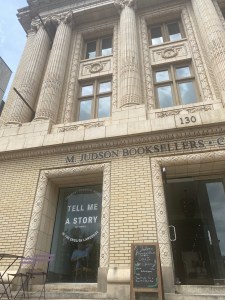
The exterior of M. Judson Booksellers impresses with 1918 architecture.

The women who founded M. Judson Booksellers in Greenville, SC, were not deterred by the economic reality in 2015. At a time when many indie bookstores were closing across the US, and amid the rise of a certain-unnamed-profit-gobbling-ecommerce-giant trying to force customers to buy and read books on screens, they accomplished an incredible feat: bringing the experience of books and stories back to downtown.

In a ‘go big or go home’ move, M. Judson Booksellers opened its doors in the historic courthouse building in the center of Greenville. The store’s exterior is impressive, with brick pavers, antique street lamps, grand stairs, and 1918 architecture with its ivory-colored façade and terra cotta ornamental trim in the Beaux Arts style. Once inside, the landmark experience of M. Judson continues to inspire not only readers of all ages, but lovers of food and drinks, and anyone looking for the perfect South Carolina gift.

“You’ll find our shelves bursting with books we can’t wait to tell you about, bestsellers and new releases, everything from poetry to Southern Lit to cookbooks, as well as gift items gathered from all over the Upstate. We’re proud to be more than just a bookstore; we’re a home for stories,” says Ashley Warlick, an M. Judson founder, novelist, and creative writing professor.

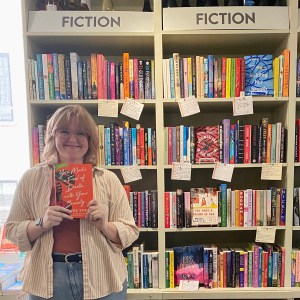
M. Judson event manager Alyssa Fiske showcases the fiction section.

The store is named after Mary Camilla Judson, a historic Greenville feminist and the first Lady Principal (they really called her that!) at the Female College of Greenville. Camilla Kitchen is the café inside M. Judson serving up delicious treats and drinks with stories of their own.

M. Judson is a general interest bookstore with selections in every genre. The children’s section is huge, with areas to read and play at a 14-foot community table. It is built around themes children love, such as cooking, STEM, art, trucks, and animals.

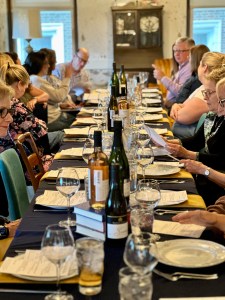
Guests attend a Sunday Sit-Down Supper to enjoy a literary-themed meal.

Literary-themed events are an important aspect of the M. Judson experience, with most events requiring tickets, including a book, and selling out. These are not your traditional bookstore events with an author behind a table signing books. Most are interactive, such as the Sunday Sit-Down Supper series where a chef prepares a meal inspired by a novel and attendees gather around a beautifully set table to dine and discuss. Camilla Kitchen offers book-themed cooking classes or demonstrations. The events calendar is packed with experiences, like an evening with symphony music, open-mic nights for writers, book and wine pairing events, and more.

“I think we have found the way to connect with our community and our readership here in Greenville and show them how to better support the literary world. Our goal is success for the people who are making and telling these stories. I do feel committed to that mission,” Ashley says.

The community component of bookselling has surprised her the most, with deepened ties as the store pivoted during the pandemic to meet its customers’ reading needs. Some patrons have continued having M. Judson staff read, select, and recommend books for them long after shutdown ended. Greenville is also a popular tourist destination, with M. Judson a must-visit destination for travelers. Ashley describes a beloved customer, who actually lives in California and saw on social media that the store offers book recommendations. Three years later, M. Judson still sends her books.

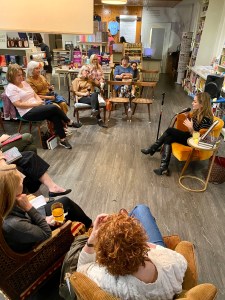
Author Katherine St. John discusses her book with event guests.

Nine years after opening an independent bookstore at a seemingly impossible time in history, M. Judson and Camilla Kitchen are thriving businesses in downtown Greenville. Firmly rooted in books and storytelling, often centered around food and drink, and providing a breathtaking experience both inside and outside the store, it is woven into the fabric of the city.

“We believe that stories don’t just come wrapped in book jackets. Sometimes they’re bottled in a wine, roasted in a bean, baked in a bread, woven into a tea towel, or created in a moment,” Ashley says.

Learn more about M. Judson Booksellers, upcoming events, or contact them to send you one of their famous “blind date” book selections to change things up in your reading life. You won’t be disappointed.

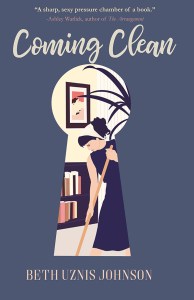
Beth Uznis Johnson’s fiction and nonfiction have appeared in Massachusetts Review, Broad Street, Mississippi Review, Cincinnati Review, Story Quarterly, Gargoyle, Southwest Review and elsewhere. Her essay, “Your Friend/My Friend, Ted,” was included in The Best American Essays 2018, edited by Hilton Als. Beth is the author of Coming Clean, released by Regal House Publishing on January 9, 2024.

Filed Under: Book Bound, Regal House Titles Tagged With: Beth Uznis Johnson, BookBound, M. Judson Booksellers

Volumes Bookcafe: A Beautiful Day in My Neighborhood

January 9, 2024 Leave a Comment

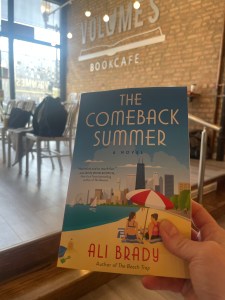
Volumes Bookcafe, Wicker Park in Chicago, 1373 N. Milwaukee Ave.

By Beth Uznis Johnson

Who remembers that glorious day in May 2020 when 28 authors from around the country released a reenactment of the library dance scene from The Breakfast Club to the song “We Are Not Alone”? I’d seen their faces on book jackets, Twitter, and a few in person at writing events over the years. Amid the isolation of the pandemic, to get this inside peek at their homes and dance styles was beyond thrilling.

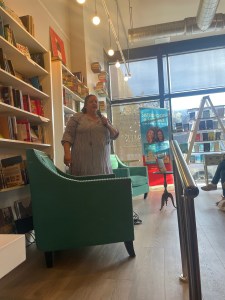
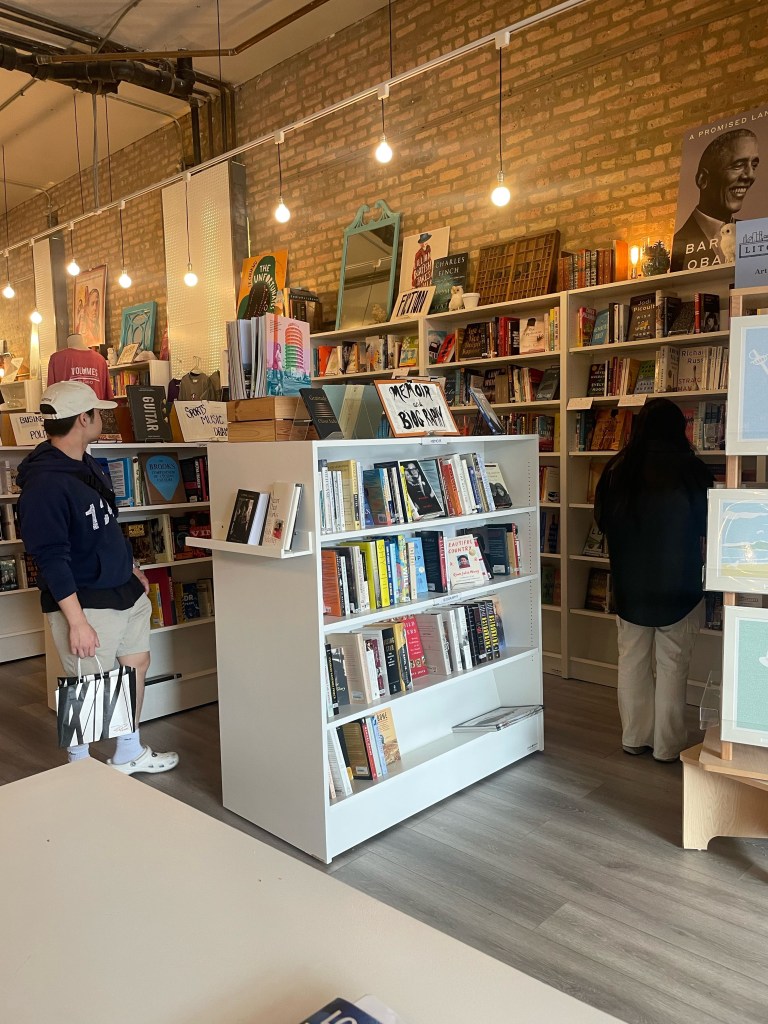
Themes of social justice proliferate all sections of the Wicker Park store.

Not only did they dance their asses off, they did it in support of Volumes Bookcafe, an independent bookstore in the Wicker Park neighborhood of Chicago. The video was conceived by Chicago author, Rebecca Makkai, who is also the artistic director of the nonprofit literary organization, StoryStudio Chicago. At the time, I was a Michigan-based writer without a neighborhood bookstore. To see the literary community rally behind a beloved bookseller touched me deeply.

It was a great day on literary Twitter. I watched the dance video at least 10 times.

It made me long to move back to Chicago, a vibrant literary community, with many indie bookstores sprinkled around its more than 200 neighborhoods. Flash forward to 2023 and I did move back. With the launch of my debut novel, Coming Clean from Regal House Publishing, slated for January 2024, I vowed to never live in a community without a bookstore again.

“Volumes, on Milwaukee Avenue,” my friend Claude said without hesitation, when I asked for the best bookstore around my new condo in West Town. I scrambled to open my maps app and couldn’t believe my luck: Volumes Bookcafe of Wicker Park was only 0.7 mile away. A 15-minute walk! A 7-minute bike ride! A 4-minute drive if I could talk my husband into dropping me off.

Even better, I can pick up Claude on the way. She’s only 0.2 mile away.

Come to find out my kickass neighborhood bookstore has an amazing neighborhood story. When a new landlord upped the rent (during the pandemic, no less), forcing Volumes to temporarily close their doors in Wicker Park, the neighbors rallied. They found a great location, crowdsourced funds to BUY the store space, and partnered with owners, sisters Rebecca and Kimberly George, to open a new, forever location at 1373 N. Milwaukee Ave.

With the community deeply invested in the store and the days of pandemic isolation in the past, Volumes has everything a reader (or writer) could ever need, starting with the heavenly new-book smell and knowledgeable staff who love and care about literature. Foot traffic in the store has returned and the in-person event schedule is back and growing.

Owner Rebecca George greets guests at an author event.

Rebecca, who spends the bulk of her time at the Wicker Park location, gives me her take on the book business, including:

  • 1. Physical books are a much-needed escape in a world where people spend far too much time on screens.
  • 2. Community bookstores are a reflection of the community itself and, in Wicker Park, that means a focus on fiction, science fiction, kids’ books, and nonfiction on topics of social justice, popular culture, and true crime.

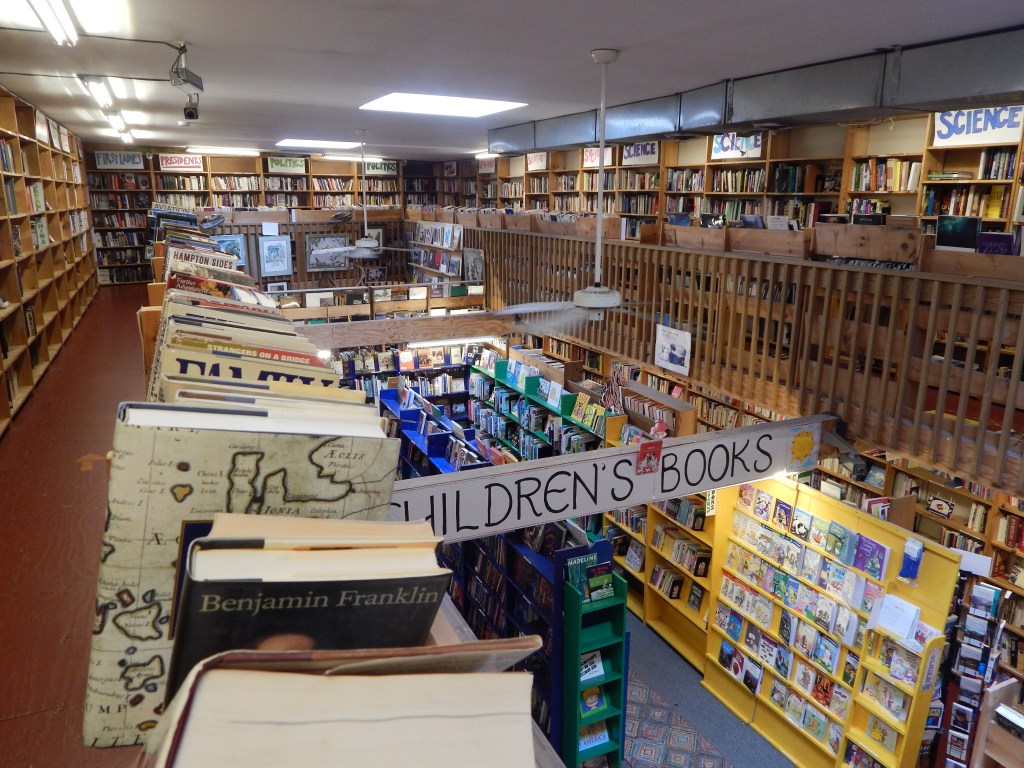
Volumes offers handwritten recommendations for books in all categories around the store, from its section featuring Chicago authors to carefully curated literary fiction, best-selling graphic novels, mysteries, memoirs, and on and on. The notes include quick plot summaries, staff picks, who liked the book and why. There are also novelty items and gifts for readers (and writers) like literary-themed mugs, t-shirts, bookends, and socks. There are cozy nooks for reading, a picnic table for discussions, and tables for work-oriented patrons. There’s a café with baked goods, coffee drinks, teas, and other refreshments.

Fiction, memoir, and biography, also popular in Wicker Park.

I sit with Rebecca while she checks out a customer, a man she obviously knows based on their rapport. He’s finally decided to use the gift card he’s been hanging onto, selecting a cookbook with glossy photographs.

“You’ll have to bring in some of the dishes you make and we’ll sample them,” Rebecca jokes. The customer laughs and pauses, seeming to seriously consider it. We chat for a few minutes and I wonder if there is a way to ask them to call me for this sampling party; I like to eat, especially when someone else cooks, and I’m new in the neighborhood and looking for friends.
After the customer leaves with his book, Rebecca shares there’s a story behind the joke: some amazing cookbooks were released in the spring of 2020, the early days of the pandemic, and a local mom and her kids had—indeed—continued to visit Volumes with samples of baked goods they’d made together.

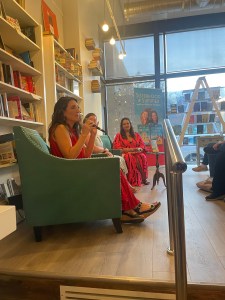
Authors Bradeigh Godfrey and Alison Hammer (aka Ali Brady) at the
launch of The Comback Summer

The café, Rebecca says, is especially nice to have during author readings and other events at the store. She tells me about a literary-themed private event the night before: a husband planned a surprise party for his wife that included an 8-course meal with themes from her favorite classic books. She was one of Volume’s first Wicker Park customers. She was really surprised.

Rebecca also tells me about a children’s book, The Story of Ukraine: An Anthem of Glory and Freedom, that Volumes took to local schools for student readings over the course of a week. The Wicker Park neighborhood is next to Ukrainian Village, where many Ukrainian families live. One child, from a refuge family, read the book to his mom three times and insisted on sleeping with it. Other classmates got enthused and decided to do an action project to support Ukraine.

My new Chicago neighborhood suddenly feels distinctly more intimate than the bookstore-less Michigan suburb I’d lived for more than 20 years. Strange how a big city can feel quaint; a suburb can feel vast and never ending. During the brief years a Border’s Books opened and closed, I never heard friendly chats between shop owners and customers.

Rebecca says Volumes loves to support new authors and local writers. She encourages me to attend some events at the store and recommends an upcoming Ali Brady launch, a summer beach read titled The Comeback Summer. So, I go. It turns out the author is the writing team of Chicago writer, Allison Hammer, and her friend, Bradleigh Godfrey. I’m amazed at the turnout: the bookstore is packed! It turns out the authors are members of the Women’s Fiction Writers Association, which has a large Chicago contingency. The WFWA members have come in droves to support the book.

As a proud member of the WFWA since its 2020 pandemic write-ins, I feel the warmth of the Chicago literary community like an embrace. How lucky to be here for the launch of Coming Clean. How amazing that Volumes Bookcafe is my neighborhood bookseller. How exciting to have Volumes in Wicker Park hosting my launch event on January 13, 2024.

How lucky I donated so many books before I moved and can now refill my shelves with all the great new literature. Volumes will see a lot of me in the years to come.

Visit Volumes for the launch of Coming Clean by Beth Uznis Johnson: Saturday, January 13, 2023, at 6:30 p.m. at Volumes Bookcafe, 1373 N. Milwaukee Ave, Chicago, IL 60622 Website: www.volumesbooks.com ; Instagram: @volumesbooks ; Facebook: @volumesbooks ; X: @volumesbooks

Beth Uznis Johnson’s short fiction and essays have appeared in Massachusetts Review, Broad Street, Cincinnati Review, Story Quarterly, Mississippi Review, Southwest Review, “The Best American Essays,” and elsewhere. She lives and writes in Chicago. Coming Clean is her first novel. www.bethujohnson.com

Filed Under: Book Bound, Regal House Titles Tagged With: Beth Uznis Johnson, BookBound, regal house publishing, Volumes Bookcafe

You’ll Always Be Welcome: Celebrating Lemuria Bookstore’s 48 Years with Founder John Evans

December 1, 2023 1 Comment

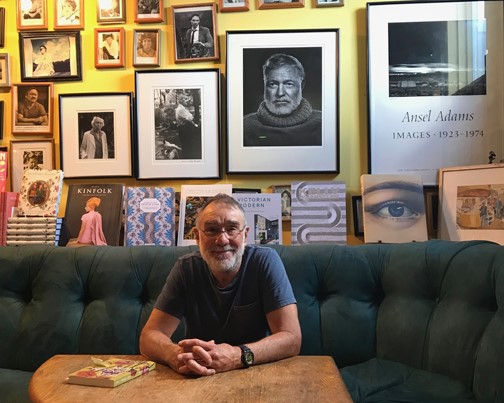
Gerry Wilson interviews John Evans, the founder/owner of Lemuria Books

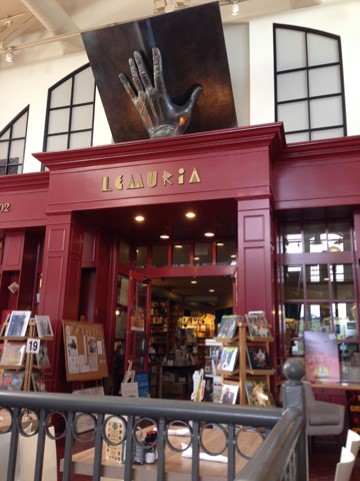
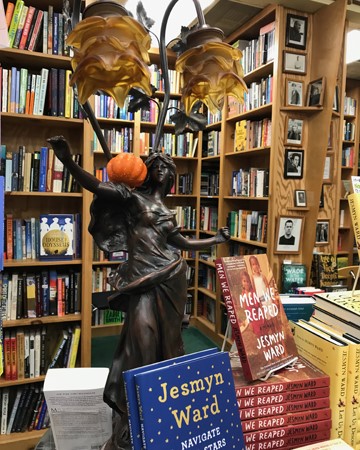
The façade of Lemuria Books would be impressive anywhere, but in Jackson, Mississippi, Lemuria’s doors represent the entrance to a long literary tradition. Lemuria’s founder and owner, John Evans, has a story to tell about the sculpture of a “book in hand” over the front doors.

He reminds me that Lemuria spent the early years (I was a customer even then) in a closet-size space in The Quarter, a small shopping center located on the outskirts of Jackson, and in Highland Village, which was a step-up location-wise, but it wasn’t John’s dream store. Lemuria moved to its present location, Banner Hall, in 1988. In the course of that move, John says, he immersed himself in design books and books about bookstores. He became enamored of Irish book shops and diners with unique entrances (think: a donut shop whose entry is a donut hole, or the old A&W root beer chain). Lemuria was settling in at the new location when the eBook craze began and threatened to take down physical book stores everywhere. That was when John settled on the symbol of the “book in hand” that would represent what was and is, for John and for readers, the essence of Lemuria. A design firm in New Orleans created the “sculpture.” Mounted over the front doors, the piece looks like a bronze, but to quote John, “If it were, you’d need a fortress to hold it up!” It’s striking just the same and speaks for Lemuria very well.

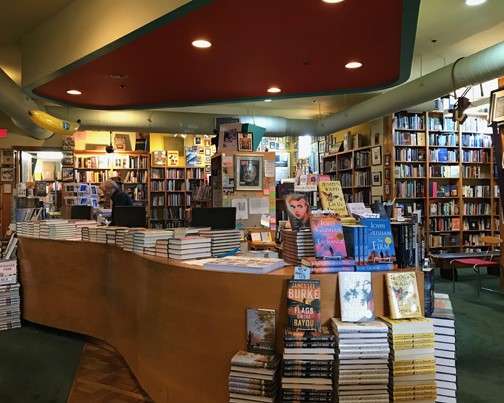
John will tell you that, even though much has changed over the years, Lemuria is the same warm place it was when the store first opened in 1975. The interior will remind you of someone’s lovely, dark-paneled home library. The staff are happy to help and/or make recommendations, but they won’t follow you around. You’re free to wander from room to room where the shelves are clearly defined for content.

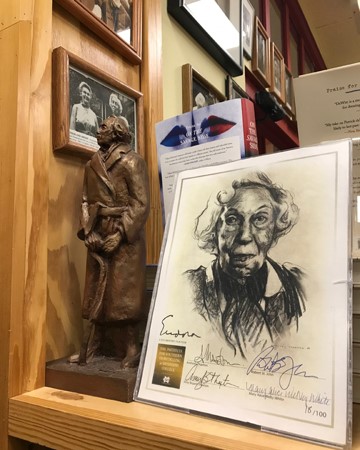
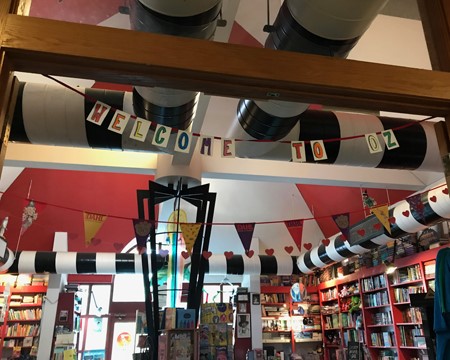
There’s the “Mississippi corner,” where Lemuria celebrates Mississippi’s literary chops with unabashed pride. I’m happy to have one book on those shelves already, and That Pinson Girl will be there soon, alongside all the “Mississippi greats” I so admire. There’s as fine a selection of poetry books as you’ll find anywhere. Looking for travel or food or nonfiction? Lemuria has them all. There’s a children’s and youth shop, too—OZ, a magical little place. Lemuria boasts all the accoutrements of a “good” book store space but goes one better. The First Editions Room houses an exceptional collection of books you may not find elsewhere, especially the classic, collectible Mississippi authors—William Faulkner, Eudora Welty, Ellen Douglas, Barry Hannah, Willie Morris—as well as the newer generations of writers: John Grisham, Richard Ford, Jesmyn Ward, Natasha Trethewey, Katy Simpson Smith, and many, many more. The Mississippi literary tradition lives on.

The photos I’ve included give you a taste of Lemuria, but they can’t tell the whole story. Only John Evans can do that.

He and I got together a while back. In the interview you may be struck, as I was, by his breadth of knowledge and his love for what he’s been doing all these years.

Here’s John:

GERRY: Lemuria’s website tells us, “In 1975, John Evans opened Lemuria in a converted apartment stuffed full of books in The Quarter in Jackson, Mississippi.” In 2025, Lemuria turns 50! To what do you attribute Lemuria’s longevity?

JOHN: Lemuria has many loyal writers, but we’ve maintained a malleable business plan that adapts as the industry changes. For the last 40 years, the industry has often been on a rollercoaster. We’re going through another period like that now. But Lemuria has maintained the loyalty of our readers and has been able to adapt to change.

GERRY: Lemuria has a very active visiting author schedule. Why do you think it’s important to provide the space where authors and readers come together?

JOHN: The answer goes back to when we [Lemuria] first began in the Quarter. A poet, Terry Hummer, came to me and wanted to do poetry readings in the book store. So we started having some poets come and read. The author list grew when the store moved [to Highland Village] around 1977-78. That’s when we met Ellen Gilchrist, we met Barry Hannah, we met Willie Morris, and we began to realize that writers being friends with the store made the books come alive and become more than a product. When books come alive, readers care more about them. It creates a more vibrant experience.

Also it’s fun! I didn’t realize when I started, but the ability to develop long-term friendships with writers has been a gift to my life. I’m not just somebody selling their books. They respect my work as I respect theirs.

So many writers who were great friends of Lemuria are gone. We can’t talk about the book store without talking about Miss [Eudora] Welty. What a gift. She shared so many of her friends [with the store]—like Walker Percy. Those friendships full of integrity and association wouldn’t have happened without her. John Grisham is another writer who has allowed the book store to stay out of debt!

GERRY: How do you want your customers to feel when they walk into the store?

JOHN: Relaxed! If they’re relaxed, they’re comfortable to explore. I’m a believer that books find you; you don’t just find them. Being a browser is like being a prospector; you’re trying to mine something that gives you something that’s unexpected, that makes it a special experience.

GERRY: What are the greatest challenges facing book store owners today? How do you address them?

JOHN: I think the most important thing today is to figure out how to maintain your upstream identity to the publishers and the value you bring to them. In 2020 the trade show was cancelled. That was where I went with staff, made the one-on-one contacts, discovered what books fit for us, what authors to befriend and/or bring to Jackson. I worked with Richard [Howorth] at Square Books in Oxford to “put Mississippi on the map.”

But so many people [in the book industry] quit because of Covid. It’s been difficult working with new people, but we have done a pretty good job. My young [staff] people are talking to their young people. But how do people perceive your authenticity when you’re doing everything by email or digitally? Online ordering became very important during the pandemic. We haven’t quite recovered from all that yet. It’s hard to explain what you think you mean to the community when someone doesn’t come in and see for himself. Ordering online has changed the dynamic.

GERRY: What do you want Lemuria’s legacy to be?

JOHN: I don’t know. I guess what legacy means is when you think about someone, what do you think about? “Well, you know, he shared this great book with me. That was his gift to me.” The connection is the book, the reading experience. And the reading experience is our own little creative art form we practice ourselves, what we’re reading and thinking about.

Also, it’s rewarding to have the third generation of families coming in the store. That makes me realize I haven’t wasted my life! Something’s being done right. That’s real.

As we were closing the conversation, John asked me a question. “You go all the way back to the Quarter,” he said. (I do indeed!) “Do you think the bookstore has maintained its essence?”

I didn’t hesitate. “Yes,” I said. “Yes, and then some.” And the three generations of readers who have now walked through Lemuria’s doors would agree.

If you read the news, no doubt you know that my home town, Jackson, has more than its share of problems. But no matter how often we deal with crumbling infrastructure or water woes, Lemuria stands quite literally “on a hill,” bringing the best of a broad range of reading pleasures to the community. If you’re ever near Jackson or willing to drive a little bit out of your way—then please: “Y’all come,” as my aunt used to call out from her porch as my parents and I drove away on Sunday afternoons. You’ll always be welcome. And if you can’t get to Jackson, do the next best thing: go online and pay Lemuria Books a visit.

Lemuria Books will host the reading/signing launch party for Gerry Wilson’s That Pinson Girl (available February 6, 2024) on March 7, 2024. 

Gerry Wilson is the author of Crosscurrents and Other Stories, published by Press 53, and a Mississippi Institute of Arts and Letters Fiction Award Nominee in 2016. An early draft of That Pinson Girl (coming from Regal House in 2024) was a finalist in the Faulkner-Wisdom Writing Competition. Residing in Jackson, Mississippi, Gerry is the recipient of a Mississippi Arts Commission Literary Arts Fellowship.

Filed Under: Book Bound Tagged With: BookBound, Gerry Wilson, John Evans, Lemuria Bookshop, Regal House, That Pinson Girl

Montclair Book Center: Celebrating An Iconic Bookstore’s New Owners

July 21, 2023 4 Comments

by Patrick O’Dowd

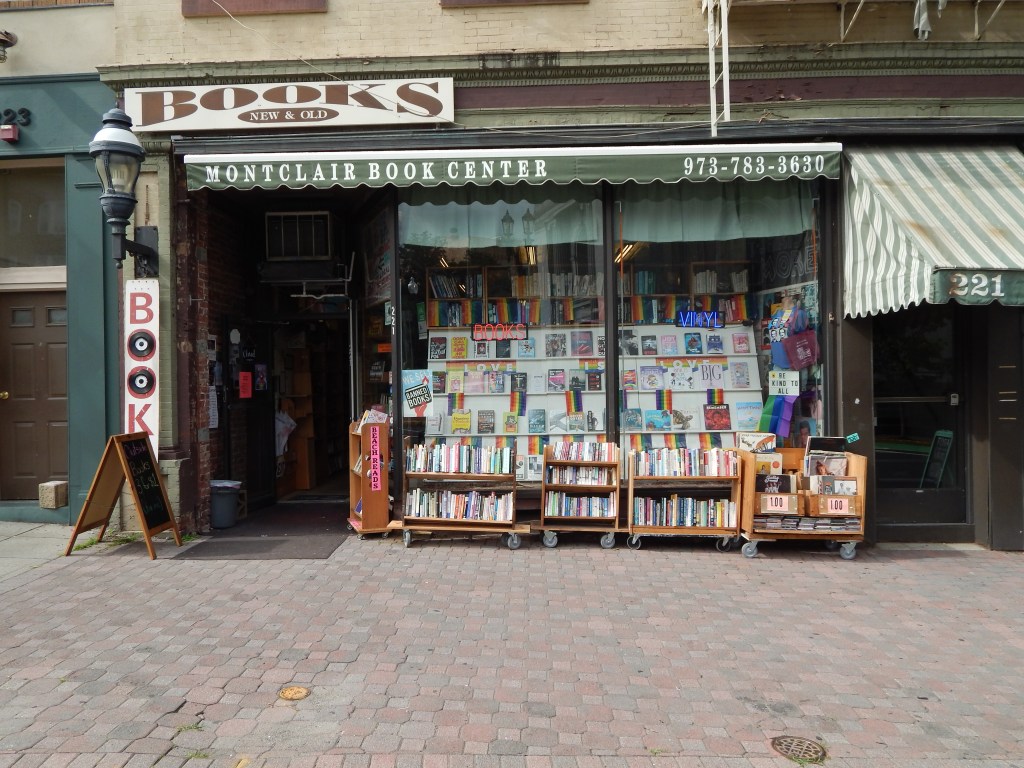
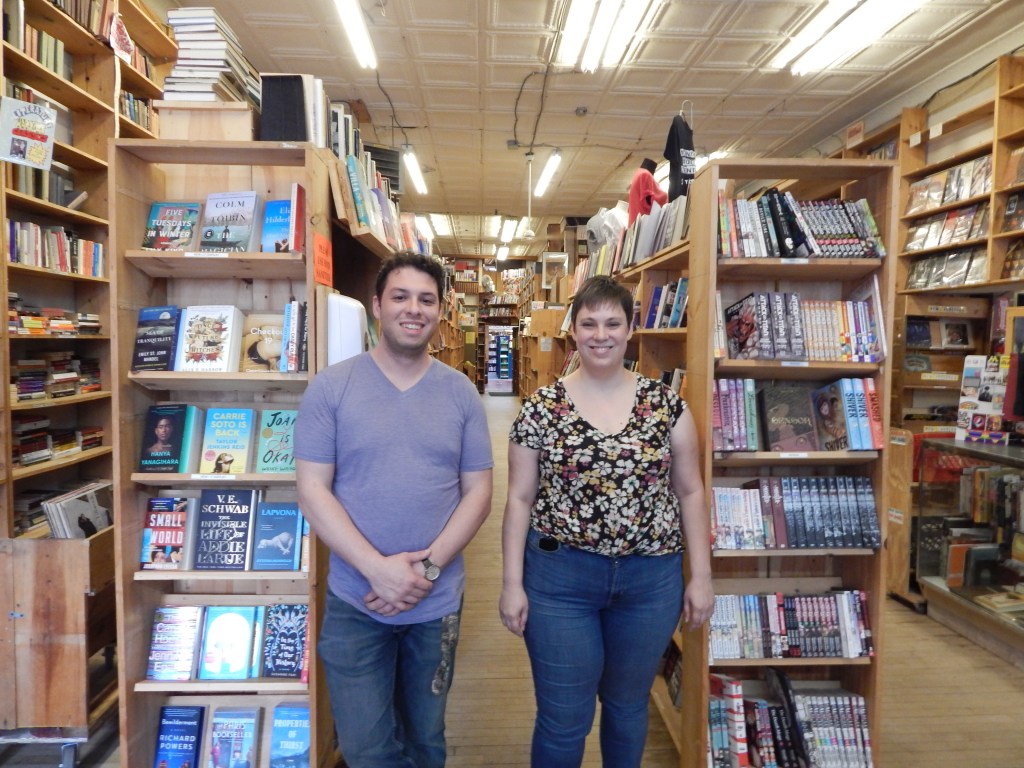
When I close my eyes and picture a bookstore, the one that appears is Montclair Book Center. Rows upon rows overflowing with new and used books. Walls floor to ceiling with shelves of the same. A staircase that leads you upstairs from fiction to non-fiction. If you’d rather stay in fiction, you turn right at the stairs, and there’s another sea of books—children’s, sci-fi, fantasy. Deeper still, in the basement, are scores of records and an event space. They have rare books, first editions, comics, movies, anything your heart could desire lurks somewhere in this brilliant maze.

The store itself feels like a character from a novel. Like you wish you could get it to speak and tell you all its stories. It has a history to it. In the same way, a used book is special because you know someone else read and loved it, this store is special because of its past. You think of all the people who have walked in and gaped in awe at the shelves and the labyrinthine structure of the store. All the people who stopped by to kill a few minutes before dinner only to find, to their pleasant surprise, that they had missed their reservation. The moments when someone discovered a book or author they’d never heard of and suddenly fell in love. That’s the magic of Montclair Book Center.  

It opened in 1984, but it feels older. It feels timeless like Montclair came to life around it, and if it weren’t there, the town would collapse.

I’m sure this is largely my own mythologizing. When I first started seeing my partner, we went to this bookstore. We had one of those days where you walk in expecting to spend fifteen minutes and emerge hours later with arms full of books and an inescapable joy coursing through your veins. It’s a fond memory we revisit every time we walk back inside and feel that excitement well up in us. I always feel like a kid inside those walls. I think of all the possibilities, the thousands of stories that live in that space. There’s a part of me that never wants to leave.

Chelsea Pullano and Ryan Whitaker bought the store a little over a year ago. They’d spent the last few years working for a start-up, knowing it wasn’t the right fit. They felt, as so many of us have over the past few years, that corporate life wasn’t for them. That years spent staring at a screen and working for somebody else wasn’t what they’d envisioned for themselves. So, they decided to make a change.

They didn’t set out with the intention of buying a bookstore. Instead, they had different visions, a café or a bar, some sort of place where people would gather. I can’t help but wonder if, after the terrifying isolation of Covid, this vision was born out of the need to connect with people and become part of a community, something larger than themselves.

Montclair Book Center happened on a whim. After a fruitless search for retail space, Chelsea decided to go rogue and see if any bookstores were for sale in the area. After all, if you’re looking for a place where people can go and get lost and connect, what’s better than a bookstore? And when she heard that her favorite bookstore, a place she’d spent hours wandering, was available, she was sold.

Chelsea had anticipated a hard sell with Ryan, a long process where she convinced him that this store in this town was the right choice. But in the end, all she needed to do was get him there.

“I took one walk through this place,” Ryan says, relaying the story. “And said, ‘This is the idea now.’”

Because that’s all it takes. You walk inside and feel both awed and comforted. You sense a familiarity as if every bookstore you’ve walked into before this one was preparing you to find Montclair Book Center. A common refrain you hear as you walk through the rows of books is, “This place is just so cool.”

As a longtime patron, I can say that Chelsea and Ryan are the exact people—so full of life and spirit—that you hope will take over your favorite bookstore. They aren’t some soulless corporation or, worse, a developer who plans to knock it down and build condos, but people who see the store’s magic and want only to help it thrive for years to come.

They plan to utilize the store for more events—local authors are a particular area of emphasis. They stress the idea of it being a third space, somewhere that isn’t your home or work, where you can come to hang out and feel safe. In our increasingly difficult age, I can’t think of a place I’d rather spend my time than Montclair Book Center, run by Chelsea and Ryan.

“We’re all about community, sincerely, community and culture,” Ryan says. “We need to create spaces where people can come and learn and be seen and heard.”

There’s a crucial importance to a local, independent bookstore in the same way that a movie theater, restaurant, or school has value to a community. The new owners welcome this and are eagerly working to cement their status in Montclair. They’ve had young, aspiring filmmakers come in and shoot in their store, they’ve begun hosting events, promoting charity drives, and you can see this is only the beginning.

I asked them about books that inspired their love of literature, and Chelsea told me about discovering Wuthering Heights in high school and how it awakened something in her. Not only the novel but the way her teacher encouraged her to view and discuss it. You can see a glint in her eye as she envisions their store as a place where others can discover and discuss works that will awaken that same passion in them.

She also mentions being raised in a home with a “beautiful, leather-bound classics set,” which she devoured. I can’t help but wonder if having those at her fingertips influenced the person she’s become and maybe planted the seed to buy this store.

I wander the store for a bit and come across a delightful “banned books” display where they briefly explain why each was banned. It’s typical of the store, full of small corners where you can discover something new that stays with you. The display is also emblematic of the store’s attitude and its new owners. There’s a defiance to them, a rebellious streak that drove them to make this leap. Leaving your corporate job to purchase an iconic bookstore takes courage, and I can see that Chelsea and Ryan are not lacking in that essential trait.

They have a wall downstairs in their newly renovated events space with a few polaroids hanging up of the authors who have held events. It’s a big wall, mostly empty right now, but I am confident they’ll fill it. I can already picture myself down there on a weeknight listening to some local author read from their new novel, and the vision fills me with hope. This is what a bookstore should be. A pillar of the community run by people full of hope and energy. I wish every community could have its version of Chelsea and Ryan running their independent bookstore.

My novel, A Campus on Fire, doesn’t come out until the Spring of 2025, but when it does, I can’t wait to have a reading at my favorite bookstore, Montclair Book Center.

I hope to see you there. It’s located in wonderful downtown Montclair at 221 Glenridge Ave. You can’t miss it, and I promise that once you’ve walked inside, you’ll never want to leave.

Visit their website, www.montclairbookcenter.com, to browse their excellent collection of new and used books. And to keep up to date on their events and other information about the store, follow them on Facebook, Instagram, and Twitter.

Patrick O’Dowd lives in New Jersey, just up the road from Montclair Book Center, with his partner Cassie and their mischievous cat Toffee. His novel, A Campus on Fire, will be released in the spring of 2025. He’s the fiction editor of Sequoia Speaks Literary Magazine, and you can find his writing at patrickrodowd.com.

Filed Under: Book Bound Tagged With: BookBound, Montclair Book Center, Patrick O'Dowd

  • « Go to Previous Page
  • Page 1
  • Page 2
  • Page 3
  • Page 4
  • Interim pages omitted …
  • Page 12
  • Go to Next Page »

Footer

The Regal House Enterprise

Regal House Publishing is the parent company to the following imprints:

Fitzroy Books publishing finely crafted MG, YA and NA fiction.

Pact Press publishing finely crafted anthologies and full-length works that focus upon issues such as diversity, immigration, racism and discrimination.

The Regal House Initiative, a 501(c)(3) nonprofit that conducts project-based literacy and educational outreach in support of underserved communities.

From our Blog

Dockside Books: An Up North Haven for Thinkers, Adventurers, and Creatives

Tombolo Books: a book lover’s loveshack in downtown St. Pete, Florida

That’s My Story: Regal House Publishing (RHP) Interviews Novelist James Janko

  • Facebook
  • Twitter
  • LinkedIn
  • Google +
  • Email
Regal House Publishing · © 2017–2025 · Website design by Lafayette & Greene
 

Loading Comments...