• Skip to primary navigation
  • Skip to main content
  • Skip to footer

Regal House Publishing

Advancing Finely Crafted Literature

  • Home
  • About Us
    • The Origin Narrative of an Indie Press
    • The Regal Mandate
    • Our Imprints
    • The Regal House Initiative
    • Regal House Publishing Staff
    • Our Professional Affiliations
    • RHP’s Climate Commitment
    • Helen Keller Intl
    • RHP Summer Scholars Program
    • Contact & FAQ
    • Blog
  • Authors
    • Our Authors
      • Regal House Authors & Poets
      • Fitzroy Books Authors & Poets
      • Pact Press Authors & Poets
    • Forthcoming Publications
    • Sour Mash: RHP’s Southern Literature Series
    • Fugere Books: RHP’s Novella Series
    • Regal House Reading Series
    • Author Resources
  • Submissions
  • Marketing & Distribution
    • Our Distribution and Printing Partners
    • Subsidiary Rights
    • For Retailers
    • Events
    • A Conspiracy of Lemurs Podcast
  • Contests
    • The Fugere Book Prize for Finely Crafted Novellas
    • The Petrichor Prize for Finely Crafted Fiction
    • The W.S. Porter Prize for Short Story Collections
    • Past Contests
      • The Kraken Book Prize for Middle-Grade Fiction
      • The Acheven Book Prize for Young Adult Fiction
    • The Terry J. Cox Poetry Award
  • SHOP

interview

That’s My Story: Regal House Publishing (RHP) Interviews Novelist James Janko

September 19, 2025 Leave a Comment

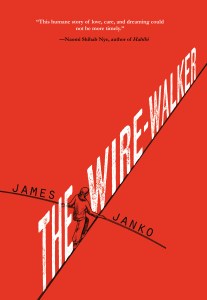
We were delighted to sit down with James Janko, the author of The Wire-Walker, to talk about life, literary pursuits, languages, science, and the value of meditation.
RHP: When did you start to write?

Janko: I was a truant in high school, but I began writing a novel my junior year. I stuffed hand-written pages into an empty tinker-toy box until it was full. I have no idea what my novel was about, but my older sister, who never missed school, read a chapter or two and said, “This is sick.”

My early efforts aside, I am a person who must write. In 1974, while living in New Orleans and working as a flower vendor on Bourbon Street, my health broke down and I was in severe pain. Three years earlier, I had returned from the Viet Nam War, where I was a combat medic in an infantry battalion commanded by Colonel George Armstrong Custer III. Nowhere felt like home after the war, so I bought a backpack, a fishing pole, and wandered the country. Hitching rides was easy for a white male in the 1970s, and finding work—I wasn’t choosy—seldom took more than a day or two. I picked strawberries in Willamette Valley in Oregon, drove a truck during a Nebraska corn harvest, a taxi in Chicago, and so on. I lived the life of a drifter, but the war followed me, more intimate than a shadow. I remember lying in bed one night, hurting all over, when I heard a voice inside me: You must write. Write something, anything. Otherwise, you’ll die.

RHP: Has your education helped you become a better writer?

Janko: After my vagabond days ended, I went to college on the GI Bill and received a B.S. in Conservation of Natural Resources from UC Berkeley. The program revived me, breathed new life into me, and sparked my creativity and love for the earth. One class in particular––Ecosystemology––had a direct influence on my first novel, Buffalo Boy and Geronimo, which highlights the environmental consequences of war. For our final exam, Arnold Shultz, a delightfully unpredictable professor, led us outside of our cramped classroom and onto the campus. Each student was free to walk about for a time, then choose one square inch of earth to write about as an ecosystem, that is, to write about the relationships between organisms, about what sustained this patch of earth. I remembered, as I was writing, that a Cobra gunship, one of the most effective killing machines of the Viet Nam War, could put a bullet in every square inch of a football field in less than a minute. And at the same time, on a blue morning in Berkeley, I learned and am still learning about the complexity of life in minuscule, one inch containing innumerable organisms and inseparable from the ebb and flow of life, inseparable from the rest of the planet! I believe what Walt Whitman believed: “…a leaf of grass is no less than the journeywork of the stars.”

RHP: Are you fluent in any other languages? If so, do you find that knowledge has any effect on your writing? Is it important for people to learn other languages? Why?

Janko: I can’t say I’m fluent in Spanish, but I’m competent enough to appreciate the untranslated poetry of García Lorca and Juan Ramón Jiménez and Antonio Machado and many others. The sounds of Spanish are sometimes supple on the tongue, sometimes fierce, and I hear, especially in Lorca, rivers and stones, love songs, castanets, and the wails of birthing and dying. What is more important in writing, meaning or sound? I don’t know, but I doubt there can be any profound meaning without close attention to sound.

I speak rudimentary Khmer, my wife’s language, and I can read and write Arabic at a first-grade level. I take great care when I write a word in Arabic. I pay homage to those long ago who invented the word, the meaning, the sound. I pay special attention to words of the earth and the elements. I can read and write in Arabic rain, waterfall, river, lake, and sixteen other words associated with water. The language finds a home in my body, the rhythm of my heart. How can this not be a boon for the difficult task of writing?

RHP: There’s a fair bit of interest, scientific and otherwise, in the links between creativity and insanity. How crazy must someone be to be a good author?

Janko: My best writing comes when I sit in a room, door closed, a cat or two at my side, and imagine my way into the lives of others.

I once said to my wife, “Forgive me if I seem distant. Sometimes I go far away when I write, but I go far away to come closer to you and the world.”

She replied, without hesitation: “Why are you nuts?”

RHP: How has Buddhist meditation supported you in your efforts to write?

Janko: I often meditate before I write. Silence is my first language. Nearly everything in the modern world encourages us to be occupied, to be addicted to our phones, to hitch a ride on the endlessly spinning hamster wheel called social media, to waste our precious lives on chats and messaging and online profiles and calculations for deepening our influence so that one day—this is the pipe dream of many writers––we’ll go viral, reach the masses, sell millions of books.

Buddhist meditation is revolutionary. There is no ambition, except to cultivate kinder and more compassionate ways of living and being. I believe there’s a deep kindness in most of my writing, and this is especially true of The Wire-Walker, whose narrator, Amal Tuqan, is the most loveable character to ever come my way. She found me in the silence, or we found each other. Amal understands the circus of life and the requirements of her profession: “The work of a funambulist is to walk in the sky on a rope, a wire, a prayer.”

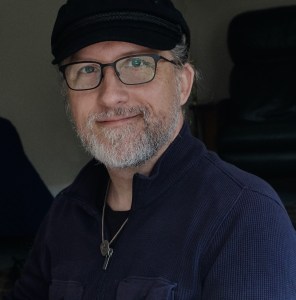
James Janko is the author of the novels, What We Don’t Talk About, The Clubhouse Thief (recipient of the Association of Writers and Writing Programs (AWP) Award for the Novel), Buffalo Boy and Geronimo (recipient of The Association of Asian American Studies Book Award and the Northern California Book Award), and The Wire-Walker, which was a finalist for the 2023 Donald L. Jordan Prize for Literary Excellence, a finalist for the 2023 Dzanc Fiction Prize, and was awarded the Juniper Prize by the University of Massachusetts Press in 2021. Excerpts of The Wire-Walker appeared in the Fall/Winter 2022 issue of Nimrod International Journal. Janko’s short stories have appeared in The Massachusetts Review, The Sun, and Eureka Literary Magazine, among others. His story––“Fallujah in a Mirror”––won First Place in the Jeff Sharlet Memorial Award and appeared in the Spring 2021 issue of The Iowa Review. Janko is the recipient of an Illinois Arts Council Award for Fiction.
Filed Under: About Regal House, Author Interview, Regal Authors, Regal House Titles, That's My Story Tagged With: interview, James Janko, The Wire-Walker

That’s My Story: David Ebenbach on Fiction, the Writing Process & Jokes You Love

September 3, 2024 Leave a Comment

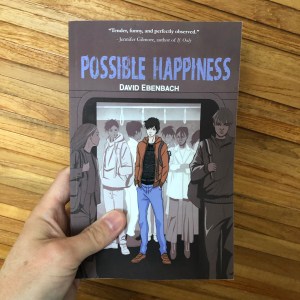
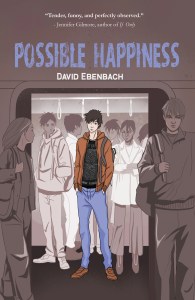
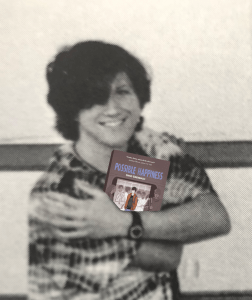
The RHP team sat down with David Ebenbach, author of Possible Happiness, to chat about fiction, humor, and the writing process.

We’ve all heard the advice that authors should “write what they know.” But fiction emerges from imagination and creation of new worlds. Do you feel a tension between what you’ve experienced and what lives only in your mind?

This question was a big one for me in the writing of Possible Happiness; on the one hand, this is definitely the most autobiographical novel I’ve ever written, with a protagonist who’s a lot like me and who’s spending his teen years coming of age in the same place and time that I did (Philly in the late 80s), and the character spends the book going through a lot of all-too-familiar dramatic emotional experiences. On the other hand, almost none of this book actually happened, or at least not in this way, or with these exact people, or in this order, and so on.

Let me explain. I started working on this book by thinking about what my teen years were actually like and writing down what the major events were. So that was the foundation. But I was aware from the very beginning that I was going to need to make major, fundamental, continuous changes to this raw material to make it work as a novel. Life, after all, has too many people in it, and in the real world things happen in chaotic and plotless and often meaningless ways. Life therefore isn’t the best material for fiction—unless you transform it, do whatever you need to do in order to make it work. So I changed people, events, timing, feelings, consequences. Everything.

And yet still—the novel is kind of true all the same. In fact, that’s exactly why I changed and falsified so much: to make it true.

What’s the role of humor in Possible Happiness?

I think humor is a very serious thing. I didn’t think so when I was just starting out as a writer, when I was very concerned about being taken seriously, and so a lot of my early work is a bit humorless, which I can now see made it more one-dimensional than it had to be. But I now see that humor is crucial to fiction. It’s crucial in part because it’s a big part of life, not to mention a significant source of pleasure and meaning in my own experience. It’s also crucial because, as the writer Dylan Krider once observed, humor intensifies surrounding emotions. He said, in a lecture I once heard, something like, “If you want to make a story sad, make it funny. If you want to make it scary, make it funny.” I guess it’s like adding salt to a recipe; you add humor to make everything else more vivid. You probably also do it because it’s funny.

How long did it take you to write your book? How many revisions has it undergone so far?

Oh, boy. I started writing this book in 2018. So that’s six years ago! And—*consults notes*—the final version of the novel is apparently version #22. Though that doesn’t mean that I wrote twenty-two full drafts of the novel—not at all. I just like to create a new draft (with a new number) whenever I make any kind of significant change, even if it’s just to a single chapter or scene. So that number means that there were twenty-two times when I made a big-enough change to save the document as a new draft. But the book certainly did go through a lot of revision. Characters were dropped altogether, events rewritten or replaced, threads added. Scenes and sentences interrogated like murder suspects. It’s part of the deal. I passionately hate revision, but I do it because the book needs it, and my job is to make sure the book gets what it needs.

Do you belong to any writing groups or communities, either online or offline?

Yes! I wouldn’t be any kind of writer at all without community. For starters, I am buoyed every day by the positivity and energy of my online communities on various social media platforms. (I’m not kidding! I know people say terrible things about social media, but I get a lot of positivity from my connections there.) But I also depend on feedback and support from the more focused writing group I’m in. We meet about once a month to share prose, and the people in the group—Angie Chuang, Melanie McCabe, Emily Mitchell, and David Taylor—are not only wonderful writers (go check out their books if you don’t believe me—or even if you do believe me!), but also incredibly wise readers with excellent advice, and lovely human beings who help me stay at it when I’m thrown off by doubt. Without them, Possible Happiness probably wouldn’t exist, and, even if it did, I bet it wouldn’t be worth reading.

What’s your favorite joke?

Do you know the one about the duck who goes into a bar to ask if they have any grapes? I love that one. That duck is so persistent! Do ducks even eat grapes? The first time I heard the joke, I laughed off and on for several hours. I won’t bother you by retelling it here, though, because it’s long and not too many other folks think it’s quite as funny as I do. But, if you’re interested, you can find a retelling of the joke in my short story “Out of Grapes,” which is in my collection The Guy We Didn’t Invite to the Orgy and other stories (which, maybe it goes without saying, is not a YA book). And anyway I’m a big believer in holding tight to a joke that you love, even if (especially if) you love it more than anyone else does. And maybe, now that I think of it, that advice applies to a lot more than just jokes.

Filed Under: Author Interview, Regal Authors, That's My Story Tagged With: author, fiction, humor, interview, Philadelphia, YA

That’s My Story: Beth Castrodale on Literary Adventures, the Importance of Friendship & the Influence of a Depression-Era Corset Maker

August 15, 2024 2 Comments

In the lead-up to the publication of her novel The Inhabitants, Beth took part in a virtual sit-down to discuss her writing process, the role of friendship in her writing, and more.

What’s your process for writing: do you outline, create flow charts, fill out index cards, or just start and see where you end up? Do you use the same process every time?

I find rough outlines invaluable for working out story arcs for first drafts of novels, and for helping me complete those drafts in a reasonable time frame. In the absence of such advance planning, I once spent 12 years writing and revising a novel, which I vow to never do again.

But I never hew strictly to outlines. They’re just general guides, and once I get down to writing, stories and characters inevitably take on a life of their own, which is one of the things I enjoy most about writing.

I’ve created a rough outline for every novel I’ve written since the one that took 12 years to finish, and I can’t imagine I’ll ever skip this step in the future. My life isn’t getting any longer!

We’ve all heard the advice that authors should “write what they know.” But fiction emerges from the imagination and the creation of new worlds. Do you feel a tension between what you’ve experienced and what lives only in your mind?

Personally, I find it most engaging to write about situations–and from perspectives–that are quite different from what I’ve experienced. To take my most recent novel, The Inhabitants, as an example, the protagonist is a portrait artist, and she moves into a house built by an architect whose creations were said to influence the mind. Although I’m not a visual artist, and the protagonist’s house is purely my own invention, I loved the possibilities that arose from placing someone who’s visually attuned into such a mentally, and emotionally, stimulating space. (And the space is haunted, no less!) To give some examples from my other novels, I’ve also written from the perspective of a (male) rocker-turned-gravedigger and a Depression-era corsetiere.

For me, novel writing is perhaps my greatest source of adventure–a way to immerse myself in diverse characters’ inner lives and to see how they confront various challenges, both internal and external. To my mind, writing about someone who’s a lot like me, and who shares many of my own experiences, would be the opposite of an adventure, and I think I’d lose interest pretty quickly.

I wouldn’t say that there’s a tension between what I’ve experienced and what lives only in my mind, because when I’m deeply immersed in my writing and in a character’s world, I kind of lose my sense of self. However, I certainly draw on my own experiences when I’m writing about characters who are grieving, falling in love, dealing with an upheaval in their lives, or going through just about anything else that most of us typically face over time.

What role has friendship played in your evolution as a writer?

A huge role. I’m thinking in particular of a dear friend, the poet Beth Gylys, whom I’ve known since first grade, when both of us attended a since-demolished elementary school outside of Pittsburgh. When Beth and I first met, I’m not sure that either one of us sensed that writing would be the thing we most wanted to do with our lives. But storytelling was part of our relationship from the start. For one thing, we used to wander around a cemetery near our suburb, read the names on the gravestones, and make up stories about some of the people buried on the grounds.

During recess, instead of playing hopscotch or kickball with the other kids, or swinging our way across the monkey bars, we’d make a wide circuit around the playground, talking and talking. I can’t remember the topics of our conversations, but it seemed as if nothing could be more important than whatever we were discussing. Through experiences like this, we built a bond that lasted for years and across many miles after Beth’s family moved back to New Jersey and mine moved to Ohio. Beth has remained a beloved friend and an inspiration to me as a writer, and we’ve supported each other through many ups and downs when it comes to writing and life in general. Beth has also been a thoughtful, insightful, and generous commenter on my work.

What surprising skills or hobbies do you have?

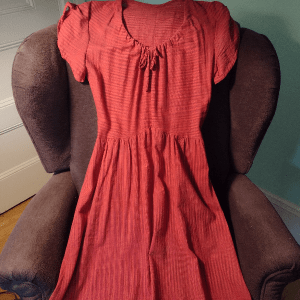
One of Beth’s hand-sewn dresses, based on a forties-era pattern

One kind of odd hobby I have is sewing dresses by hand. Although I have a sewing machine, I don’t like being rushed by the mechanics of it, and I find it far more relaxing and rewarding to set my own pace and to have the sensory experience of working with a needle and thread.

This all started when I was working on my début novel, Marion Hatley, whose eponymous protagonist is a Depression-era corset maker. The retro nature of the novel inspired me to order some vintage patterns and sew some older-style dresses. It’s been a lot of fun, and I love it that so many old-school patterns are available online.

What’s next for you?

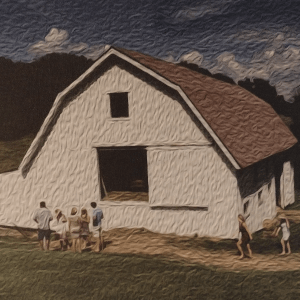
A scene from the family farm that inspired Beth’s novel-in-progress

I’m in the early stages of writing a novel that’s set on a farm inspired by a fourth-generation farm in my family. The story involves a land dispute that threatens the ongoing existence of the farm, which the protagonist has been left to run by herself, for the most part. The dispute stirs the protagonist’s great-grandmother to return to the world of the living and step into the action, on the protagonist’s behalf. But it turns out that she wants more than to just save the land, setting the protagonist up for a struggle that’s far bigger than what she’d bargained for.

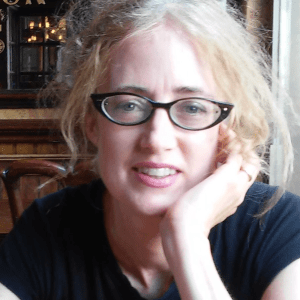
Beth Castrodale is the award-winning author of three novels: Marion Hatley, In This Ground, and I Mean You No Harm. Her latest novel, The Inhabitants, will be released by Regal House Publishing in fall 2024.

Filed Under: Author Interview, Regal House Titles Tagged With: author, Beth Castrodale, interview, The Inhabitants

Footer

The Regal House Enterprise

Regal House Publishing is the parent company to the following imprints:

Fitzroy Books publishing finely crafted MG, YA and NA fiction.

Pact Press publishing finely crafted anthologies and full-length works that focus upon issues such as diversity, immigration, racism and discrimination.

The Regal House Initiative, a 501(c)(3) nonprofit that conducts project-based literacy and educational outreach in support of underserved communities.

From our Blog

Dockside Books: An Up North Haven for Thinkers, Adventurers, and Creatives

Tombolo Books: a book lover’s loveshack in downtown St. Pete, Florida

That’s My Story: Regal House Publishing (RHP) Interviews Novelist James Janko

  • Facebook
  • Twitter
  • LinkedIn
  • Google +
  • Email
Regal House Publishing · © 2017–2025 · Website design by Lafayette & Greene
 

Loading Comments...