• Skip to primary navigation
  • Skip to main content
  • Skip to footer

Regal House Publishing

Advancing Finely Crafted Literature

  • Home
  • About Us
    • The Origin Narrative of an Indie Press
    • The Regal Mandate
    • Our Imprints
    • The Regal House Initiative
    • Regal House Publishing Staff
    • Our Professional Affiliations
    • RHP’s Climate Commitment
    • Helen Keller Intl
    • RHP Summer Scholars Program
    • Contact & FAQ
    • Blog
  • Authors
    • Our Authors
      • Regal House Authors & Poets
      • Fitzroy Books Authors & Poets
      • Pact Press Authors & Poets
    • Forthcoming Publications
    • Sour Mash: RHP’s Southern Literature Series
    • Fugere Books: RHP’s Novella Series
    • Regal House Reading Series
    • Author Resources
  • Submissions
  • Marketing & Distribution
    • Our Distribution and Printing Partners
    • Subsidiary Rights
    • For Retailers
    • Events
    • A Conspiracy of Lemurs Podcast
  • Contests
    • The Fugere Book Prize for Finely Crafted Novellas
    • The Petrichor Prize for Finely Crafted Fiction
    • The W.S. Porter Prize for Short Story Collections
    • Past Contests
      • The Kraken Book Prize for Middle-Grade Fiction
      • The Acheven Book Prize for Young Adult Fiction
    • The Terry J. Cox Poetry Award
  • SHOP

BookBound

You’ll Always Be Welcome: Celebrating Lemuria Bookstore’s 48 Years with Founder John Evans

December 1, 2023 1 Comment

Gerry Wilson interviews John Evans, the founder/owner of Lemuria Books
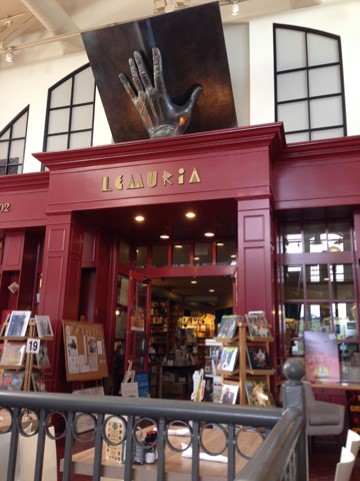
The façade of Lemuria Books would be impressive anywhere, but in Jackson, Mississippi, Lemuria’s doors represent the entrance to a long literary tradition. Lemuria’s founder and owner, John Evans, has a story to tell about the sculpture of a “book in hand” over the front doors.

He reminds me that Lemuria spent the early years (I was a customer even then) in a closet-size space in The Quarter, a small shopping center located on the outskirts of Jackson, and in Highland Village, which was a step-up location-wise, but it wasn’t John’s dream store. Lemuria moved to its present location, Banner Hall, in 1988. In the course of that move, John says, he immersed himself in design books and books about bookstores. He became enamored of Irish book shops and diners with unique entrances (think: a donut shop whose entry is a donut hole, or the old A&W root beer chain). Lemuria was settling in at the new location when the eBook craze began and threatened to take down physical book stores everywhere. That was when John settled on the symbol of the “book in hand” that would represent what was and is, for John and for readers, the essence of Lemuria. A design firm in New Orleans created the “sculpture.” Mounted over the front doors, the piece looks like a bronze, but to quote John, “If it were, you’d need a fortress to hold it up!” It’s striking just the same and speaks for Lemuria very well.

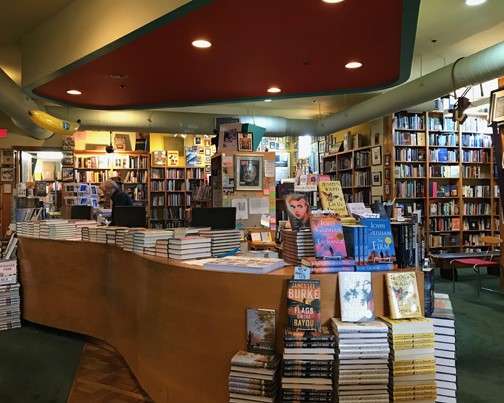
John will tell you that, even though much has changed over the years, Lemuria is the same warm place it was when the store first opened in 1975. The interior will remind you of someone’s lovely, dark-paneled home library. The staff are happy to help and/or make recommendations, but they won’t follow you around. You’re free to wander from room to room where the shelves are clearly defined for content.
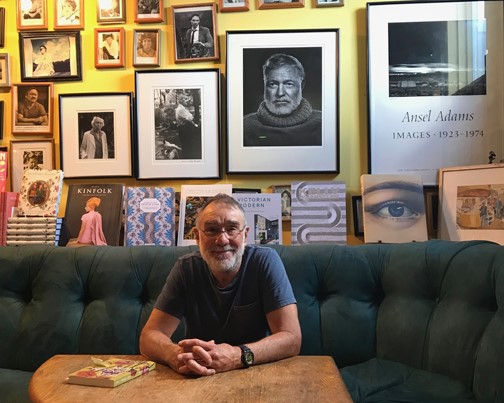
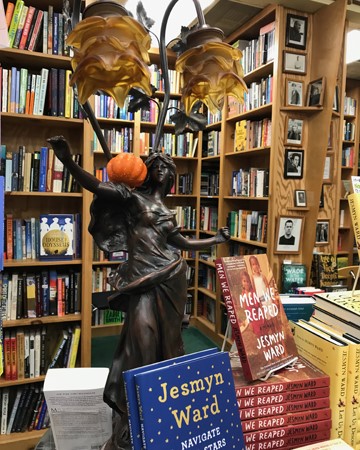
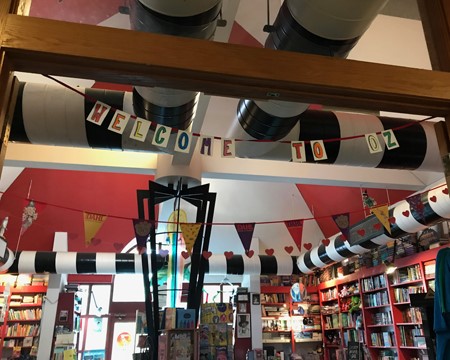
There’s the “Mississippi corner,” where Lemuria celebrates Mississippi’s literary chops with unabashed pride. I’m happy to have one book on those shelves already, and That Pinson Girl will be there soon, alongside all the “Mississippi greats” I so admire. There’s as fine a selection of poetry books as you’ll find anywhere. Looking for travel or food or nonfiction? Lemuria has them all. There’s a children’s and youth shop, too—OZ, a magical little place. Lemuria boasts all the accoutrements of a “good” book store space but goes one better. The First Editions Room houses an exceptional collection of books you may not find elsewhere, especially the classic, collectible Mississippi authors—William Faulkner, Eudora Welty, Ellen Douglas, Barry Hannah, Willie Morris—as well as the newer generations of writers: John Grisham, Richard Ford, Jesmyn Ward, Natasha Trethewey, Katy Simpson Smith, and many, many more. The Mississippi literary tradition lives on.
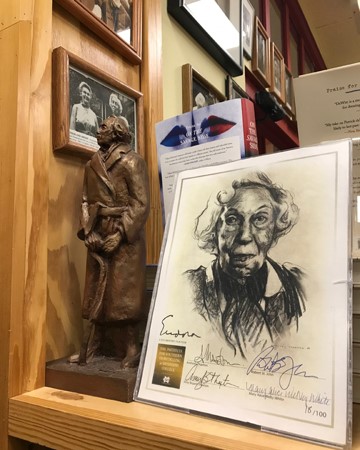
The photos I’ve included give you a taste of Lemuria, but they can’t tell the whole story. Only John Evans can do that.

He and I got together a while back. In the interview you may be struck, as I was, by his breadth of knowledge and his love for what he’s been doing all these years.

Here’s John:

GERRY: Lemuria’s website tells us, “In 1975, John Evans opened Lemuria in a converted apartment stuffed full of books in The Quarter in Jackson, Mississippi.” In 2025, Lemuria turns 50! To what do you attribute Lemuria’s longevity?

JOHN: Lemuria has many loyal writers, but we’ve maintained a malleable business plan that adapts as the industry changes. For the last 40 years, the industry has often been on a rollercoaster. We’re going through another period like that now. But Lemuria has maintained the loyalty of our readers and has been able to adapt to change.
GERRY: Lemuria has a very active visiting author schedule. Why do you think it’s important to provide the space where authors and readers come together?

JOHN: The answer goes back to when we [Lemuria] first began in the Quarter. A poet, Terry Hummer, came to me and wanted to do poetry readings in the book store. So we started having some poets come and read. The author list grew when the store moved [to Highland Village] around 1977-78. That’s when we met Ellen Gilchrist, we met Barry Hannah, we met Willie Morris, and we began to realize that writers being friends with the store made the books come alive and become more than a product. When books come alive, readers care more about them. It creates a more vibrant experience.

Also it’s fun! I didn’t realize when I started, but the ability to develop long-term friendships with writers has been a gift to my life. I’m not just somebody selling their books. They respect my work as I respect theirs.

So many writers who were great friends of Lemuria are gone. We can’t talk about the book store without talking about Miss [Eudora] Welty. What a gift. She shared so many of her friends [with the store]—like Walker Percy. Those friendships full of integrity and association wouldn’t have happened without her. John Grisham is another writer who has allowed the book store to stay out of debt!
GERRY: How do you want your customers to feel when they walk into the store?

JOHN: Relaxed! If they’re relaxed, they’re comfortable to explore. I’m a believer that books find you; you don’t just find them. Being a browser is like being a prospector; you’re trying to mine something that gives you something that’s unexpected, that makes it a special experience.

GERRY: What are the greatest challenges facing book store owners today? How do you address them?

JOHN: I think the most important thing today is to figure out how to maintain your upstream identity to the publishers and the value you bring to them. In 2020 the trade show was cancelled. That was where I went with staff, made the one-on-one contacts, discovered what books fit for us, what authors to befriend and/or bring to Jackson. I worked with Richard [Howorth] at Square Books in Oxford to “put Mississippi on the map.”

But so many people [in the book industry] quit because of Covid. It’s been difficult working with new people, but we have done a pretty good job. My young [staff] people are talking to their young people. But how do people perceive your authenticity when you’re doing everything by email or digitally? Online ordering became very important during the pandemic. We haven’t quite recovered from all that yet. It’s hard to explain what you think you mean to the community when someone doesn’t come in and see for himself. Ordering online has changed the dynamic.
GERRY: What do you want Lemuria’s legacy to be?

JOHN: I don’t know. I guess what legacy means is when you think about someone, what do you think about? “Well, you know, he shared this great book with me. That was his gift to me.” The connection is the book, the reading experience. And the reading experience is our own little creative art form we practice ourselves, what we’re reading and thinking about.

Also, it’s rewarding to have the third generation of families coming in the store. That makes me realize I haven’t wasted my life! Something’s being done right. That’s real.

As we were closing the conversation, John asked me a question. “You go all the way back to the Quarter,” he said. (I do indeed!) “Do you think the bookstore has maintained its essence?”

I didn’t hesitate. “Yes,” I said. “Yes, and then some.” And the three generations of readers who have now walked through Lemuria’s doors would agree.

If you read the news, no doubt you know that my home town, Jackson, has more than its share of problems. But no matter how often we deal with crumbling infrastructure or water woes, Lemuria stands quite literally “on a hill,” bringing the best of a broad range of reading pleasures to the community. If you’re ever near Jackson or willing to drive a little bit out of your way—then please: “Y’all come,” as my aunt used to call out from her porch as my parents and I drove away on Sunday afternoons. You’ll always be welcome. And if you can’t get to Jackson, do the next best thing: go online and pay Lemuria Books a visit.

Lemuria Books will host the reading/signing launch party for Gerry Wilson’s That Pinson Girl (available February 6, 2024) on March 7, 2024. 
Gerry Wilson is the author of Crosscurrents and Other Stories, published by Press 53, and a Mississippi Institute of Arts and Letters Fiction Award Nominee in 2016. An early draft of That Pinson Girl (coming from Regal House in 2024) was a finalist in the Faulkner-Wisdom Writing Competition. Residing in Jackson, Mississippi, Gerry is the recipient of a Mississippi Arts Commission Literary Arts Fellowship.
Filed Under: Book Bound Tagged With: BookBound, Gerry Wilson, John Evans, Lemuria Bookshop, Regal House, That Pinson Girl

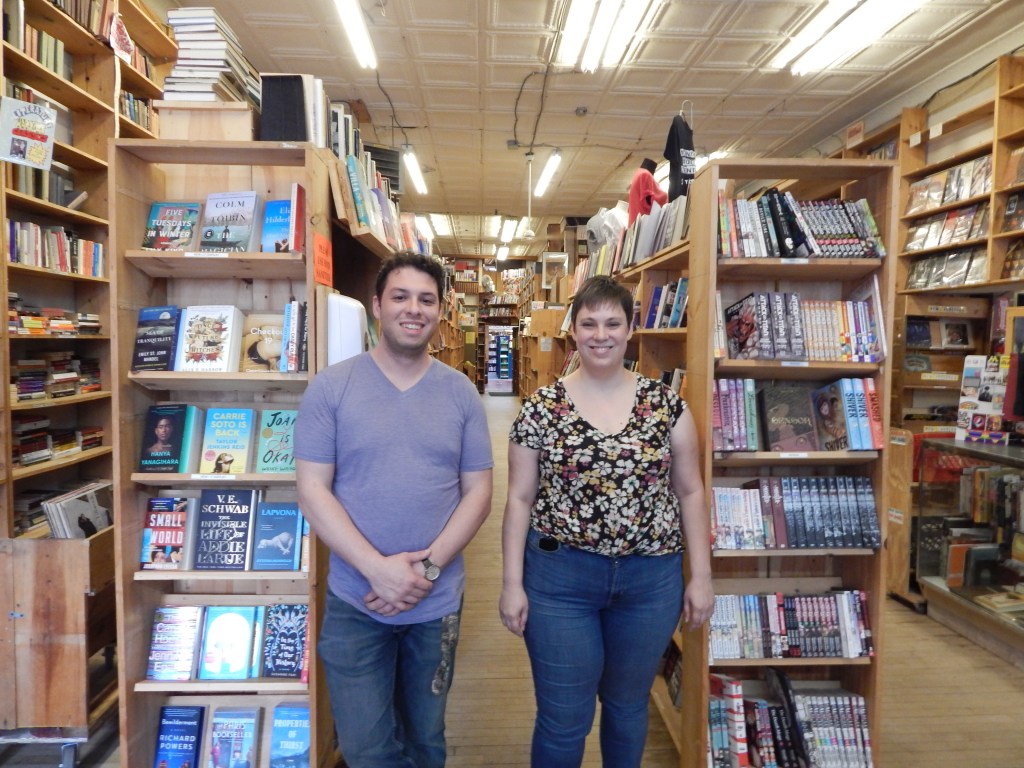
Montclair Book Center: Celebrating An Iconic Bookstore’s New Owners

July 21, 2023 4 Comments

by Patrick O’Dowd

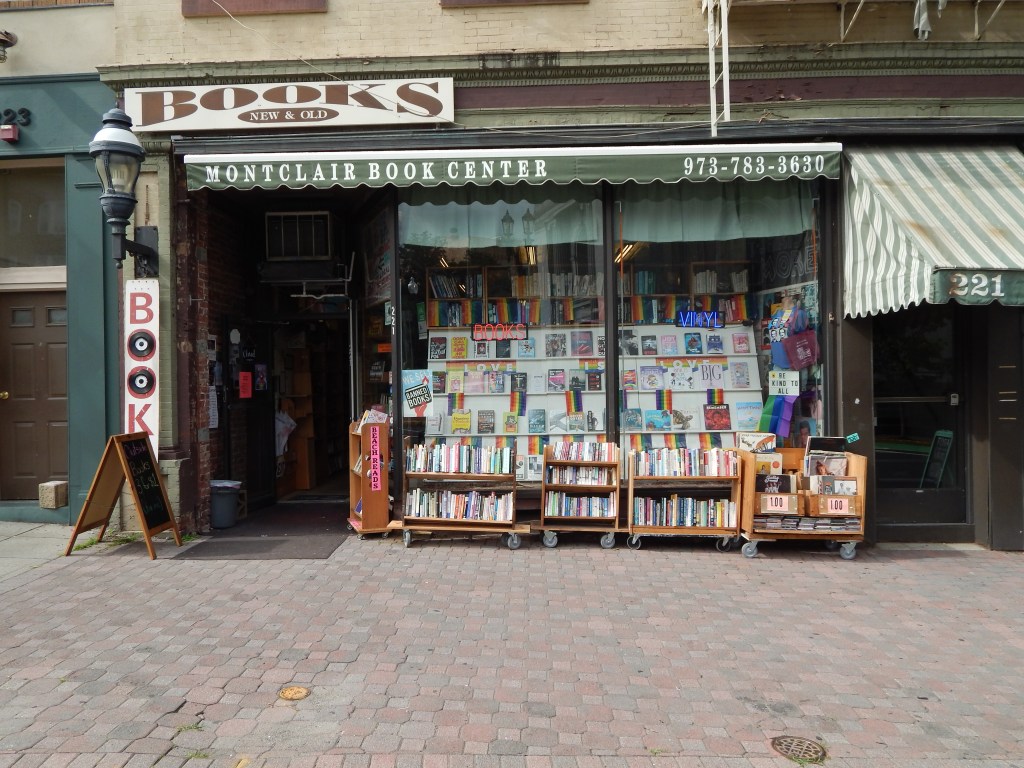
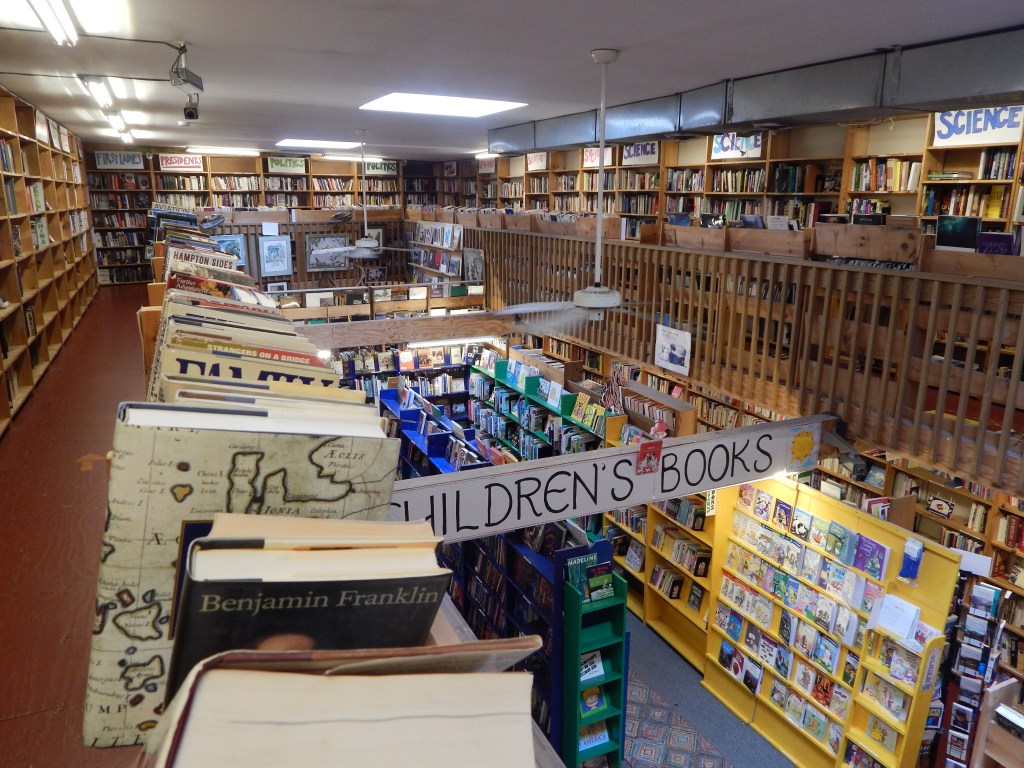
When I close my eyes and picture a bookstore, the one that appears is Montclair Book Center. Rows upon rows overflowing with new and used books. Walls floor to ceiling with shelves of the same. A staircase that leads you upstairs from fiction to non-fiction. If you’d rather stay in fiction, you turn right at the stairs, and there’s another sea of books—children’s, sci-fi, fantasy. Deeper still, in the basement, are scores of records and an event space. They have rare books, first editions, comics, movies, anything your heart could desire lurks somewhere in this brilliant maze.

The store itself feels like a character from a novel. Like you wish you could get it to speak and tell you all its stories. It has a history to it. In the same way, a used book is special because you know someone else read and loved it, this store is special because of its past. You think of all the people who have walked in and gaped in awe at the shelves and the labyrinthine structure of the store. All the people who stopped by to kill a few minutes before dinner only to find, to their pleasant surprise, that they had missed their reservation. The moments when someone discovered a book or author they’d never heard of and suddenly fell in love. That’s the magic of Montclair Book Center.  

It opened in 1984, but it feels older. It feels timeless like Montclair came to life around it, and if it weren’t there, the town would collapse.

I’m sure this is largely my own mythologizing. When I first started seeing my partner, we went to this bookstore. We had one of those days where you walk in expecting to spend fifteen minutes and emerge hours later with arms full of books and an inescapable joy coursing through your veins. It’s a fond memory we revisit every time we walk back inside and feel that excitement well up in us. I always feel like a kid inside those walls. I think of all the possibilities, the thousands of stories that live in that space. There’s a part of me that never wants to leave.

Chelsea Pullano and Ryan Whitaker bought the store a little over a year ago. They’d spent the last few years working for a start-up, knowing it wasn’t the right fit. They felt, as so many of us have over the past few years, that corporate life wasn’t for them. That years spent staring at a screen and working for somebody else wasn’t what they’d envisioned for themselves. So, they decided to make a change.

They didn’t set out with the intention of buying a bookstore. Instead, they had different visions, a café or a bar, some sort of place where people would gather. I can’t help but wonder if, after the terrifying isolation of Covid, this vision was born out of the need to connect with people and become part of a community, something larger than themselves.

Montclair Book Center happened on a whim. After a fruitless search for retail space, Chelsea decided to go rogue and see if any bookstores were for sale in the area. After all, if you’re looking for a place where people can go and get lost and connect, what’s better than a bookstore? And when she heard that her favorite bookstore, a place she’d spent hours wandering, was available, she was sold.

Chelsea had anticipated a hard sell with Ryan, a long process where she convinced him that this store in this town was the right choice. But in the end, all she needed to do was get him there.

“I took one walk through this place,” Ryan says, relaying the story. “And said, ‘This is the idea now.’”

Because that’s all it takes. You walk inside and feel both awed and comforted. You sense a familiarity as if every bookstore you’ve walked into before this one was preparing you to find Montclair Book Center. A common refrain you hear as you walk through the rows of books is, “This place is just so cool.”

As a longtime patron, I can say that Chelsea and Ryan are the exact people—so full of life and spirit—that you hope will take over your favorite bookstore. They aren’t some soulless corporation or, worse, a developer who plans to knock it down and build condos, but people who see the store’s magic and want only to help it thrive for years to come.

They plan to utilize the store for more events—local authors are a particular area of emphasis. They stress the idea of it being a third space, somewhere that isn’t your home or work, where you can come to hang out and feel safe. In our increasingly difficult age, I can’t think of a place I’d rather spend my time than Montclair Book Center, run by Chelsea and Ryan.

“We’re all about community, sincerely, community and culture,” Ryan says. “We need to create spaces where people can come and learn and be seen and heard.”

There’s a crucial importance to a local, independent bookstore in the same way that a movie theater, restaurant, or school has value to a community. The new owners welcome this and are eagerly working to cement their status in Montclair. They’ve had young, aspiring filmmakers come in and shoot in their store, they’ve begun hosting events, promoting charity drives, and you can see this is only the beginning.

I asked them about books that inspired their love of literature, and Chelsea told me about discovering Wuthering Heights in high school and how it awakened something in her. Not only the novel but the way her teacher encouraged her to view and discuss it. You can see a glint in her eye as she envisions their store as a place where others can discover and discuss works that will awaken that same passion in them.

She also mentions being raised in a home with a “beautiful, leather-bound classics set,” which she devoured. I can’t help but wonder if having those at her fingertips influenced the person she’s become and maybe planted the seed to buy this store.

I wander the store for a bit and come across a delightful “banned books” display where they briefly explain why each was banned. It’s typical of the store, full of small corners where you can discover something new that stays with you. The display is also emblematic of the store’s attitude and its new owners. There’s a defiance to them, a rebellious streak that drove them to make this leap. Leaving your corporate job to purchase an iconic bookstore takes courage, and I can see that Chelsea and Ryan are not lacking in that essential trait.

They have a wall downstairs in their newly renovated events space with a few polaroids hanging up of the authors who have held events. It’s a big wall, mostly empty right now, but I am confident they’ll fill it. I can already picture myself down there on a weeknight listening to some local author read from their new novel, and the vision fills me with hope. This is what a bookstore should be. A pillar of the community run by people full of hope and energy. I wish every community could have its version of Chelsea and Ryan running their independent bookstore.

My novel, A Campus on Fire, doesn’t come out until the Spring of 2025, but when it does, I can’t wait to have a reading at my favorite bookstore, Montclair Book Center.

I hope to see you there. It’s located in wonderful downtown Montclair at 221 Glenridge Ave. You can’t miss it, and I promise that once you’ve walked inside, you’ll never want to leave.

Visit their website, www.montclairbookcenter.com, to browse their excellent collection of new and used books. And to keep up to date on their events and other information about the store, follow them on Facebook, Instagram, and Twitter.

Patrick O’Dowd lives in New Jersey, just up the road from Montclair Book Center, with his partner Cassie and their mischievous cat Toffee. His novel, A Campus on Fire, will be released in the spring of 2025. He’s the fiction editor of Sequoia Speaks Literary Magazine, and you can find his writing at patrickrodowd.com.

Filed Under: Book Bound Tagged With: BookBound, Montclair Book Center, Patrick O'Dowd

Broadside Bookshop: a Northampton Icon

May 4, 2023 Leave a Comment

by Thérèse Soukar Chehade

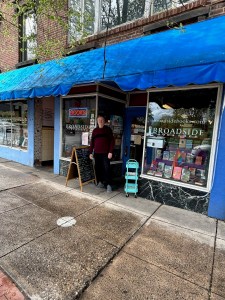
Broadside Bookshop has been in the same Main Street location since 1974

Broadside Bookshop in Northampton, Massachusetts, was the first bookstore I visited after moving to western Massachusetts from my native Lebanon in the summer of 1983. I liked the welcoming staff, the small space, and the shelves piled high with books. Even though my Arabic and French education hadn’t exposed me to the English-speaking authors on display, I felt that I was viewing a collection curated with love and intelligence.

I made it a point to visit often. The civil war was still raging in Lebanon, but the bookstores had remained open, providing havens of stability and reason in a shattered country. I went to Broadside for the same reason I went to the bookstores in Beirut during breaks from the fighting: to lose myself among the shelves and forget the difficult world outside. I was struggling to find something to tether me in my new and unfamiliar life. But books I knew. A friendly staff member would offer to help or simply let me browse to my heart’s content, and the world would get a little brighter. I read and was drawn into the magical circle of belonging.

The region of western Massachusetts known as the Pioneer Valley is home to many colleges. The New York Times describes it as “arguably the most author-saturated, book-cherishing, literature-celebrating place in the nation,” featuring many bookstores to satisfy book lovers. Located in the same spot on Main Street since 1974, Broadside is a Northampton icon and a popular destination for locals. It is part of a network of local bookshops that are rooted in their communities, their excellent customer service providing a welcome relief in an increasingly automated world. 

Bruce MacMillan, the shop’s original founder, died in 2001 after leaving the store to four of his employees. Bill Clements is one of these owners. He has been with the store since 1992 and agreed to meet with me. We’ve known one another since the late 1990s, when our sons attended the local Montessori school. After catching up for a few minutes, we began the interview.

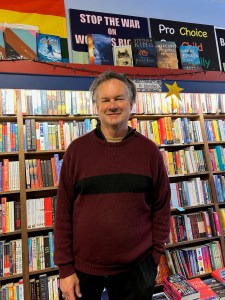
Bill Clements in front of the fiction section

There are many bookstores in this area and they all seem to coexist. Why do you think that is?

There aren’t as many as there used to be. I moved here in 1982. For the first ten years that I lived in Northampton, there were four stores that sold new books. Now there are only two. 

The town has changed. Rents had risen even before COVID. There are a lot of empty storefronts. It was never like this before. On Thursday nights, the entire town used to be open, but now there isn’t enough street traffic to support it. In fact, for the first time, we are considering not being open late once our winter hours end in a month or so for the rest of the year. We’re usually open until 9 p.m. on Thursdays, Fridays, and Saturdays, and we’re debating whether to keep that up. There aren’t enough people. It’s much more difficult to run a store and make enough money to keep it open. There are fewer places to shop and hardly any retail. It is driven primarily by restaurants in the evenings. I’ve recently traveled and seen a lot worse, so we’re fortunate, but it’s not what it used to be.

What effect did COVID have on sales?

At the start of COVID, Channel 22 did an interview with store owners. They followed up with them after COVID, and we were the only store they originally interviewed that is still in business, out of 4 or 5. So yes, it’s been difficult for local businesses.

Your store will be celebrating its 50th anniversary next year!

The community values us and people here have always gone out of their way to support local independent businesses in general. Because of the politics of the area being what they are, people are aware of the corporations and the big box stores and they know this is not the lifestyle they want to be around as much. They want it, but they don’t want only that. They want us as well. So we really are valuable to them, and they realize that we want to be around for them. That’s a big thing for us. Before the founder of Broadside, Bruce MacMillan, passed away, he made it possible for the store to be passed on to us, and in doing so, he was aware of the legacy of the store. We, too, are very aware of the need for this to continue, and in fact we’re probably going to be in transition in the next three years or so. It will be a generational change, and a lot of stores don’t survive that. When the owners of a store want to retire, they try to sell and find that it’s not easy. Fortunately, we’re setting up things now that will put in place people who will be carrying it on. 

So the key is to stay local?

Yes, as well as the politically aware locals who recognize our value as a kind of third place outside of home and work to gather and create community. We’re seen that way. We are not the only ones, but we are part of that.

How do you give back to the community?

We have a non-profit program where we sponsor a non-profit that we feature in the window once a month. We offer them space to be noticed and recognized by people walking by, and give them the money we have raised to help them out. It’s a very popular program. We also provide books for the schools and hold regular reading events featuring local authors.

A book is born. How do you decide which books to display? 

Before that, we must decide which books to buy. We order from a company that provides catalogs for all major and minor publishers. The criteria are the author’s track record and, if nonfiction, the subject’s track record. If it’s fiction, we also look at the track record in that genre. We have knowledgeable and experienced buyers who understand what works and what doesn’t. Everyone has their finger in the wind. Publishers don’t know what will work or not, so they put it out there. Most of the books published do not make any money. It’s great that they’re publishing so many writers, but only a small percentage of the successful books drive the whole engine and pay for the ones that are losing money, which accounts for about 80 or 90 percent of the total.

And yet books keep getting published.

It’s an interesting model, and it has its ups and downs. Another major factor is the escalating financial crisis. I attended a conference in Seattle three weeks ago, and the main topic of discussion was what we should do about it, and where this is all going. The rising cost of books is a big concern. Novels are selling for almost $30, and non-fiction can cost up to $45. 

That leaves out a lot of people.

That’s a big concern. Going back to the business of bookselling, we order the books and we put them out. Some will succeed unexpectedly through word of mouth, while others will be carried because they are written by well-known authors. In a way, the rich get richer. We make a point to stock works by local authors. We accept books, even self-published books, from walk-in authors. We have a consignment program, and we carry these books for a small fee. If they sell, we order more. If not, after a year or so we ask them to take them back. This creates a local connection. Most of our reading events are by local authors. We have a lot of authors in this area.

Books have a different business model than food or clothing. The books can be returned. The publishers accept them back at no cost. If a book doesn’t sell, we return it and that’s it; we pay the return freight, which isn’t cheap, but there’s no discount on them. We can keep the books flowing that way, but you must stay on top of it. Ordering, returning, culling, and reviewing records on a regular basis. If a book hasn’t sold in three months, it is returned. It’s a judgment call whether you continue to carry it after selling one in three months and for how long.

NPR and the New York Review of Books are both important venues for book promotion. We have a very popular bookcase where we keep titles that have been reviewed by NPR. Many people get their recommendations from them. It’s a constant flow.

On the subject of “the rich getting richer,” I’m wondering how small presses fit into the picture as you decide which new books to purchase. Small presses frequently publish writers from underrepresented groups like women, minorities, and lesser-known authors. Keeping in mind that booksellers are trying to survive in an increasingly difficult economy, do you believe they have a role in highlighting some of these lesser-known voices in an effort to broaden the literary playing field? 

It is part of our mission as booksellers to carry lesser known and marginalized authors. This is made easier by the publishing and book distribution industries: publishers are making a substantial effort to publish women, minorities, and lesser known authors, especially after the wake-up call of the controversy over the publication of American Dirt several years ago. There’s been far greater diversity of voices published since then. Distributors are carrying small presses so we have easy access to them. The bookselling business is always about a balance between carrying what sells–we need to stay in business, of course–and doing our job as purveyors of culture(s), writ large and small. We are very aware of the need for the latter.

I’m one of those people who prefer to have a book in my hands rather than read on a screen. Do you think that’s still true for most people?

Yes. a lot of people are mixed. They do both, but it’s circumstantial. If they’re on a plane, it’s an e-book. If they are reading genre fiction, it’s often e-readers, partly because people tear through a romance or mystery in a short time, and do they want to spend $17 on it? This drives which format they use. Many people discovered in the last 10 or 15 years, when e-books looked like they were going to take over the world, that the readership went up and then plateaued. That’s because a lot of people like the feel of the book. Astonishingly, I heard years ago that young people were getting tired of their screens, and it was almost a relief for them to have a book in their hands. 

That’s hopeful.

Hopefully, that is true. Our readership skews older, but there are many young people who come in to buy books.

I believe that people are not reading as much as they used to. Is that consistent with your experience?

I just read an article in the New Yorker about the decline in college enrollment in the humanities. In an interview, a Columbia English professor said that he used to read five novels a month. Then he bought a cell phone. Now he’s happy if he reads one book per month. If someone like him is reading this much less, imagine what it’s like for other people! We’re all reading blogs, responding to emails, and listening to podcasts. Few people read the long form, although people continue to write them. How many people nowadays read Dickens?

Are you seeing these changes reflected in sales?

Somewhat. But we had our best year ever two years ago, as did almost everyone. Because of the outpouring from the community following COVID, 2021 was far above any other year. Last year was not as good, but it wasn’t bad. Things are sluggish this year, but we hope sales will pick up.

The opening keynote speaker at this year’s ABA (American Booksellers Association) Winter Institute conference said that there are currently 530 new independent bookstores in the pipeline nationwide. The book industry suffered significant losses during the 2008 recession, which didn’t really level out until 2012. But, since then, there has been a steady increase in the number of new independent bookstores opening, proving that it is a viable business model. The real indicator is that Barnes and Noble has been struggling. It used to be the big box stores were our main competitor before Amazon became the boogeyman. The independent stores won that battle to the point where Barnes and Noble hired the guy who turned around BigBox books in England. The way he did it there, and is now attempting to replicate his strategy at Barnes and Noble, is by giving power back to the actual managers of each store á la indie bookstore model, rather than corporate dictating what you buy and where you display. It’s all about reinvesting in the local community.

I wonder if they’ll succeed. Barnes and Noble feels cold and big to me.  

It may not be able to fully replicate us. Also, customer service is what sets us apart and was the bedrock of our turnaround. Indie bookstores are staffed by people who know books and are trained booksellers. That’s what we have that the big ones don’t.

Aside from buying books, how do we support our local bookstores?

Attend events. Join book clubs that are sponsored by the stores. We don’t have one but others do. Mostly, it’s by financially supporting us.

And don’t go anywhere near Amazon!

That’s also mixed. It’s similar to what we said about e-books earlier. This was the message at the Seattle conference: get used to Amazon. Your best customers are buying from Amazon. It’s very difficult to resist that whim in the evening, when you go over to your computer and hit the button. It’s amazingly convenient. There are also a large number of people who do it for the lower cost and do not bother with us.

Bookshop.org can scratch that itch.

It’s good that you know about it. That’s a measure of its success.

Is it helpful?

The guy behind Bookshop, the one responsible for the whole enterprise, gave a presentation at the conference. He said that COVID really increased the success of Bookshop. It was the right time to start it. He was trying to give booksellers a platform that would not necessarily be able to compete with Amazon, but would at least allow us to stay in the game. He was successful, and part of it was the timing, with COVID triggering community support. Bookshop has grown five times since then. It is spreading and incredibly generous. We aren’t very active with it. But we get two checks from them each year with no effort on our part. They pool money and then divide it among the participating stores. And the customer can get the book by mail while still supporting independent bookstores in general. If you want to support a specific store, you can do so by choosing one when you first log on to the Bookshop website.

Do you have a favorite section in the store?

I’m a non-fiction guy. I love history, especially local history.

If you had infinite space, what would add?

I would have more sidelines. (Laughs.) There was a flattening out of sales in the 1900s and the downturn in 2008. Both times, the ABA highly recommended that we make up the difference by increasing the number of sidelines and not rely only on books. The founder of Broadside, Bruce, was a book guy. He had literally one spinner rack of cards from one guy in Maine. That was it. I’m naturally inclined toward liking the old-fashioned kind of stuffed place where you walk through and see something different at every turn. The store reflects my cluttered mind, I guess. (Laughs.)

It feels like a small library to me, and the sidelines are just part of the decor.

I keep stuffing things in here, much to the chagrin of my colleagues. They’re always rolling their eyes. We do have a filter, and we try to keep it to things related to words. We try not to have anything way out there. We still want to have some sense of dignity and integrity as a bookstore. (Laughs.)

Broadside Bookshop

Address:

247 Main St.,

Northampton, MA

Phone: (413) 586-4235

Website: http://www.broadsidebooks.com

Thérèse Soukar Chehade, author of Loom, has spent the last two decades teaching English Language Learners at a public school in Amherst, MA. She lives in Granby, MA, where the autumn foliage still fills her heart with gladness. Her upcoming novel, We Walked On, will be published by Regal House in the fall of 2024.

Filed Under: Book Bound Tagged With: BookBound, Broadside Bookstore, Thérèse Soukar Chehade

After 42 Years, The Muse Bookshop Still Promotes Literacy and Community

July 13, 2022 1 Comment

By Ginger Pinholster

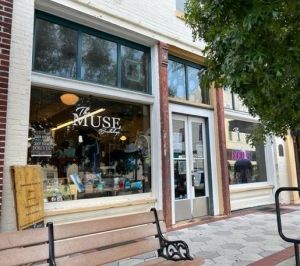
In DeLand, Florida’s bustling historic downtown, The Muse Bookshop invites readers to browse an irresistible children’s section, new best sellers, used and antiquarian books, topographical maps, “Floridiana,” gifts, and more.

Seated at the heart of the shop is its unstoppable founder – educator and community champion Janet Bollum, who co-founded The Muse 42 years ago, on July 1, 1980. Bollum’s business has continued to thrive despite devastating recessions, changes in her personal life, and a global pandemic. On a recent Saturday, customers bustled in and out of the shop as they paraded along DeLand’s humming downtown shopping area.

Bollum has played a key role in advancing her city’s downtown business district, ever since the area was established in 1985. “I have a vested interest in the viability of the downtown district,” she explains. “I’m on the MainStreet DeLand Association board. I live in DeLand, own a business in DeLand. I promote literacy in that, if people come in and they’re looking for something, I have the ability to point them in the right direction.”

Janet Bollum, owner of The Muse Bookshop

She considers that level of service – and literary insight – as her primary selling point, compared to chain stores. “I can help my customers navigate my collection,” says Bollum, an enthusiastic bibliophile. “If I don’t have it, I can get it for you.”

From a visitor’s perspective, Bollum’s other primary selling point is her infectious passion for books and her steadfast commitment to community-building. As an example, following the police killing of George Floyd in 2020, Janet and her daughter Ella Ran live-streamed weekly readings of children’s books on race and diversity. Readings in that series included books such as Something Happened in Our Town: A Child’s Story About Racial Injustice.

“Give a kid a love for books and they’ll be entertained for life,” Bollum says, noting that her nine-year-old granddaughter loves graphic novels such as Wings of Fire and Artemis Fowl.

The Children’s Section at The Muse

Bollum’s preferred genre is historical fiction. She reads to escape, and for entertainment, but she also reads a bit of everything, including all of the offerings in her bookshop’s “Florida Room.” There, contemporary literary fiction by Connie May Fowler and Carl Hiaasen’s humorous thrillers coexist with antique copies of Robert Wilder’s Flamingo Road and Marjorie Kinnan Rawling’s Cross Creek.

Born in Minnesota, Janet Lynn Bollum earned a mathematics degree from Moorhead State College, taught high school in Australia for a couple of years, then returned to the United States, where she became involved in adult education. That experience got her more interested in promoting literacy.

In 1979, she and her then-husband, the late Keith Charles Bollum, followed her parents to Florida, where he worked at a bookstore in St. Augustine. In 1980, they bought a business called McVicker’s Books, Cards, and Gifts, which was located a block north of her current store in DeLand. The Bollums had two children, Justin and Ella, before divorcing in 1989.

The Florida Room

Still, The Muse Bookshop persisted.

Janet Bollum became increasingly involved in civic life, serving as a City of DeLand commissioner; as chair of the Volusia County Metropolitan Planning Organization; as a representative of the Volusia Council of Governments; and on the advising committee of the Metropolitan Planning Organization. She remains active in the Democratic Party, and she helps citizens register to vote.

During the COVID-19 pandemic, Bollum says, The Muse closed for a couple of months, then began reopening gradually. She was able to secure grants from the county that helped her survive. All along the DeLand business district, she says, landlords temporarily reduced rents to help keep their tenants from going under. With very few exceptions, most of DeLand’s downtown businesses are small and privately owned, she notes. By working together, the community got through those dark days, and it has now bounced back stronger than ever, Bollum reports.

Bollum received the Woman of the Year Award from the DeLand Downtown Business and Professional Organization in 1996. She has been listed as a noteworthy Retail Book Store Owner and Educator by Marquis Who’s Who.

These days, her brother Brian helps out at the shop, as needed. At the back of The Muse Bookshop, daughter Ella Ran co-owns Outsiders, a retail store for outdoor adventurers.

Visit The Muse Bookshop at 112 S. Woodland Avenue, DeLand, Florida 32720. DeLand’s award-winning downtown district also features an art museum, eclectic craft and gift stores, restaurants, a brewery, and much more. If you’re in Central Florida, it’s a destination well worth touring, especially if you have a chance to meet and be inspired by Janet Bollum.

_______

Ginger Pinholster’s second novel, Snakes of St. Augustine, is forthcoming on September 12, 2023 from Regal House Publishing. Her first novel, City in a Forest, won a Gold 2020 Royal Palm Literary Award from the Florida Writer’s Association. She works for Embry-Riddle Aeronautical University and lives in Ponce Inlet, Florida, where she volunteers with the Volusia-Flagler Turtle Patrol.

Filed Under: Book Bound, Regal House Titles Tagged With: BookBound, Ginger Pinholster, Janet Bollum, The Muse Bookshop

Arvida Book Company: A Warm and Nurturing Community Gathering Spot

April 14, 2022 3 Comments

by Candi Sary

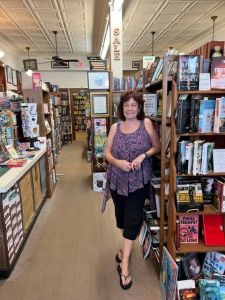
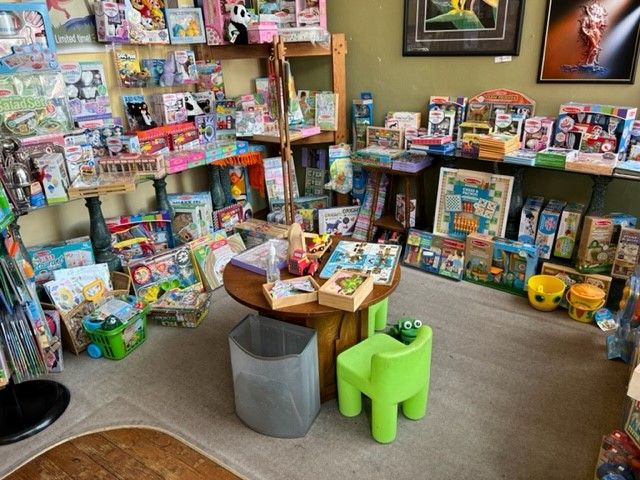
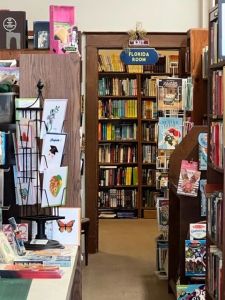
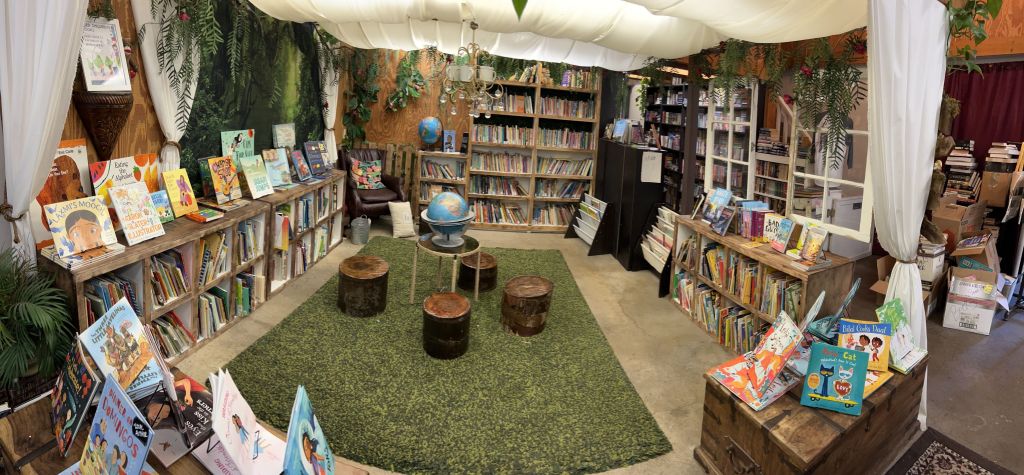
Arvida Book Company is my local bookstore. Its eclectic décor spans generations of style, pairing unique and edgy artwork with the nostalgic comfort of grandma’s living room. Lantern-like hangings, made of book pages, dangle from the ceiling. Paintings and sculptures by local artists adorn the walls. A turntable near the register plays music from a collection of vintage albums. Tables and shelves are stacked with an impressive variety of new and used books. The children’s section, like an enchanted garden with climbing vines, invites little ones to stay a while. 

Sam and Mike Robertson

One Friday morning I stopped in to talk with owners Samantha and Mike Robertson. We sat together in the burgundy and gold wingback chairs near the coffee counter. Tiny blackboards along the wall offered staff beverage picks—Mike suggested a ‘cortado’ while Sam simply underlined ‘black coffee.’ There in the cozy chairs, with a small rounder of classic literature between us, the couple shared their Arvida story. Opening a bookstore in the age of Amazon and during a pandemic takes a lot of courage and heart. Spending time with the Robertsons, it was clear the two have an abundance of both. 

When the pandemic hit, Mike lost his job and Sam, a flight attendant, worried about losing shifts. She had always dreamed of opening a business sometime in the future. Given the uncertainty of their current situation, they thought, why not now? and set their eyes on a vacant store in their neighborhood. The big corner building, amidst quaint little shops and restaurants of Old Town Tustin, had only switched hands twice. First it was a hardware store, and for the next twenty years it was Mrs. B’s Consignment Store. Sam and Mike loved bookstores. They even had their engagement photos taken at The Last Bookstore in LA. With a leap of faith, in 2020 the Robertsons transformed that vacant building into Arvida Book Company. 

With the help of friends, family, and their two young daughters, Sam and Mike have created a welcoming, comfortable and inspiring atmosphere for the local community. They want Arvida to be more than just a bookstore. Along with author events and several bookclubs, they host a variety of community gatherings. Sam told me how important it is to listen to their customers, tailoring books to local interests, and asking about the needs of the neighborhood. Upon learning that Tustin does not have a community garden, the Robertsons are now involved in making that happen. 

A cozy nook for children

I spent a good deal of time in the store that day. Regulars stopped in to say hello and share friendly chatter. A young couple, who plays chess every morning at one of the outdoor tables, peeked in to say goodbye when they left. During our conversation about the author/artist/community events they host, Sam pointed out a petite woman on the couch beside the turntable. It was Sondos Kholaki whose book I’d seen on the local author shelf. The Robertsons introduced me to the writer who was sitting with a friend, a songwriter. The three of us, though very different kinds of writers, found a connection over our shared love for words. We had an inspiring conversation there beside the wall of local art, with the smell of coffee in the air, and a sense of warmth all around the colorful, nurtured space. And I thought to myself, This is no ordinary bookstore experience. This is Sam and Mike’s vision achieved.

I left that Friday afternoon with the latest Sally Rooney novel, a personally signed copy of Sondos’s book, and an overwhelming sense of gratitude that I get to call Arvida Book Company my bookstore.

Candi Sary is the author of the book Black Crow White Lie and the recipient of the Reader Views Literary Award, a CIBA Award, and a first runner-up in the Eric Hoffer Book Award. Her novel with Regal House, Magdalena, will be released in the summer of 2023.

Filed Under: Book Bound, Regal House Titles Tagged With: BookBound, Candi Sary, The Arvida Book Company

Scuppernong Books: It’s All About Community

November 29, 2021 Leave a Comment

by Valerie Nieman

I can honestly say I was there at the beginning.

Several years ago, opening night at Scuppernong Books in downtown Greensboro, NC, featured a warm fellowship of writers and readers, but the space itself was a work in progress. Bare shelves revealed the raddled brick of a succession of businesses. I don’t recall seeing a single fox, the creature that would become the familiar spirit of this place known for “Books Wine Community.”

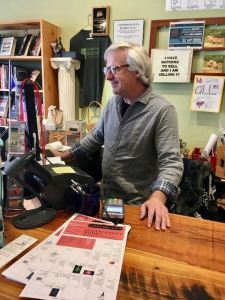
owner Steve Mitchell

Today the space is bursting with books, new in the front, used in the back, with overflow onto big library tables in the event space. Staff reviews adorn books at front and center, while art and mottos—and foxes—make it hard to remember back when the walls were bare. But the “old home place” atmosphere remains, in assorted vintage armchairs and kitchen table chairs perfect for coffee and conversation. When authors visit, which is frequently, then folding chairs are brought out to offer seating that may or may not be enough—Scuppernong is on the tour list for popular authors such as North Carolina’s own Wiley Cash and kids’ book author Jeff Kinney (Diary of a Wimpy Kid).

Co-owners Brian Lampkin and Steve Mitchell, both of them authors as well as booksellers, entrepreneurs, and visionaries, could see something special right from the start.

“I was reluctantly getting into this,” said Lampkin, who had previously owned a bookstore in Buffalo, NY. “I walked into this dead, dilapidated, dead-rat space, but I could see the possibilities of a great bookstore.”

owner Brian Lampkin

“It had been empty for 10 years,” added Mitchell. “The building has been here since 1898. It was a feed and seed store when it started, and then was a bunch of other things. It had been two ‘shotgun’ stores with a wall down the middle.”

If they could see a bright and book-filled future, others were skeptical. The owners admitted that one local funding source, when hearing that they planned to serve wine and beer, thought they were really planning a bar, not opening a bookstore at all.

Greensboro was in a bad place for books when Scuppernong began. Small shops and newsstands had closed, chain outlets had disappeared, leaving only used booksellers to feed the need of local readers downtown. The central business district was just starting the renewal that makes it a lively destination today.

“People were really interested. They came by, looked in the window,” Mitchell said. “Somebody brought us a decorated brick that we still have.”

“And the rock somebody threw through the window a couple of years later,” Lampkin added.

What can you do about bad reviews, right? But truly, Greensboro has taken Scuppernong Books to its heart, and vice versa. “What makes a great bookstore, in part, is that it has a distinct personality. Indie bookstores are always curated to a some degree. There are things we care about, and we are always learning from the community what they need and want. Great bookstores reflect the community,” Mitchell said.

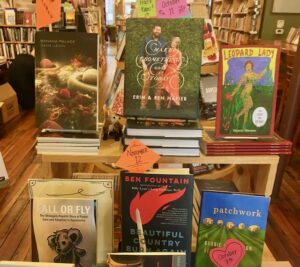
books displayed for upcoming events

Community engagement has taken many forms. The store works with local schools and has set aside space for voter registration efforts in cooperation with the League of Women Voters. Its ongoing commitment to debate and discussion is evidenced in programs such as the Death Cafe about end-of-life issues, a science forum, Ask a Muslim Anything, and book clubs including “Reading the World” and another for poetry. In addition to a full schedule of readings, Scuppernong hosts writing workshops such as “Looking at Short Fiction” featuring five authors from Press 53. There’s also “ScupTV” on You Tube with book reviews and discussion, sock puppet shows, and short clips from presentations. A weekly online magazine, Renard and Raisin, keeps people up to date.

That brings us to the foxes. Red-furred foxes appear in unexpected places, their canny eyes and bright tail-swirls following you around the space. So what’s the connection? Scuppernongs are native grapes, and grapes then make you think of the Aesop fable about the fox and the grapes. Therefore, drawing on the French names, Renard and Raisin.

The biggest event of the year, however, is the Greensboro Bound book festival, launching in 2018 under the umbrella of Greensboro Literary Organization which the bookstore was instrumental in founding. The name comes from Greensboro’s history as a major railroad hub, and the festival logo features crossed railroad tracks. At venues across town, readers get to meet dozens of writers both national and regional. “After our first Greensboro Bound, people came to us and said this really feels like a festival for writers,” said Lampkin. “As writers ourselves, we knew how to keep writers happy.” I can verify that engaged presenters make for happy audiences!

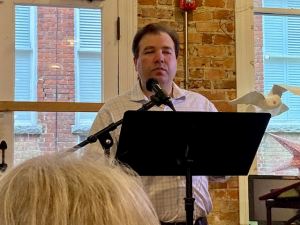
Memoirist James Tate Hills reads from Blind Man’s Bluff

Readings are a major part of the indie bookstore scene, and Scuppernong is incredibly supportive of authors, but there is a learning curve. “Most authors who’ve done it for a while have modulated their expectations, but new authors may expect big crowds,” said Mitchell. “We tried for a long time to make all authors happy, from self-published to big names, but the realities of the book business make it hard. We’re more empathetic to writers because we both understand what a tough racket this is.”

The store has been getting noticed far and wide. “We were in Time magazine, the centerfold actually,” said Lampkin. “Lev Grossman did an article on independent bookstores for an issue on the best reasons to live in America.” The store has also been recognized by Southern Living as one of the best bookstores in the South, and received awards from the North Carolina Writers Conference, Arts Greensboro, Friends of the UNCG Libraries, and more.

Some controversy has come about as well. When the store hosted Bronwen Dickey for her book Pit Bull: The Battle over an American Icon, anti-pit bull folks were enraged. Hate mail poured in from across the nation. More recently, the store’s adherence to vaccine guidance, including the requirement for a vaccination card if people wish to unmask for eating and drinking, has drawn some hostile responses.

Like most retailers, Scuppernong Books has had to adapt during the COVID-19 pandemic and the slow return to a new sort of normal. “People understand that shopping local nurtures their own environment. They want local business, and COVID really strengthened that. If they wanted restaurants and retailers to still be there, they knew they had to support them,” said Mitchell.

When the shutdowns hit early in 2020, the store was closed to foot traffic, and for several months, Scuppernong survived on mail orders and curbside delivery. The coffee, wine, and small plates service at the cafe was shuttered. But the lights are coming on again, and book lovers are again gathering at the bar for coffee or a glass of wine or local beer to warm their conversations.

Like other businesses, Scuppernong has experienced “the well-documented supply chain issues with printing, and shipping—COVID makes it difficult,” said Mitchell. Lampkin noted that opposition to Amazon has helped indie bookshops, however, because they offer atmosphere and human contact as a counter to “price-matching.”

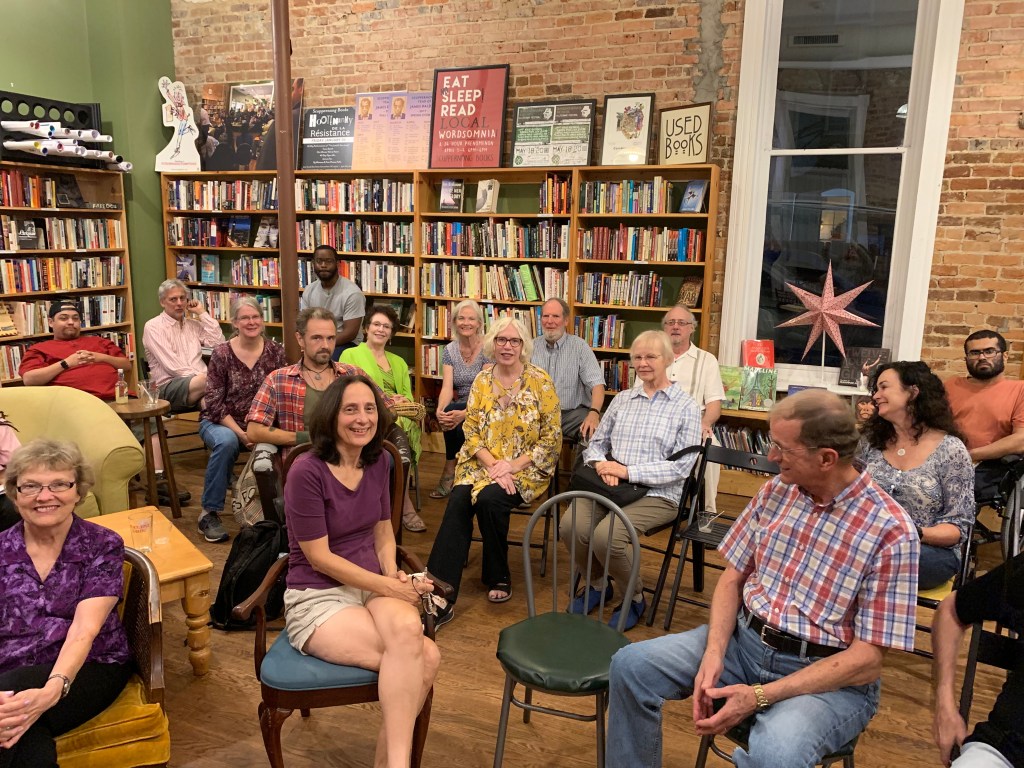
Author Valerie Nieman (center in yellow) at the launch for To the Bones

So what’s next for Scuppernong Books? When the store opened in 2013, each of the owners brought special knowledge and love to make it a success—Mitchell had been a chef for a number of years (and worked in mental health), while Lampkin was an experienced bookseller.

“Steve and I are no longer young. Ferlinghetti (founder of City Lights Books in San Francisco) made it to 101—I don’t know if that’s in our plan. We do put a lot into this,” said Lampkin. Bringing renewed energy to the business is Shannon Jones, a longtime employee who recently joined the ownership. “She’s as committed as we are, and will bring new ideas and new thinking. We’ll continue Greensboro Bound, and now we are publishing books,” said Lampkin. “We don’t have grand visions of change. Maybe we have an archaic myth of the idea of bookstores.”

Michell added, “The idea is that a bookstore will be an energetic space, not a quiet, dusty place.”

Scuppernong Books

304 South Elm Street

Greensboro NC 27401

(336) 828-1588

scuppernongbooks@gmail.com

Valerie Nieman, author of In the Lonely Backwater (coming from Fitzroy Books in the summer of 2022), To the Bones, and three earlier novels, a short fiction collection, and three poetry books. Her award-winning poetry and short prose have been published here and abroad. She has held state and NEA creative writing fellowships.

Filed Under: Book Bound Tagged With: BookBound, Scuppernong, Valerie Nieman

Connect, Inspire & Explore: Commonplace Reader, Yardley, PA

March 17, 2021 3 Comments

By David R. Roth  

Photos Courtesy of Cindy Fatsis

Commonplace Reader

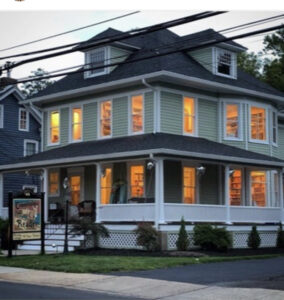
Back in 2019, as I followed the transformation of the modest, 150-year-old Victorian house on South Main Street in Yardley Borough into a bookstore, I had no idea that its owner and I had something in common: long deferred dreams coming true that fall.

When Elizabeth (Liz) Young moved to Yardley Borough in 1991, she had never heard of the municipal designation borough. She was immediately attracted to the idea of living in a close-knit community centered around a walkable downtown that brought to mind Miss Marple’s St. Mary’s Mead. There was just one thing missing from the quaint downtown of her adopted borough: a bookstore.

The seeds of a dream were sown, but Liz was busy raising three kids and working. The bookstore idea became something she would do eventually. The dream seeds would take thirty years to sprout, benefiting from an influx of time and energy called retirement.

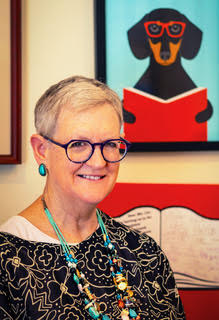
Liz Young

Liz began researching bookstore reality in late 2018. By early 2019 she had watched every online video she could find, built a thick 3-ring notebook of how-to resources, and attended a “Bookstore Boot Camp” on Amelia Island, Florida with thirty other aspiring booksellers. She was ready to start looking at rental properties. Guided by her English village vision, she was committed to the idea of a house downtown. She wanted the cozy factor, an environment that felt homey and inviting, especially for kids. She imagined a room where children would gather for story hour, a room where book clubs would meet, chairs so shoppers could sit and sample selections, and nooks where young readers could linger. 49 S. Main Street checked all the boxes.

Next, she needed a name. She was attracted to the concept of the commonplace book that was widely used back in the days when the Yardley family was farming the land and the town was called Yardleyville. A commonplace book is devoted to capturing those day-to-day things its keeper finds remarkable, whether a revealing bit of conversation, an inspiring poem, or the clever design of a building. It is not intended to be used for mundane things, such as to-do lists or keeping a chronological diary.

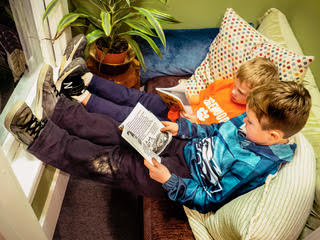
A reading nook for young readers

Liz, an educator at heart, loved that such books were reference tools for personal enrichment, for remembering the remarkable. She also liked that common suggests that anyone can be such a reader. She wanted to create a space where the entire community would feel welcome to explore new ideas and activities. Commonplace Reader would be that place.

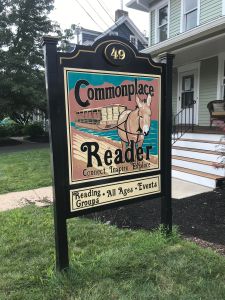
A logo was next and, in another nod to the rich history of the borough, Commonplace Reader’s logo features Franki the barge mule pulling a load of books along the Delaware Canal, a major transportation artery for regional commerce and connection for almost one hundred years. The combination of the mule barge, the commonplace book, and Liz’s curated inventory perfectly captures the themes she has established for her enterprise: Connect, Inspire & Explore.

 Liz’s nine-month journey from dream to launch required a great deal of research and planning. She is particularly proud that the realization of her vision for a community meeting house has been such a local undertaking. “My carpenter, lawyer, accountant, landlord, the ship and print shop, the guys who installed my security system, even the bakery that provided the pastries for my opening are all within a block of our front door.”  Even so, there was one aspect of the undertaking that took her by surprise: the tremendous outpouring of unsolicited support she received from the community.

One of the first people to reach out was literary agent, Mackenzie Brady Watson (SK Agency). A ten-year publishing industry veteran, Watson knows how special indie booksellers are to authors and to the health of the industry. When she read about what Liz was up to, she immediately contacted her to offer support.

“I’ve been so impressed by all that she’s accomplished,” Watson said. “She’s made the store such a welcoming place; my daughter loves the puppy dog pillows and train set upstairs. The thing about Liz, she always takes time to speak with her customers, she remembers their family members’ names and book tastes, and always has some news to share.”

Yardley-based marketer Lisa Gage (Hue Entertainment), reached out to Liz to hold a virtual book launch for local area author Lise Deguire’s memoir Flashback Girl. The event was so successful they did a second one. “I admire Liz’s mission to be a resource for the community,” Gage said. “Her store quickly became a place where people get together to share common interests.”

Deguire added, “Liz has been a terrific supporter of Flashback Girl and the works of other local writers. She has created a home for book lovers that is warm and welcoming, and where the staff is present and helpful.”

Another local writer, Marc Kaye, hosts monthly writing workshops in the store. “The emergence of the wealth of local talent has been something,” Kaye said. “A community of writers has come together all thanks to this great business.”

Staffer Amy DeLeo is delighted that the store has enjoyed such positive, enthusiastic support, but is not surprised. “Liz always finds a way to create an inclusive atmosphere, for us and our customers. Particularly during this rough pandemic year, we hope we’ve helped lift folks’ spirits.”

Meanwhile, in a parallel universe, I had deferred my dream of being an author for thirty years while my wife and I also raised three kids and worked. My dream, too, would become a reality only after I retired.

When I walked into Commonplace Reader this year, I told Liz my first novel, The Femme Fatale Hypothesis, had been scheduled for release by Regal House Publishing, an independent, traditional publisher with a love of intimate, independent bookstores. I asked if she would be interested in a BookBound profile. She responded with all the qualities her fans describe: warmth, enthusiasm, and a genuine interest in me, both what I’m writing and, naturally, what I’m reading. In an era dominated by online bookstores and anonymous “influencers,” Yardley Borough’s Commonplace Reader and its passionate owner are refreshingly uncommon.

David R. Roth, author of The Femme Fatale Hypothesis, is a graduate of the Cedar Crest College’s Pan-European MFA program. He placed second in the inaugural Bucks County Short Fiction Contest judged by Janet Benton (Lilli de Jong) and was a quarter-finalist in Driftwood Press’s Adrift Short Story Contest. His short stories have been published by Passenger Journal and Moss.

Filed Under: Book Bound Tagged With: BookBound, Commonplace Reader, David R. Roth

The Book Cellar: A Chicago Literary Haven Since 2004

February 23, 2021 Leave a Comment

By Alex Poppe

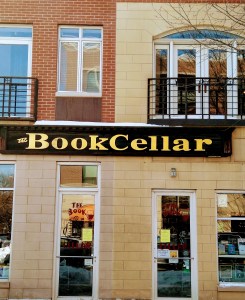
When I asked Suzy Takacs, the owner of Lincoln Square’s The Book Cellar, an independent bookstore on Chicago’s northwest side, what TV series would use her space as a recurring location, she didn’t hesitate with her one-word answer: Cheers. After sitting down to talk with her, it is easy to see why. In our pre-Covid-19 days, not only did this beloved neighborhood fixture serve up some of the best wines by the glass and small plates in the city to accompany its exceptionally well-curated book collection, but more important, it was a home away from home for many of its clients. In fact, when one customer’s son ran away from home, he ran to The Book Cellar, where his mom waited for him to cool down under the staff’s watchful, caring eye.

Another regular used The Book Cellar as a refuge when got locked out of his own home. Older clients who have moved out of the neighborhood to enter assisted living facilities have had their children bring them to The Book Cellar when their children came to visit. One long time regular had the unofficial job of turning the OPEN sign on when he came in. But perhaps the biggest testament to the importance of The Book Cellar in the local community is the $40,000 fans donated through a GoFundMe page last April to help The Book Cellar stay afloat while many businesses in the city capsized due to Covid-19. I asked Suzy what her secret was for inspiring such loyalty. She credited hard work, participating in the local chamber of commerce and in schools, and her commitment to the community, but I have another idea. I think the secret weapon is Suzy. Here’s why.

Suzy wants The Book Cellar to convey a “homey, cozy feel.” She accomplishes this by treating people as if they are coming to her home when they come to her store. She explained that the customer’s experience is personal for her, meaning if someone has a bad experience, she takes it personally. Her concern for the personal, Susy’s heart, is why The Book Cellar is a singular space, a gathering place, a place for conversation, and why it has been with us since 2004. No wonder The Book Cellar team dropped a customer’s purchase off to the customer when pick-up hours conflicted with the customer’s work schedule.

Suzy’s heart extends to her staff. My mouth fell open when she told me she had been practicing appointment only shopping because her staff didn’t feel comfortable with public browsing when Chicago’s positivity rates were above 9%. I was so impressed that her concern for her staff’s and their families’ well-being is more important to her than making money. That is true leadership.

The Book Cellar, 4736 N Lincoln Ave, Chicago, IL 60625

https://www.bookcellarinc.com/

Alex Poppe is the author of Girl, World, which was named a 35 Over 35 Debut Book Award winner, First Horizon Award finalist, Montaigne Medal finalist, was short-listed for the Eric Hoffer Grand Prize, was awarded an Honorable Mention in General Fiction from the Eric Hoffer Awards and was recommended by the US Review of Books. Alex’s novella Duende will be published by Regal House Publishing in the summer of 2022.

Filed Under: Book Bound Tagged With: Alex Poppe, BookBound, The Book Cellar

  • « Go to Previous Page
  • Page 1
  • Page 2
  • Page 3
  • Go to Next Page »

Footer

The Regal House Enterprise

Regal House Publishing is the parent company to the following imprints:

Fitzroy Books publishing finely crafted MG, YA and NA fiction.

Pact Press publishing finely crafted anthologies and full-length works that focus upon issues such as diversity, immigration, racism and discrimination.

The Regal House Initiative, a 501(c)(3) nonprofit that conducts project-based literacy and educational outreach in support of underserved communities.

From our Blog

Dockside Books: An Up North Haven for Thinkers, Adventurers, and Creatives

Tombolo Books: a book lover’s loveshack in downtown St. Pete, Florida

That’s My Story: Regal House Publishing (RHP) Interviews Novelist James Janko

  • Facebook
  • Twitter
  • LinkedIn
  • Google +
  • Email
Regal House Publishing · © 2017–2025 · Website design by Lafayette & Greene
 

Loading Comments...